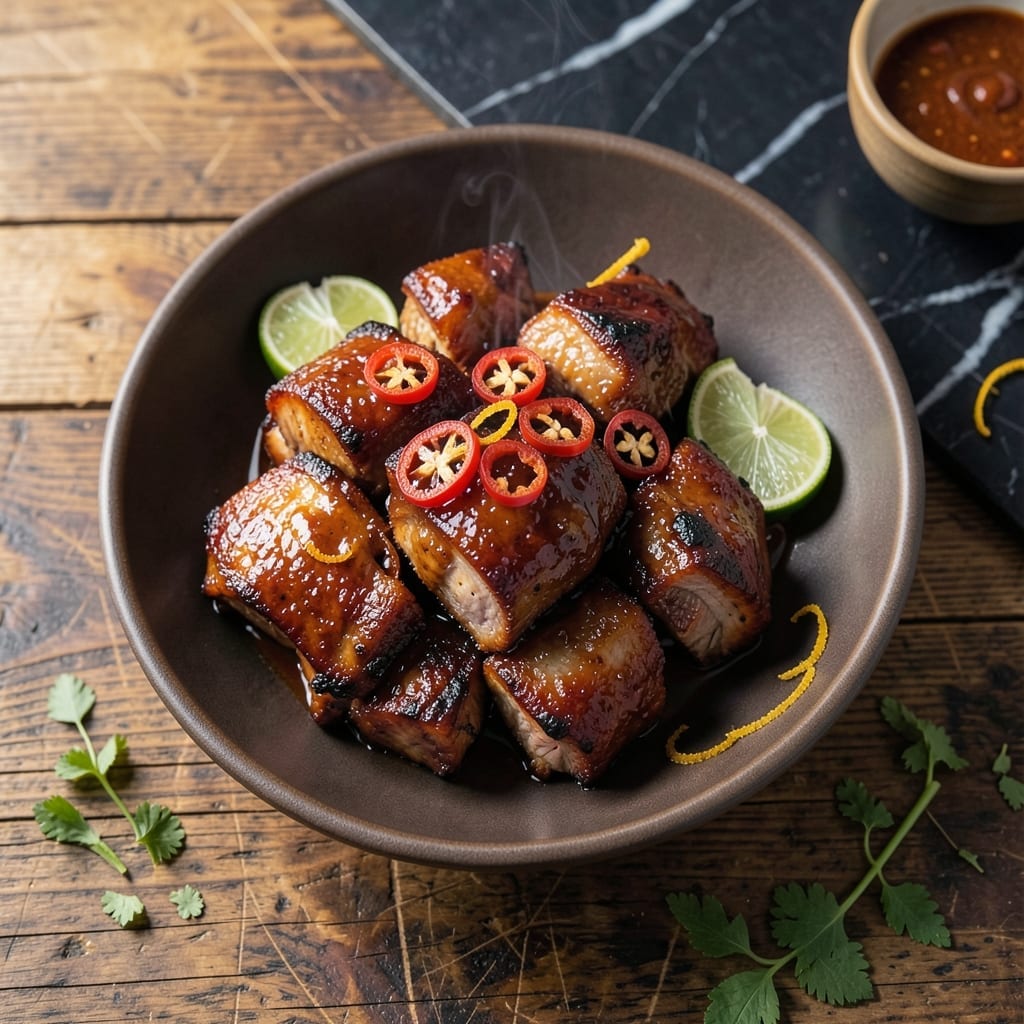
This jerk pork delivers the authentic Caribbean flavors I fell in love with during my coastal rides. The Walkerswood seasoning creates a perfect balance of heat and depth that transforms simple pork into something extraordinary.
I developed this method to honor the traditional jerk technique while making it accessible for home cooks. The secret is in the slow cooking process that allows the spices to penetrate deeply and create a beautiful caramelized crust.
The result is tender pork with a smoky, spicy exterior that packs serious heat without overwhelming the natural flavor. Each bite delivers complex layers of Caribbean spices that linger on your palate.
Serve with rice and peas or fresh mango salsa to complement the bold flavors. This recipe brings the islands to your kitchen.
Ingredients for Walkerswood Jerk Pork
Transform simple pork shoulder with Caribbean spices and Walkerswood’s signature jerk seasoning for bold depth.
| Ingredient | Amount | Notes |
|---|---|---|
| Pork Shoulder 🐖 | 2 ½ lb | Boneless, cut into 2-inch chunks |
| Walkerswood Traditional Jerk Seasoning 🌶️ | ½ cup | Wet marinade, full-fat version |
| Brown Sugar 🧈 | ¼ cup | Dark or light, firmly packed |
| Soy Sauce 🥢 | 3 tbsp | Low-sodium preferred for balance |
| Lime Juice 🍈 | 3 tbsp | Freshly squeezed for brightness |
| Scotch Bonnet Pepper 🌶️ | 1 whole | Seeds removed for controlled heat |
| Fresh Thyme Leaves 🌿 | 2 tbsp | Stems discarded, finely chopped |
| Garlic Cloves 🧄 | 6 cloves | Minced to paste consistency |
| Ground Allspice 🌰 | 2 tsp | Freshly ground for potency |
| Ground Cinnamon 🌿 | 1 tsp | Ceylon or cassia both work |
| Ground Nutmeg 🌰 | ½ tsp | Freshly grated if possible |
| Olive Oil 🫒 | 2 tbsp | For searing pork chunks |
| Kosher Salt 🧂 | 1 ½ tsp | Diamond Crystal preferred for texture |
| Freshly Ground Black Pepper 🌶️ | 1 tsp | Coarse grind for texture |
[recipe_ingredient_scaler]
The pork shoulder is non-negotiable here. Look for well-marbled cuts at Whole Foods or your local butcher—fat equals flavor and tenderness. Walkerswood jerk seasoning is the backbone; find it in the international aisle at Walmart or order online. Don’t skip the Scotch bonnet—it’s essential for authentic heat (just handle with gloves if you’re sensitive to capsaicin).
No Walkerswood? Mix wet jerk marinade with a bit of pineapple juice for tang. Out of Scotch bonnet? Habanero works at a 1:1 swap. Brown sugar can be coconut sugar for depth. The soy sauce adds umami—tamari or coconut aminos keep it gluten-free. Fresh thyme is ideal, but dried at one-third the amount works if that’s what’s on hand.
Marinate the pork overnight for maximum flavor penetration—24 hours is ideal. Cooked pork keeps in the fridge for 4-5 days, freezes beautifully for 3 months. Leftovers make incredible tacos or sandwiches (the flavors just get better).
Why You’ll Love This Recipe
- Minimal Effort: I just mix the jerk seasoning with brown sugar, soy sauce, and lime juice, rub it on the pork, and let it do its thing.
- Smoky Sweet Heat: The Walkerswood seasoning gives that authentic Jamaican jerk kick, while the brown sugar caramelizes into sticky, finger-licking goodness.
- Feeds the Crew: Pork shoulder is cheap, stretches far, and tastes even better the next day in tacos or rice bowls.
- One Bowl Wonder: Honestly, the marinade comes together in a single bowl—no chopping, no fuss, just bold flavor with barely any cleanup.
Step-by-Step Instructions for Walkerswood Jerk Pork
Here’s the method. Straightforward, tested, works every time.
Step 1: Create the Jerk Marinade
In a large bowl, combine the 0.5 cup Walkerswood Traditional Jerk Seasoning, 0.25 cup Brown Sugar, 3 tbsp Soy Sauce, and 3 tbsp Lime Juice. Stir until the Brown Sugar dissolves completely, creating a thick, fragrant paste.
Add the 2 tbsp Fresh Thyme Leaves, 6 cloves Garlic Cloves (minced to a paste), 2 tsp Ground Allspice, 1 tsp Ground Cinnamon, and 0.5 tsp Ground Nutmeg. Mix thoroughly to distribute the spices evenly. The aroma should be deeply savory with bright citrus notes.
Finely mince the 1 whole Scotch Bonnet Pepper (seeds removed) and stir it into the marinade. This adds the characteristic heat without overwhelming the dish.
Step 2: Marinate the Pork
Cut the 2.5 lb Pork Shoulder into 2-inch chunks and place them in a large resealable bag or bowl. Pour the marinade over the pork, ensuring every piece is well coated. Massage the marinade into the meat for 1-2 minutes to ensure full coverage.
Seal the bag or cover the bowl and refrigerate for at least 4 hours, or preferably overnight. The longer the pork marinates, the deeper the flavors penetrate. The pork should take on a deep reddish-brown hue from the Walkerswood seasoning.
Step 3: Sear the Pork for Depth of Flavor
Heat the 2 tbsp Olive Oil in a large, heavy-bottomed skillet or Dutch oven over medium-high heat until it shimmers. Remove the pork from the marinade (reserve the marinade) and pat the pieces dry with paper towels. This ensures a good sear.
Working in batches to avoid crowding, sear the pork chunks for 3-4 minutes per side until they develop a deep, caramelized crust. The sugar in the marinade will create a glossy, dark brown exterior.
Season the seared pork with the 1.5 tsp Kosher Salt and 1 tsp Freshly Ground Black Pepper as it cooks.
Step 4: Braise to Tenderness
Return all the seared pork to the skillet and pour in the reserved marinade. Add enough water to come halfway up the pork, about 1 cup. Bring to a simmer, then reduce the heat to medium-low.
Cover and let braise for 1.5 to 2 hours, stirring occasionally, until the pork is fork-tender and the sauce has thickened into a rich, glossy glaze. The pork should easily pull apart with a gentle tug.
If the sauce reduces too quickly, add a splash of water to maintain the braising liquid. The final sauce should cling to the pork with a deep, spicy-sweet flavor.
Pro Tips For Making Walkerswood Jerk Pork
- Marinate Overnight: I learned this the hard way—pork shoulder needs at least 8 hours in the Walkerswood jerk seasoning, lime juice, and soy sauce to let those bold flavors really sink in. Anything less and you’re just tasting the surface.
- Patty, Don’t Rub: Sounds weird, but it works: mix the jerk seasoning with a little brown sugar and lime juice to form a paste before slathering it on the pork. It sticks better and gives you that authentic crust.
- Low and Slow Wins: After burning three batches, I finally figured out that jerk pork needs indirect heat or a 300°F oven for 2.5-3 hours. High heat chars the outside before the inside gets tender.
- Rest Before Serving: Give it a solid 15 minutes under foil after cooking—your future self will thank you. The juices redistribute, and every bite stays juicy, not dry.
Regional Styles of This Recipe
Jamaican Original
This is the classic approach I fell in love with on my coastal rides. Traditional Jamaican jerk uses pimento wood for smoking, which adds a unique aroma. The Walkerswood seasoning captures this island authenticity perfectly with its blend of Scotch bonnet peppers and allspice.
Trinidadian Twist
In Trinidad, they often add green seasoning to their jerk marinades. I like to blend cilantro and culantro with the Walkerswood for a brighter, herbier profile. The result is a pork dish with more freshness and a vibrant green hue.
Barbadian Style
Bajan jerk tends to be sweeter, so I increase the brown sugar to ½ cup in the marinade. They also often include mustard in their jerk blends, which adds a tangy depth that complements the pork beautifully.
This version pairs wonderfully with the island’s famous macaroni pie. 🌟
Belizean Adaptation
Belizean jerk incorporates more citrus elements. I add orange juice and zest to the marinade for a brighter, more acidic profile. The pork takes on a beautiful citrusy aroma that’s distinctly Belizean.
Puerto Rican Influence
Puerto Rican mofongo pairs perfectly with this jerk pork. I sometimes add a touch of sofrito to the marinade for a nod to the island’s flavors. The combination creates a beautiful fusion of Caribbean traditions.
Nutrition Facts
Frequently Asked Questions
Can I use a different cut of pork?
Pork shoulder works best due to its marbling and tenderness. Pork loin can be used but may dry out during the 1.5-2 hour braise. Always choose well-marbled cuts for best results.
How spicy is this dish?
Expect serious heat from the Walkerswood and Scotch bonnet. For milder flavor, remove all pepper seeds and reduce marinating time to 4 hours. The spice mellows slightly during cooking.
What if my sauce is too thin?
Uncover and simmer for an additional 10-15 minutes to thicken. If it reduces too much, add a splash of water. The final glaze should coat the back of a spoon.
Can I make this in a slow cooker?
Yes! Sear the pork first, then cook on low for 6-7 hours. Add the marinade and enough water to cover half the pork. Skip the Dutch oven entirely.

Trained in classic French technique but raised on slow-cooked ribs and spicy rubs, she blends culinary skill with smoke and soul.
- Recipe for Boneless Pork Chops in Cast Iron Skillet: Sear and Baste to Juicy Perfection - October 3, 2026
- Recipe for Boneless Cross Rib Roast: Slow-Roasted Beef with Herb Crust - October 3, 2026
- Hamburgers in Sauce Recipe Crock Pot: Slow-Cooked Savory Delight - October 3, 2026