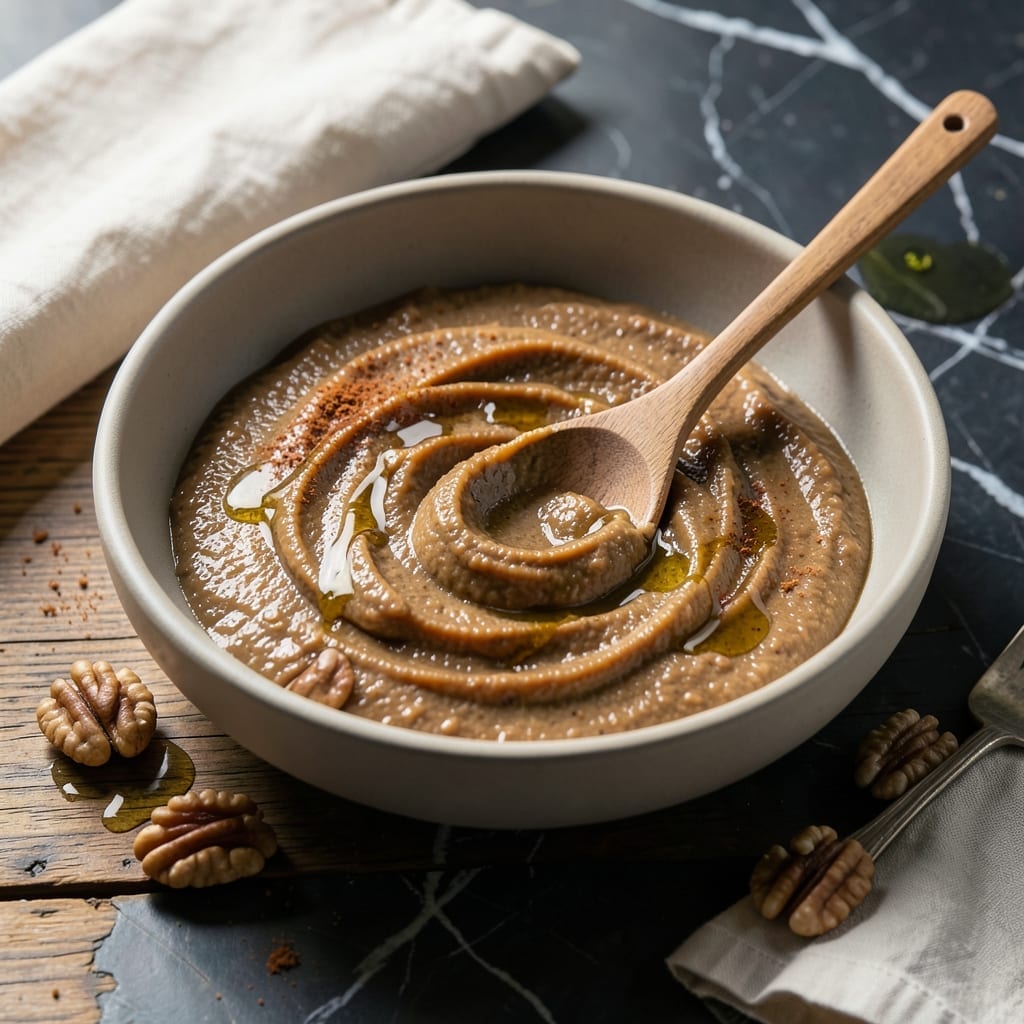
This versatile paste transforms both sweet and savory dishes with its deep, toasted walnut flavor. I developed this recipe to add richness without overwhelming other ingredients.
The process is straightforward: toast walnuts to intensify their natural oils, then blend with a touch of oil until smooth. The result is a spreadable paste that keeps its texture at room temperature.
Use it to elevate cheese boards, swirl into yogurt, or thicken sauces. The concentrated nutty taste means a little goes a long way in any recipe.
Store in an airtight container in the fridge for up to 3 weeks, where the flavors will continue to develop over time.
Ingredients for Walnut Paste
Seven simple ingredients create this rich, versatile paste for any dish.
| Ingredient | Amount | Notes |
|---|---|---|
| Raw Walnuts 🌰 | 2 cups | Lightly toasted for depth |
| Neutral Oil 🫒 | ¼ cup | Avocado or grapeseed preferred |
| Sea Salt 🧂 | ½ tsp | Fine grain for even distribution |
| Maple Syrup 🍁 | 1 tbsp | Optional for sweet applications |
| Vanilla Extract 🌿 | ½ tsp | Pure extract recommended |
| Ground Cinnamon 🌶️ | ¼ tsp | Optional for warmth |
| Lemon Zest 🍋 | 1 tsp | Brightens savory uses |
[recipe_ingredient_scaler]
The walnuts are everything here. Buy raw, unsalted walnuts—pre-toasted ones lose that freshness you need. Whole Foods or Trader Joe’s have great bulk options. Toast them low and slow (325°F for 10-12 minutes) to bring out the oils without burning. The oil should be neutral—avocado or grapeseed won’t compete with the nut flavor like olive oil might.
Maple syrup can be swapped for agave nectar or date syrup if you prefer. Skip the vanilla for savory applications—it’s only for sweet uses. No cinnamon? Try a pinch of cardamom or nutmeg instead. The lemon zest is optional but adds brightness to cheese boards or dips. Always taste before adding salt—walnuts can vary in natural saltiness.
Keeps beautifully in the fridge for 3 weeks (as mentioned). Freeze in ice cube trays for 6 months if making a big batch. The paste thickens when chilled but softens at room temperature—perfect for spreading or stirring into sauces.
Why You’ll Love This Recipe
- Five Minute Blend: I toss everything into the food processor and it’s done before the coffee brews.
- Sweet Nutty Magic: The maple and vanilla turn plain walnuts into a spread I sneak spoonfuls of straight from the jar.
- Smear on Anything: It’s my secret for toast, oatmeal, or even stirring into brownie batter.
- Stretch Your Dollar: A pound of raw walnuts makes a big batch that keeps for weeks in the fridge.
Step-by-Step Instructions for Walnut Paste
Here is the professional method for creating this versatile spread with consistent texture and flavor.
Step 1: Toast the Raw Walnuts
Preheat your oven to 350°F. Spread the 2 cups Raw Walnuts in a single layer on a rimmed baking sheet. Toast for 8-10 minutes, stirring halfway through, until the nuts are fragrant and lightly golden.
Watch carefully during the last 2 minutes—walnuts can go from perfectly toasted to burnt quickly. The toasting step deepens their natural oils and enhances the nutty flavor in your final paste. Remove from oven and let cool for 5 minutes before proceeding.
Step 2: Blend the Nuts with Oil
Transfer the toasted Raw Walnuts to a food processor. Add the 0.25 cup Neutral Oil and pulse until the mixture resembles coarse crumbs. This initial pulsing breaks down the nuts without releasing too much oil too quickly.
After about 30 seconds of pulsing, the mixture will start to clump. Scrape down the sides of the processor bowl and continue blending. The walnuts will release their natural oils, creating a thick, creamy paste. This process typically takes 2-3 minutes total of blending time.
Step 3: Incorporate Seasonings and Sweeteners
Add the 0.5 tsp Sea Salt and continue blending for 15-20 seconds to distribute evenly. Then add the 1 tbsp Maple Syrup, 0.5 tsp Vanilla Extract, 0.25 tsp Ground Cinnamon, and 1 tsp Lemon Zest.
Blend for an additional 30-45 seconds until all ingredients are fully incorporated and the paste is smooth. Stop occasionally to scrape down the sides of the bowl. The paste should be thick but spreadable, with a glossy appearance from the natural walnut oils.
Step 4: Adjust Consistency and Finish
Check the texture of your paste. If it seems too thick, add additional Neutral Oil 1 teaspoon at a time, blending after each addition until you reach the desired consistency. The paste should hold its shape when scooped but spread easily.
Taste and adjust seasoning if needed. For savory applications, you might omit the Maple Syrup and Vanilla Extract, relying on the Sea Salt and Lemon Zest for flavor. Transfer to a clean jar and let cool completely before sealing. The paste will thicken slightly as it cools.
Pro Tips For Making Walnut Paste
- Toast the Walnuts: Spread raw walnuts on a baking sheet and toast at 350°F for 8-10 minutes until fragrant—I learned this the hard way after my first batch tasted bland and raw.
- Use Warm Oil: Heat your neutral oil slightly before blending, about 110°F, to help release the walnuts’ natural oils for a smoother paste.
- Skip the Overcrowding: Process walnuts in small batches, about 1 cup at a time, to avoid a chunky, uneven texture that’s hard to fix later.
- Balance the Sweetness: Start with half the maple syrup, taste, then adjust—sounds obvious, but I’ve ruined batches by dumping it all in at once.
Creative Variations of These Flavors
Sweet Breakfast Spread
Transform this into a morning treat by adding 1 tbsp honey and ½ tsp cinnamon to the base recipe. I love spreading it on toasted sourdough with banana slices. The warmth of the spices pairs beautifully with the nutty depth. 💛
Savory Herb Version
For cheese boards, blend in 1 tbsp fresh rosemary and 1 minced garlic clove. I forage wild rosemary along my coastal rides—it adds an earthy aroma. Skip the sweeteners entirely for this variation.
Spiced Dessert Paste
Add ¼ tsp cardamom and 1 tsp orange zest for a Middle Eastern twist. This works wonderfully in thumbprint cookies or swirled into brownies. The citrus brightens the rich walnut flavor.
Umami Boost
Mix in 1 tsp nutritional yeast and ½ tsp smoked paprika for a vegan alternative to cheese spreads. I discovered this combo at a local BBQ competition—it adds depth without dairy.
Chocolate Walnut
For dessert lovers, blend in 2 tbsp cocoa powder and 1 tbsp powdered sugar. This creates a Nutella-like spread perfect for fruit dipping or pancake topping.
Citrus Zing
Double the Lemon Zest to 2 tsp and add 1 tsp lime zest for a bright, tangy version. This variation cuts through rich dishes like roasted meats or creamy pastas.
Nutrition Facts
Frequently Asked Questions
Can I use pre-toasted walnuts?
Best to use raw—pre-toasted can taste stale. Toasting fresh at 350°F for 8-10 minutes ensures peak flavor and oil release for your paste.
How do I fix a paste that’s too thick?
Add neutral oil 1 teaspoon at a time, blending between additions. The paste should spread easily but hold its shape when scooped.
What’s the best way to store it?
Keep in an airtight container in the fridge for up to 3 weeks. For longer storage, freeze in ice cube trays for up to 6 months.
Can I omit the maple syrup for savory dishes?
Skip sweeteners and boost flavor with lemon zest or herbs. This makes it perfect for cheese boards or dips.

Trained in classic French technique but raised on slow-cooked ribs and spicy rubs, she blends culinary skill with smoke and soul.
- Recipe for Boneless Pork Chops in Cast Iron Skillet: Sear and Baste to Juicy Perfection - October 3, 2026
- Recipe for Boneless Cross Rib Roast: Slow-Roasted Beef with Herb Crust - October 3, 2026
- Hamburgers in Sauce Recipe Crock Pot: Slow-Cooked Savory Delight - October 3, 2026