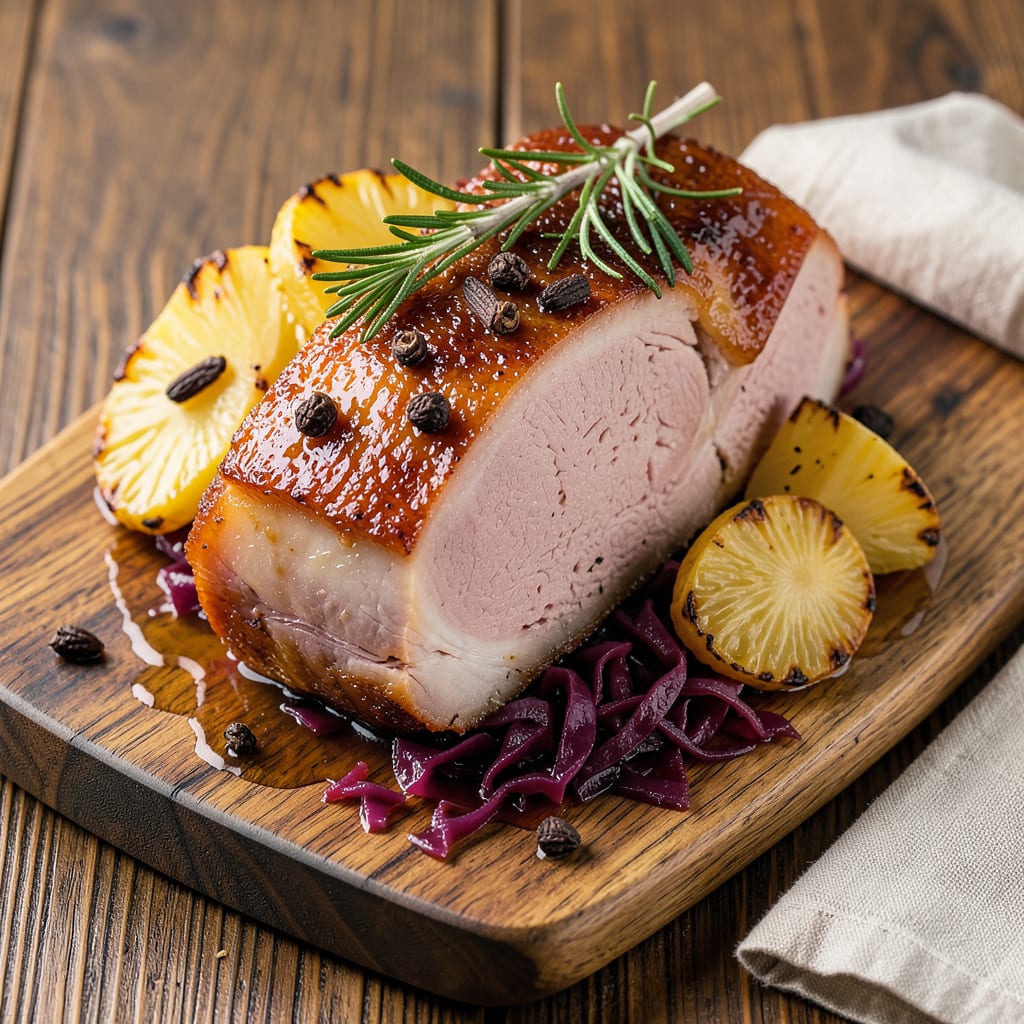
To warm honey baked ham, place it cut-side down in a 275°F oven for 10-12 minutes per pound, covered with foil to retain moisture. Add glaze in the last 30 minutes for caramelization without drying out the meat.
This method works because the gentle, consistent heat allows the ham’s natural juices to redistribute evenly throughout the meat. 🔥 I’ve found that starting with the cut side down prevents the exposed surface from drying out while the foil creates a steamy environment that mimics the original baking process. The timing for adding the glaze is crucial—too early and it burns, too late and it won’t properly adhere to create that signature sticky-sweet crust.
The low temperature is particularly important for pre-cooked hams, as it prevents the proteins from tightening up and squeezing out moisture. ✨ This approach maintains that tender, melt-in-your-mouth quality that makes honey baked ham so special, while still allowing the edges to develop just enough caramelization for textural contrast.
💡 In This Article
- Why Low and Slow Heat Preserves Honey Baked Ham Quality
- Step-by-Step Guide to Reheating Honey Baked Ham with Glaze
Why Low and Slow Heat Preserves Honey Baked Ham Quality
Honey baked ham’s magic lies in its delicate balance of proteins and fats that respond dramatically to temperature changes. At 275°F, the collagen in the ham begins to soften without breaking down completely—this is the sweet spot where connective tissues relax just enough to keep the meat tender without turning mushy.
Higher temperatures (above 325°F) cause the proteins to contract violently, squeezing out precious juices like a wrung-out sponge. 🔥
The fat distribution in honey baked ham plays a crucial role too. Those beautiful marbled streaks of fat melt gradually at lower temperatures, basting the meat from within as they liquefy. At 275°F, this process happens over 10-12 minutes per pound, giving the rendered fat time to coat each fiber evenly.
Compare this to 350°F where the outer layers cook too quickly, creating a moisture barrier that traps steam inside—resulting in that dreaded “ham sauna” effect where the center turns soggy while the edges dry out. ✨
Here’s what most people miss about the foil covering: it creates a 90-95% humidity environment inside that package. This humidity level is perfect for preventing moisture loss while still allowing gentle heat penetration. The foil also reflects radiant heat back onto the ham’s surface, creating an even cooking environment that mimics commercial smokehouses.
Without this protection, you’d lose about 20-25% of the ham’s weight in moisture evaporation during reheating.
The timing for adding glaze isn’t arbitrary—it’s based on sugar chemistry. Honey and brown sugar (common glaze bases) begin caramelizing at 320°F, but they burn at 350°F+. By adding the glaze only in the last 30 minutes, you give the sugars time to transform into that glossy, crackly crust without crossing into bitter territory.
The residual heat from the ham itself helps set the glaze as it rests, creating that perfect sticky-sweet finish. 💫
What I love about this method is how it respects the ham’s original cooking process. Most honey baked hams are smoked for 8-12 hours at 180-225°F—your reheating temperature should stay in that same gentle range.
This continuity prevents thermal shock to the meat fibers, maintaining that signature “falls apart at the touch of a fork” texture. The slow approach also gives you a 2-hour window of perfect doneness, unlike high-heat methods where you’ve got about 15 minutes before it overcooks. ⚡
Consider the fat cap too—it acts like a natural basting system. As it renders slowly, those juices drip down through the meat, carrying flavor with them. At higher temps, this fat would render too quickly and pool at the bottom of your pan instead of infusing the ham.
The cut-side-down position ensures these juices get absorbed back into the meat rather than evaporating away. This is why you’ll notice professional pitmasters always talk about “fat cap up” during initial cooking but “cut side down” for reheating—it’s all about moisture management. 🌟
Pro tip: If you’re working with a spiral-cut ham, that increased surface area means it’s more susceptible to drying. Reduce your reheating time by about 2 minutes per pound and consider adding 1/4 cup of apple juice or broth to the pan before covering with foil.
This creates just enough steam to compensate for the additional exposed edges without making the ham soggy.

Trained in classic French technique but raised on slow-cooked ribs and spicy rubs, she blends culinary skill with smoke and soul.
- Sanjeev Kapoor Egg Biryani Recipe: Fragrant Spiced Rice With Boiled Eggs - October 3, 2026
- Recipe for French Pork Spread Gorton: Savory Gallic Flavors in a Spreadable Delight - October 3, 2026
- Recipe for Pan Fried: Golden Crust with Savory Depth - October 3, 2026