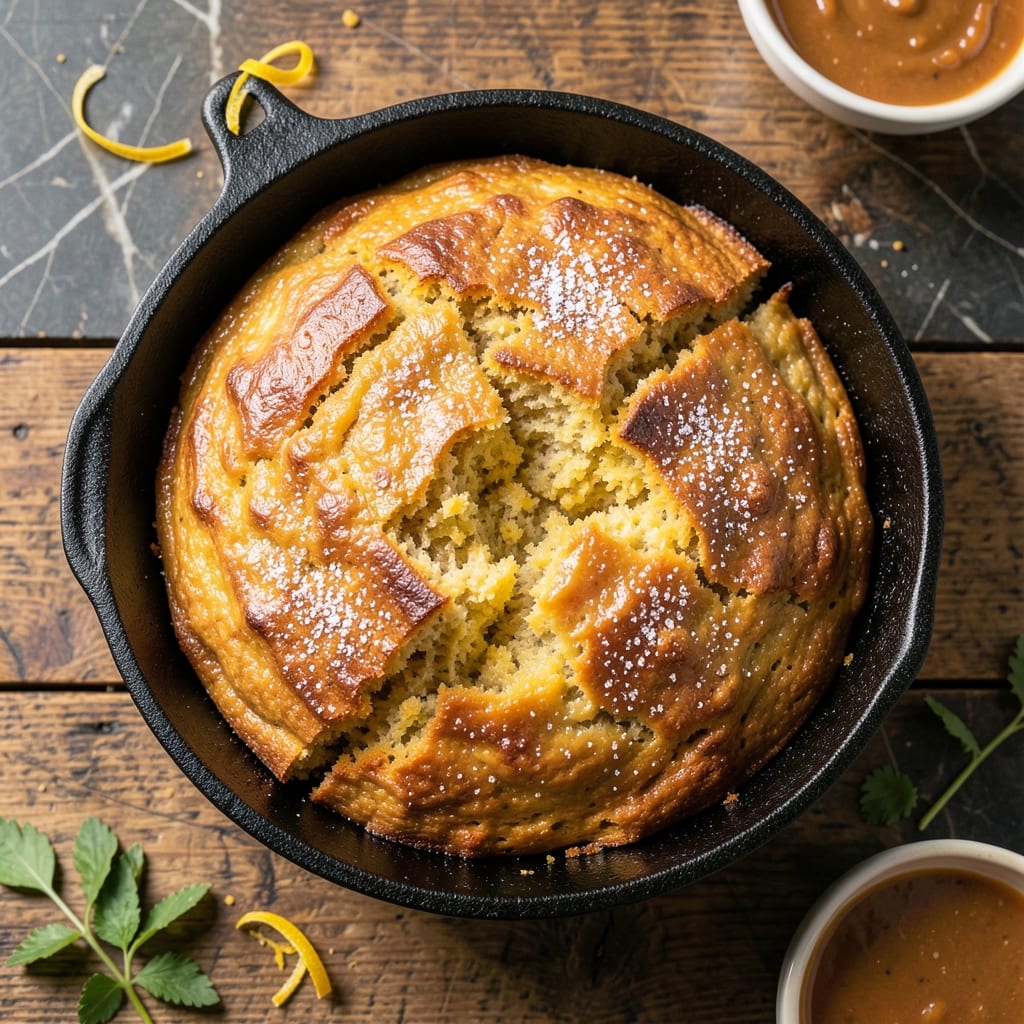
This recipe delivers the moist, tender crumb that defines authentic Southern cornbread. I developed it after testing countless versions that came out dry or dense, determined to nail that perfect texture.
The secret lies in the ratio of wet to dry ingredients and precise baking time. Using buttermilk and melted butter creates a rich, velvety batter that bakes into a classic golden loaf with just the right amount of crumble.
You’ll love how the edges develop a slight crust while the center stays wonderfully soft. This method ensures consistent results every time, whether you’re baking for a crowd or just a cozy family dinner.
Serve it warm with butter or alongside your favorite Southern dishes. This is cornbread the way it was meant to be.
Ingredients for Wet Cornbread
Nine simple ingredients for that perfect moist, crumbly Southern classic you crave.
| Ingredient | Amount | Notes |
|---|---|---|
| Yellow Cornmeal 🌽 | 1 ½ cups | Fine or medium grind |
| All-Purpose Flour 🌾 | ¾ cup | Sifted for lighter texture |
| Granulated Sugar 🍚 | ¼ cup | Adjust for sweetness preference |
| Baking Powder 🧂 | 1 tbsp | Ensures proper rise |
| Baking Soda 🧂 | ½ tsp | Balances acidity in buttermilk |
| Salt 🧂 | 1 tsp | Kosher or sea salt |
| Buttermilk 🥛 | 1 ½ cups | Full-fat for richness |
| Large Eggs 🥚 | 2 whole | Room temperature preferred |
| Unsalted Butter 🧈 | ½ cup | Melted and cooled slightly |
| Vanilla Extract 🌿 | 1 tsp | Pure extract for best flavor |
[recipe_ingredient_scaler]
The buttermilk is non-negotiable here—full-fat from a trusted brand like Organic Valley or your local dairy gives that signature tang and moisture. Cornmeal should be fresh (check the date on the bag) and fine or medium grind. I always grab mine from Bob’s Red Mill or the bulk bins at Whole Foods. The butter? Melt it just until liquid, but don’t let it get hot—cool slightly before mixing in.
No buttermilk? Stir 1.5 tbsp lemon juice or vinegar into regular milk and let sit for 5 minutes. Swap the cornmeal for stone-ground if you want a grittier texture (it’ll soak up more liquid). Out of baking powder? Double the baking soda and add an extra tablespoon of buttermilk. The sugar can be reduced or replaced with honey (same amount) if you prefer.
Baked cornbread keeps wrapped at room temperature for 2 days, or freeze slices for up to 3 months. Reheat wrapped in foil at 350°F for 10 minutes—tastes fresh from the oven. Leftovers? Perfect for stuffing or crumbled over chili.
Why You’ll Love This Recipe
- One Bowl Wonder: I just dump the cornmeal, flour, sugar, and levers in a bowl—no mixer, no fuss, and it still turns out tender every time.
- Sweet & Moist: The sugar caramelizes just enough to give a subtle sweetness while the wet batter bakes up crazy moist.
- Breakfast or Supper: I serve it with honey butter at breakfast or alongside chili at dinner—it works for both.
- Stretches the Budget: A pound of cornmeal and a handful of pantry staples feed my whole family for pennies. Honestly, it’s my cheapest comfort food.
Step-by-Step Instructions for Wet Cornbread
Here’s the method that guarantees that perfect moist, crumbly texture Southern cooks swear by.
Step 1: Combine Dry Ingredients for Even Distribution
In a large bowl, whisk together the 1.5 cups Yellow Cornmeal, 0.75 cup All-Purpose Flour, 0.25 cup Granulated Sugar, 1 tbsp Baking Powder, 0.5 tsp Baking Soda, and 1 tsp Salt. I always sift the flour first for a lighter texture, but the whisking step ensures everything blends evenly.
This step is crucial—it prevents pockets of baking powder or salt in your finished cornbread. You want every bite to have that perfect balance of sweetness and rise. Take your time here; it only takes a minute but makes all the difference.
Step 2: Whisk Wet Ingredients Until Smooth
In a separate bowl, beat the 2 whole Large Eggs lightly, then whisk in the 1.5 cups Buttermilk, melted 0.5 cup Unsalted Butter, and 1 tsp Vanilla Extract. The buttermilk should be full-fat for that rich, tangy flavor that defines wet cornbread.
I make sure the melted butter has cooled slightly so it doesn’t cook the eggs. The mixture will look slightly lumpy at first, but keep whisking until it’s smooth. This creates a uniform batter that bakes evenly, with no dry spots or overmixed patches.
Step 3: Fold Wet and Dry Mixtures Together Gently
Pour the wet ingredients into the dry ingredients and fold them together with a spatula. Here’s the thing—I stop mixing as soon as the dry ingredients are just incorporated. You’ll see a few lumps, but that’s perfect. Overmixing develops gluten, which makes the cornbread tough instead of tender.
The batter will be thick but pourable. If it seems too stiff, resist the urge to add more liquid—this consistency is what gives wet cornbread its signature moist crumb. Just trust the process; it’ll bake up beautifully.
Step 4: Bake Until Golden and Springy
Pour the batter into a greased 8×8-inch or 9×9-inch baking dish. I like to use a cast-iron skillet for an extra-crispy crust, but any oven-safe dish works. Preheat your oven to 375°F and bake for 25-30 minutes, or until the top is golden brown and a toothpick inserted in the center comes out clean.
Real talk: the toothpick test is your best friend here. If it comes out with wet batter, give it another 3-5 minutes. You’ll notice the edges start to pull away from the pan when it’s done—another great visual cue.
Step 5: Cool Slightly Before Serving
Let the cornbread rest in the pan for 5-10 minutes before slicing. This allows it to set slightly, so it holds together when you serve it. If you cut too soon, it might crumble (though some would argue that’s part of the charm).
Serve warm, straight from the pan. The texture should be moist and slightly dense, with a tender crumb that’s just crumbly enough. This is the kind of cornbread that soaks up butter like a dream—so don’t forget to have some on hand!
Pro Tips For Making Wet Cornbread
- Preheat the Pan: Heat your cast iron or baking pan in the oven for 5 minutes before adding the batter—this guarantees a crispy crust on the outside while keeping the inside moist.
- Soak the Cornmeal: Mix the yellow cornmeal with the liquid ingredients and let it sit for 10 minutes before combining with dry ingredients; it softens the texture and prevents a gritty bite.
- Don’t Overmix: Stir the batter just until the flour disappears—overworking it makes the cornbread dense and tough, and nobody wants that.
- Use Buttermilk: Swap regular milk for buttermilk in the wet mix; it reacts with the baking soda for extra lift and adds a tangy richness that plain milk can’t.
Perfect Pairings for This wet cornbread
Classic Southern Sides
You can’t go wrong with collard greens slow-cooked with bacon and a splash of vinegar—the tanginess cuts through the cornbread’s richness. I also love serving it with black-eyed peas for a true Southern spread that feels like home. 💛
Heartier Pairings
This moist cornbread is perfect alongside smoked pulled pork or BBQ ribs. The slightly sweet crumb soaks up the smoky sauce beautifully. For a weekday meal, try it with chili—the contrast of textures is unbeatable.
Fresh and Light Options
A crisp green salad with a tangy vinaigrette balances the richness. I toss mixed greens with cherry tomatoes, cucumber, and a lemon-Dijon dressing for brightness. The acidity wakes up the palate between bites.
Breakfast Pairings
Serve slices warm with scrambled eggs and crispy bacon for a Southern-style breakfast. The cornbread’s moisture holds up well to soaking in runny yolks. Honestly, it’s my favorite way to use leftovers the next morning.
Beverage Partners
For drinks, sweet tea is a no-brainer—its cool sweetness complements the warm bread. A glass of cold buttermilk is another classic choice that’s surprisingly refreshing. For something stronger, try a bourbon old-fashioned with dinner. 🍹
Nutrition Facts
Frequently Asked Questions
Why does my cornbread turn out dry?
Overmixing the batter develops gluten, which makes it tough and dry. Also, baking too long or at too high a temperature can evaporate moisture. Stick to 375°F for 25-30 minutes.
Can I use regular milk instead of buttermilk?
Yes, but add 1.5 tbsp vinegar or lemon juice to 1.5 cups milk and let it sit for 5 minutes to mimic buttermilk’s tanginess and acidity.
How do I get a crispier crust?
Use a preheated cast-iron skillet and bake at 375°F for 25-30 minutes. The skillet’s heat creates a golden, crispy edge while keeping the center moist.
Can I make this ahead of time?
Bake it the day before, wrap tightly, and reheat at 350°F for 10 minutes. Or freeze slices for up to 3 months.

Trained in classic French technique but raised on slow-cooked ribs and spicy rubs, she blends culinary skill with smoke and soul.
- Recipe for Boneless Pork Chops in Cast Iron Skillet: Sear and Baste to Juicy Perfection - October 3, 2026
- Recipe for Boneless Cross Rib Roast: Slow-Roasted Beef with Herb Crust - October 3, 2026
- Hamburgers in Sauce Recipe Crock Pot: Slow-Cooked Savory Delight - October 3, 2026