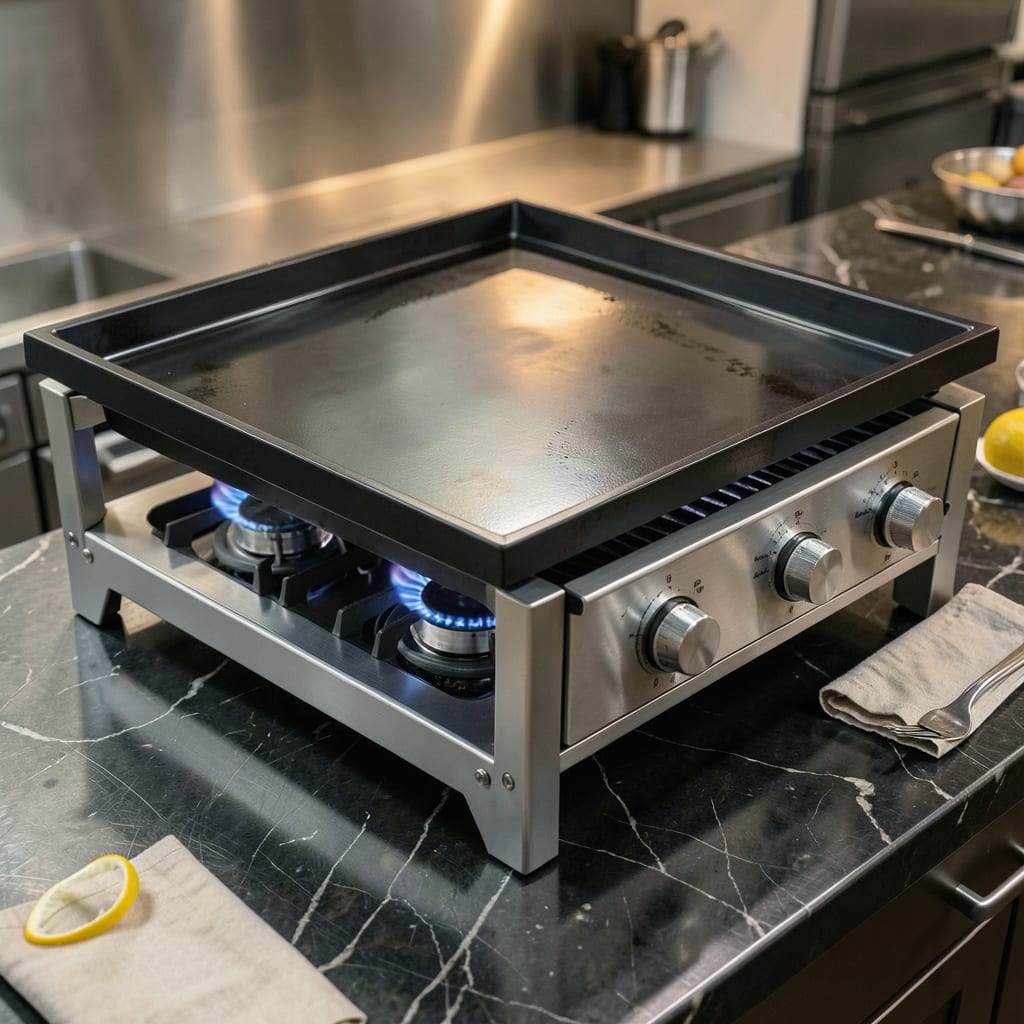
Flat top grills are primarily made of heavy-duty metals like stainless steel, cold-rolled steel, or cast iron for even heat distribution and durability. High-end models often feature chrome-plated or porcelain-coated surfaces to prevent rust and enhance cooking performance.
As a pitmaster who’s worked with countless grill types, I can tell you the material choice directly impacts your cooking results. 🔥 The thickness of the steel (often 1/4-inch to 1/2-inch) determines how well it holds heat during those crucial searing moments. Cast iron models develop that coveted seasoned patina over time, while stainless steel versions resist corrosion better in humid coastal climates. What many don’t realize is that the surface treatment—like chrome plating or porcelain enamel—can make the difference between a grill that lasts 5 years versus one that lasts 20 years with proper care.
The best flat tops I’ve used actually combine materials—like a stainless steel body with a cast iron cooking surface—to balance heat retention with durability. This hybrid approach gives you the quick recovery time of cast iron with the easier maintenance of stainless. I always recommend checking the gauge of the metal too; anything under 10-gauge might warp over high heat, which ruins that perfect flat cooking surface we all want.
💡 In This Article
- Common Materials Used in Flat Top Grill Construction
- How to Maintain Different Flat Top Grill Materials
Common Materials Used in Flat Top Grill Construction
The heart of a great flat top grill lies in its metal composition. Most commercial-grade models use 304 stainless steel (18/8 chromium-nickel alloy) because it resists corrosion from both moisture and acidic foods like tomatoes or vinegar-based marinades.
🔥 The thickness matters too—professional kitchens often use 1/4-inch to 1/2-inch plates that maintain consistent temperatures even when cooking large batches of burgers or pancakes simultaneously.
Cast iron remains the gold standard for heat retention, with its dense molecular structure holding temperatures 20-30% longer than steel alternatives. The porous surface develops a natural non-stick patina when properly seasoned, though it requires more maintenance to prevent rust.
High-end manufacturers often use ductile cast iron (with added carbon for flexibility) to reduce warping risks during extreme temperature swings from 200°F to 600°F.
Cold-rolled steel (typically 1010 or 1018 grade) offers a budget-friendly middle ground, though it’s more prone to warping without proper reinforcement. The best versions get treated with a chrome-plated finish that adds both corrosion resistance and that classic diner-style shine.
I’ve found the 0.003-inch chrome layer on quality grills lasts about 5-7 years before needing refinishing, compared to just 2-3 years on cheaper models.
Porcelain-enamel coatings (applied at 1500°F+) create a glass-like barrier that prevents food from sticking while protecting the underlying metal. This treatment works exceptionally well for outdoor grills exposed to rain and salt air. The downside?
A hard knock can chip the enamel, exposing the metal underneath to potential rust—something I learned the hard way after transporting a grill in my motorcycle sidecar!
What most home cooks don’t realize is that material thickness affects recovery time. A 3/8-inch cast iron plate might take 10-15 minutes to return to cooking temperature after loading with cold food, while a thinner 1/8-inch stainless surface recovers in 3-5 minutes.
This matters when you’re cooking for a crowd and need consistent results batch after batch. ✨
The highest-end grills I’ve tested actually use layered construction—like a stainless steel exterior with a cast iron core—to combine the benefits of both materials. This hybrid approach gives you the quick heat response of steel with the superior heat retention of cast iron.
The weight difference is noticeable though: a 36-inch cast iron top might weigh 150+ pounds, while a similar stainless version comes in around 90 pounds.
For coastal environments, marine-grade 316 stainless steel (with added molybdenum) becomes worth the investment. It costs about 30% more than standard 304 but handles salt air without pitting. I’ve seen restaurant grills made from this material still looking new after 10+ years of daily use near the ocean.
The key is checking for that “316” stamp on the underside before purchasing. 🌟

Trained in classic French technique but raised on slow-cooked ribs and spicy rubs, she blends culinary skill with smoke and soul.
- Recipe for Boneless Pork Chops in Cast Iron Skillet: Sear and Baste to Juicy Perfection - October 3, 2026
- Recipe for Boneless Cross Rib Roast: Slow-Roasted Beef with Herb Crust - October 3, 2026
- Hamburgers in Sauce Recipe Crock Pot: Slow-Cooked Savory Delight - October 3, 2026