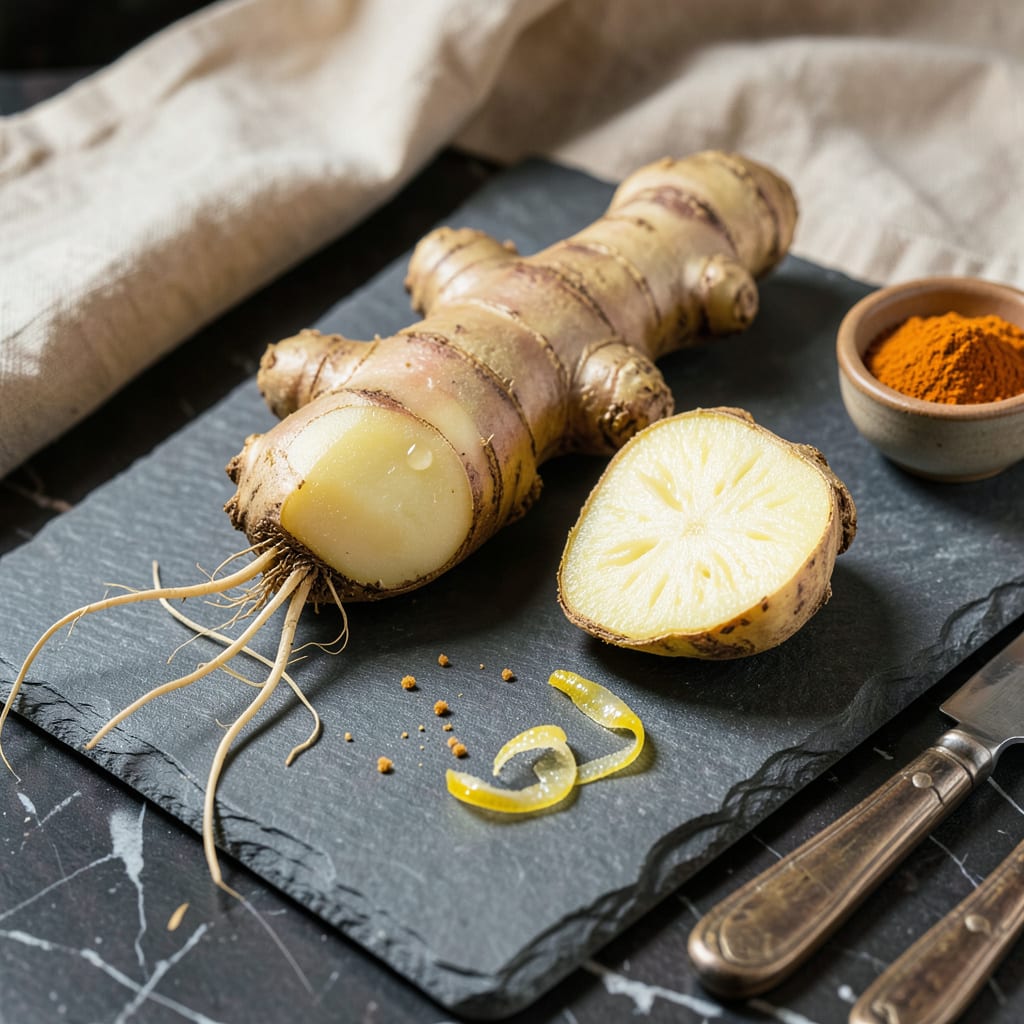
Fresh ginger root has a light brown to tan skin with a pale yellow to ivory interior, sometimes with faint blue-purple rings near the edges. Dried ginger turns darker brown and loses its vibrant inner color.
When I’m selecting ginger at the market, I always look for that telltale light tan skin—it should feel smooth and tight, not wrinkled. The inside reveals the real story: bright yellow flesh means peak freshness, while those subtle purple-blue streaks near the edges actually come from natural anthocyanin pigments. 🔥
Drying transforms ginger completely. The moisture loss concentrates flavors but darkens the skin to a deep mahogany, while the interior fades to a dull beige. This color shift happens because the same compounds that give fresh ginger its vibrancy oxidize during dehydration.
💡 In This Article
- Why Fresh Ginger Root Changes Color When Dried
- How to Pick the Best Ginger Root by Color and Texture
Why Fresh Ginger Root Changes Color When Dried
The transformation from fresh to dried ginger is all about moisture and oxidation. Fresh ginger contains about 80% water, which keeps its skin light tan and interior vibrant yellow. When dehydrated, that moisture evaporates, causing the skin to darken to a deep mahogany brown as natural sugars caramelize.
The interior fades to beige because the water-soluble pigments (like gingerols) concentrate and oxidize. 🔥
Here’s what’s actually happening at the molecular level: Fresh ginger’s yellow hue comes from curcuminoids and gingerols, while those faint blue-purple rings are anthocyanins. During drying, these compounds break down and react with oxygen. The anthocyanins degrade first, losing their purple tint, while the gingerols polymerize into darker brown pigments.
This is why dried ginger looks uniformly brown inside and out—it’s essentially “cooked” by dehydration.
The drying process also affects texture and flavor concentration. Fresh ginger’s fibrous structure becomes brittle as moisture leaves, which is why dried ginger grinds into powder so easily. I’ve noticed that ginger dried at lower temperatures (120°F) retains slightly more yellow undertones than high-heat dried versions, which turn nearly black.
The color change isn’t just visual—it signals flavor transformation too. ✨
What most people don’t realize is that the color shift serves a purpose. The darker pigments in dried ginger develop during the Maillard reaction (the same process that browns steak), creating deeper, warmer flavors. That’s why ground ginger tastes more intense than fresh—the color change mirrors the flavor concentration.
The next time you see that deep brown powder, you’re actually looking at concentrated ginger essence.
For comparison, think of how apples turn brown when sliced: similar oxidation processes are at work. But with ginger, we intentionally harness this transformation. The controlled drying process (whether sun-dried or commercially dehydrated) ensures the color develops evenly. Properly dried ginger should be uniformly brown without black spots, which would indicate scorching or mold. 💫
This color metamorphosis explains why recipes specify fresh vs. dried ginger—they’re essentially different ingredients. Fresh ginger’s bright color means milder, fresher notes, while dried ginger’s dark hue signals concentrated warmth.
The next time you’re shopping, look for fresh ginger with minimal wrinkling (a sign of moisture loss beginning) and dried ginger with consistent coloring (no pale patches, which indicate uneven drying).

Trained in classic French technique but raised on slow-cooked ribs and spicy rubs, she blends culinary skill with smoke and soul.
- Recipe for Boneless Pork Chops in Cast Iron Skillet: Sear and Baste to Juicy Perfection - October 3, 2026
- Recipe for Boneless Cross Rib Roast: Slow-Roasted Beef with Herb Crust - October 3, 2026
- Hamburgers in Sauce Recipe Crock Pot: Slow-Cooked Savory Delight - October 3, 2026