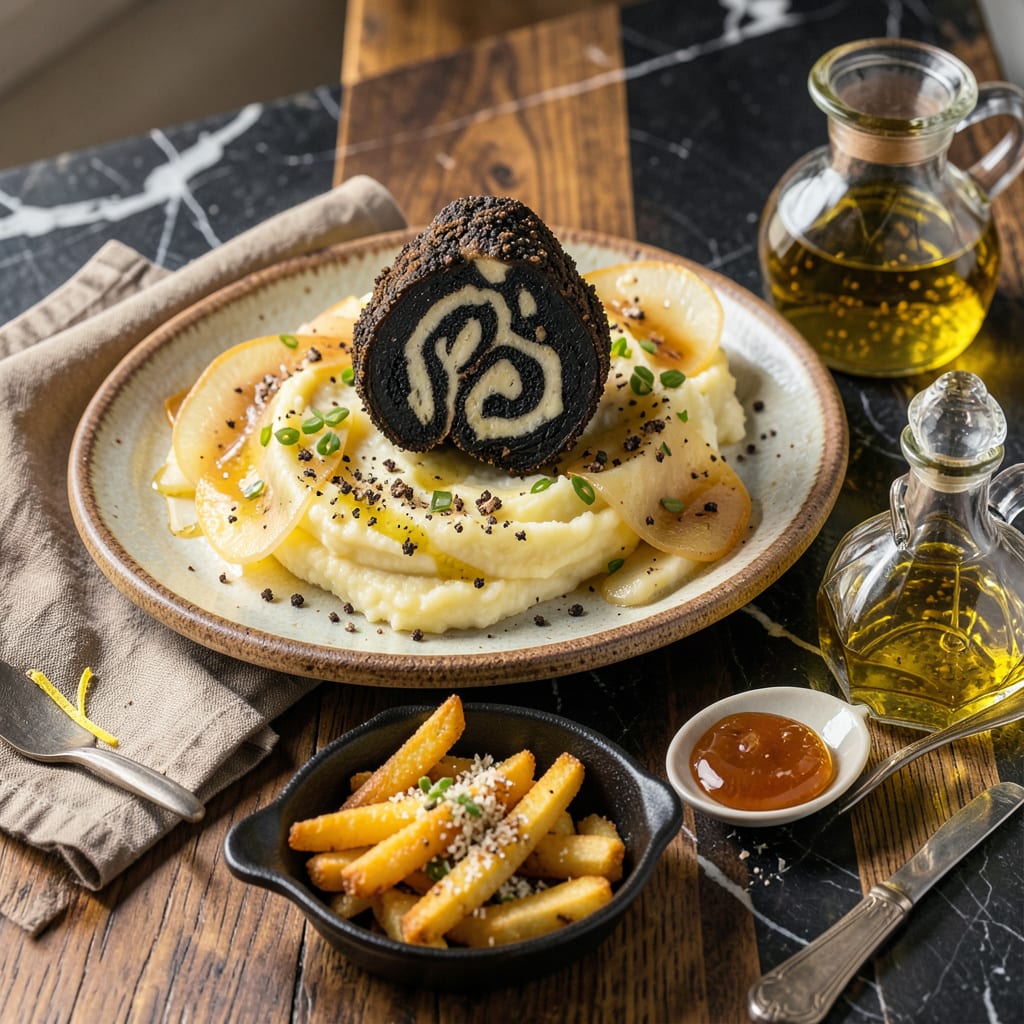
Black truffles command high prices due to their extreme rarity, labor-intensive harvesting with trained dogs or pigs, short seasonal availability, and the intricate symbiotic growth conditions required underground near tree roots.
I’ve seen firsthand how these underground gems defy mass production. Unlike cultivated crops, black truffles form delicate partnerships with specific tree roots—often oak or hazelnut—demanding perfect soil chemistry and climate conditions. 💫 Even with modern science, farmers can’t force this relationship, making each harvest a gamble. The seasonal window is brutally short, typically just 3-4 months per year, and trained animals (yes, pigs have better noses than machines!) must sniff out the mature truffles without damaging them. This isn’t just farming; it’s a high-stakes treasure hunt where nature holds all the cards.
💡 In This Article
- The Unique Growing Conditions Behind Black Truffle Rarity
- How Black Truffle Pricing Works in Global Markets
The Unique Growing Conditions Behind Black Truffle Rarity
Black truffles form an extraordinary underground partnership with tree roots—primarily oak, hazelnut, or beech. This isn’t just proximity; it’s a mycorrhizal relationship where the fungus exchanges nutrients like phosphorus for sugars from the tree. The soil must be perfectly alkaline (pH 7.5-8.3) with excellent drainage, and the climate needs distinct seasonal shifts. Too much rain?
The truffles rot. Too dry? They won’t develop. This Goldilocks scenario explains why even “truffle farms” have only 30-50% success rates after years of preparation. 🌱
The maturation timeline adds another layer of complexity. From spore to harvestable truffle takes 5-7 years—if conditions remain ideal the entire time. Unlike mushrooms that fruit above ground, truffles develop entirely underground, making their growth progress invisible.
Farmers must rely on subtle signs like “burnt” patches of grass (where truffles release chemicals) or the behavior of trained animals. Even then, only 10-20% of suspected spots yield usable truffles during harvest season. ⚡
What makes this even more frustrating is that science can’t fully replicate the process. While researchers have mapped the truffle genome, the symbiotic relationship with trees involves hundreds of chemical signals we don’t yet understand.
Attempts at lab cultivation produce truffles lacking the complex aroma profile—like growing a tomato that looks perfect but tastes like cardboard. The underground ecosystem is so delicate that even successful farms see 20-30% annual variability in yield based on microclimate shifts. 💫
Consider the harvest window: just 3-4 months annually (typically November to March). During this period, teams with trained dogs (pigs are now rare due to their tendency to eat the truffles!) work at dawn when the aroma is strongest. Each truffle must be hand-dug with special tools to avoid damage.
A single mature truffle might represent 7 years of unseen growth—and if harvested too early or late, its value plummets. This isn’t agriculture; it’s more like mining for biological diamonds where nature sets all the rules. ✨
The climate change factor adds another wrinkle. Rising temperatures and erratic rainfall patterns are shrinking traditional truffle regions in France and Italy. Some areas that produced for centuries now yield nothing, while new microclimates emerge in unexpected places like the UK or Tasmania. This geographic instability makes long-term planning nearly impossible.
When a truffle bed does produce, the harvest might be 80% smaller than the previous year without warning. 🔥
Here’s the kicker: even when everything aligns perfectly, a single black truffle weighs on average just 20-60 grams. To gather one kilogram (about 2.2 pounds), harvesters might need to collect 50-100 individual truffles over weeks of searching. Compare that to cultivated mushrooms where the same weight can be grown in days under controlled conditions.
This combination of time, uncertainty, and labor intensity is why black truffles will likely never be “affordable” in the conventional sense. 💛

Trained in classic French technique but raised on slow-cooked ribs and spicy rubs, she blends culinary skill with smoke and soul.
- Recipe for Boneless Pork Chops in Cast Iron Skillet: Sear and Baste to Juicy Perfection - October 3, 2026
- Recipe for Boneless Cross Rib Roast: Slow-Roasted Beef with Herb Crust - October 3, 2026
- Hamburgers in Sauce Recipe Crock Pot: Slow-Cooked Savory Delight - October 3, 2026