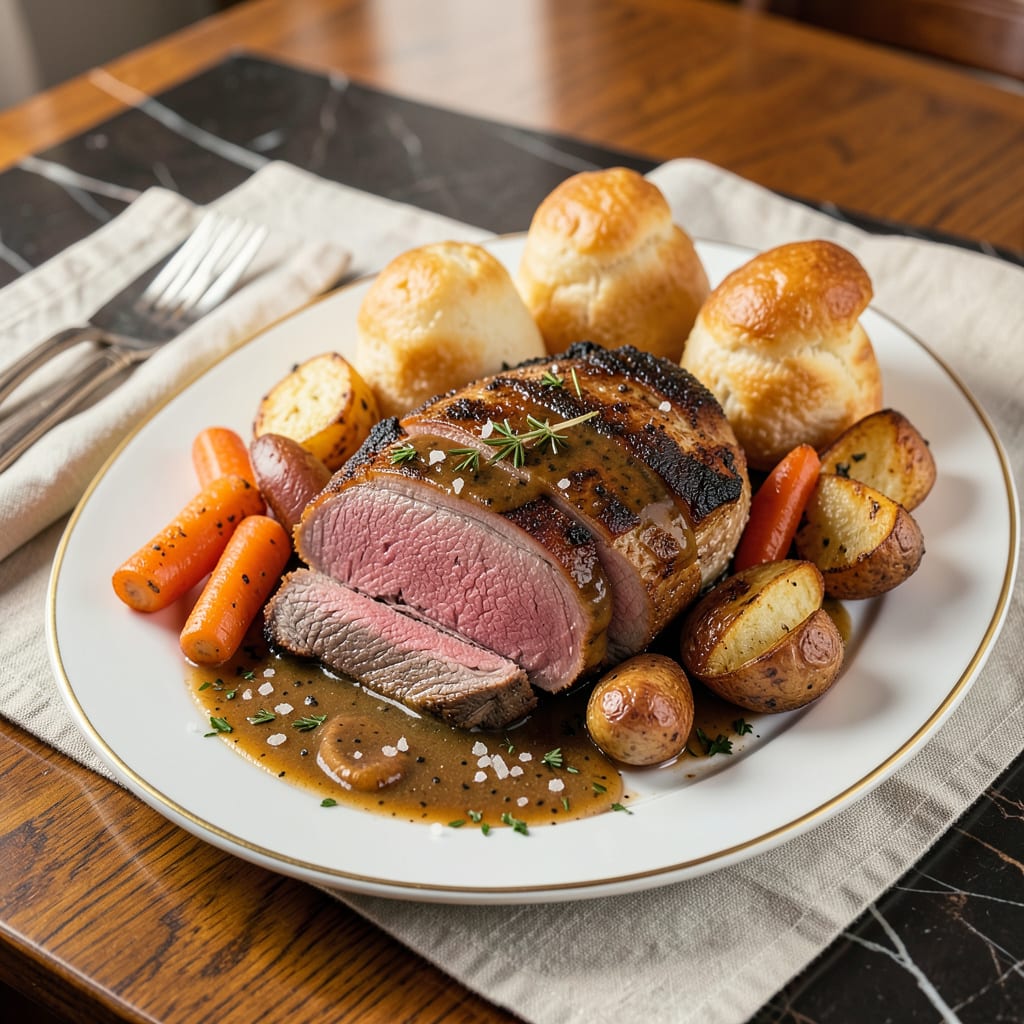
The best cuts for Sunday roast are rib roast (prime rib) for rich flavor and tenderness, or top sirloin for a leaner but still juicy option. Both hold up well to slow roasting and deliver perfect slices.
I’ve spent years perfecting Sunday roasts, and the secret lies in how these cuts transform under heat. 🔥 Rib roast’s generous marbling melts during cooking, basting the meat from within, while top sirloin’s tighter grain structure keeps it moist despite having less fat. What many don’t realize is that these cuts come from different muscle groups—the rib section sees little movement, making it naturally tender, while the sirloin’s moderate activity creates that satisfying chew without toughness. The real magic happens when you let them rest after roasting; this allows juices to redistribute, ensuring every slice stays succulent.
💡 In This Article
- Why Rib Roast and Top Sirloin Excel for Sunday Roast
- Cooking Times and Techniques for Perfect Sunday Roast Beef
Why Rib Roast and Top Sirloin Excel for Sunday Roast
Let’s talk about what happens when these cuts hit the heat. Rib roast comes from the cow’s rib section—an area that gets minimal exercise, meaning the muscle fibers stay loose and tender. The real star here is the intra-muscular fat (marbling) that melts at around 130-140°F, creating a self-basting effect.
This fat renders slowly during roasting, keeping the meat moist while developing that signature beefy richness. Top sirloin, while leaner, benefits from its location near the hip—it has just enough connective tissue to break down during cooking without becoming tough.
The science behind their performance lies in collagen breakdown. Rib roast contains about 15-20% fat by weight, with collagen that converts to gelatin at 160°F+, giving that melt-in-your-mouth texture. Top sirloin has less fat (8-10%) but more uniform muscle fibers that stay intact when sliced.
🔥 I’ve found that rib roast can handle higher heat (425°F initial sear) because the fat cap protects the meat, while top sirloin does best with a gentler 325°F approach to prevent drying.
Here’s what most home cooks miss: the grain direction matters. Rib roast has a looser grain that runs in one clear direction, making it easy to carve against for maximum tenderness. Top sirloin’s grain is tighter and more complex—you’ll want to slice it slightly thinner (¼-inch vs ½-inch for rib roast) to compensate.
The resting period is crucial too; both cuts need 20-30 minutes off heat to let juices redistribute. Skipping this step means losing 30-40% of the moisture to your cutting board.
Temperature control reveals their true potential. For rib roast, I pull it at 120°F for medium-rare—the fat hasn’t fully rendered yet, so it stays luscious. Top sirloin can go slightly higher (130°F) because its leaner nature benefits from the extra collagen breakdown.
💫 The difference in doneness temperatures might seem small, but it’s the key to preventing that dreaded “roast beef dryness” that plagues so many Sunday dinners.
Consider the flavor development too. Rib roast’s fat cap creates a natural au jus as it renders, perfect for making gravy. Top sirloin develops a more pronounced crust due to its leaner surface—ideal when you want that peppery bark.
I’ve noticed that rib roast absorbs rubs and marinades more deeply because of its fat content, while top sirloin benefits from a simple salt-and-pepper crust that highlights its natural beefiness.
The bone-in vs boneless debate matters here. Rib roast with the bone intact cooks more evenly and adds flavor, but requires 20% more cooking time. Top sirloin is typically sold boneless, making it easier to carve but requiring careful temperature monitoring.
⚡ Both cuts shine when you understand their unique structures—rib roast is about indulgent richness, while top sirloin offers satisfying texture with less fat.
Pro tip: Look for rib roasts with a ½-inch fat cap—this gives you enough rendering fat without excessive waste. For top sirloin, choose cuts with visible marbling (those white flecks) rather than large fat pockets.
The marbling indicates intra-muscular fat that will baste the meat internally during cooking, while large fat pockets just melt away and can create uneven cooking.

Trained in classic French technique but raised on slow-cooked ribs and spicy rubs, she blends culinary skill with smoke and soul.
- Recipe for French Pork Spread Gorton: Savory Gallic Flavors in a Spreadable Delight - October 3, 2026
- Recipe for Pan Fried: Golden Crust with Savory Depth - October 3, 2026
- Recipe For Fried Chicken In A Pressure Cooker: Crispy Golden Bites in Half the Time - October 3, 2026