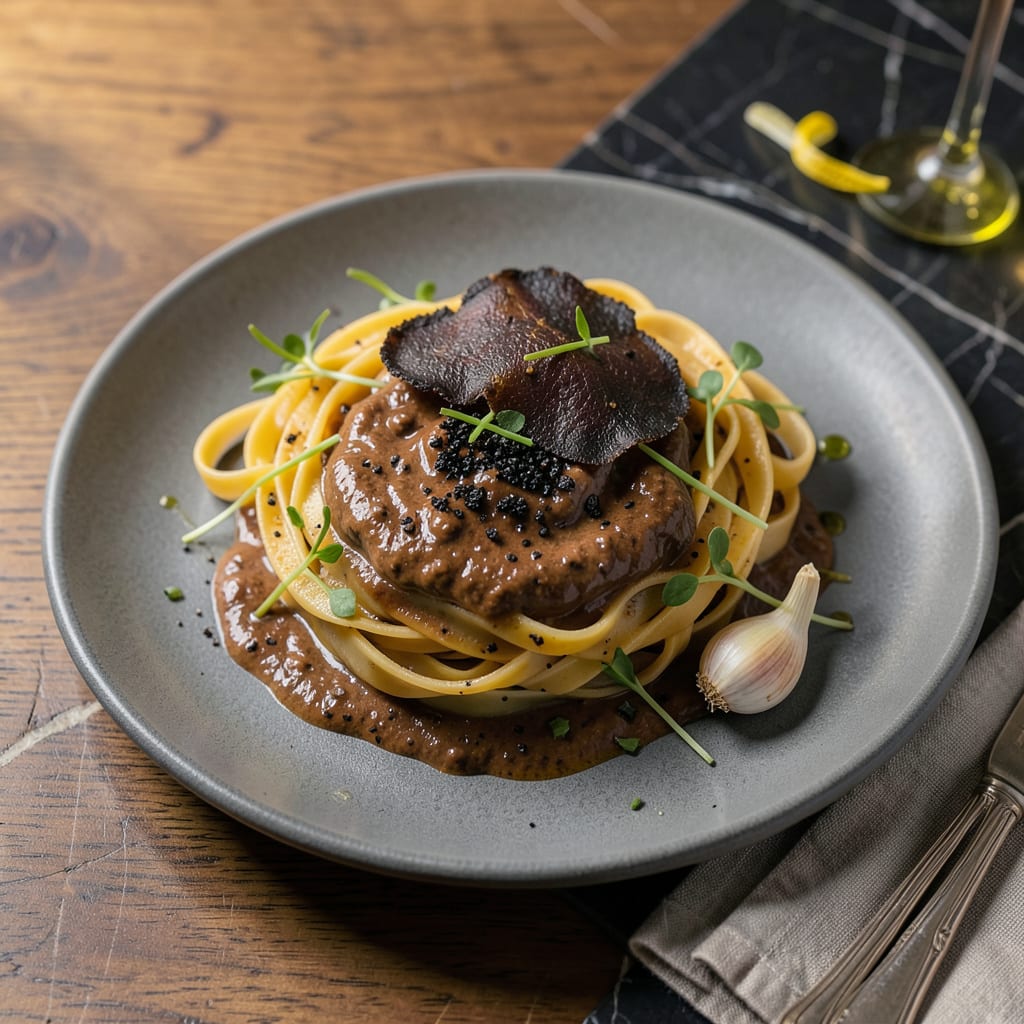
Truffle sauce delivers an intense, earthy richness with garlicky, umami depth and subtle mushroom undertones. The flavor is luxurious and slightly nutty, often balanced by creamy or buttery notes that enhance its bold complexity.
This isn’t your average condiment—it’s a culinary powerhouse that transforms dishes with its layered sophistication. 🔥 The secret lies in how truffles develop their aroma underground, absorbing minerals and organic compounds that create that signature depth. When I first tasted it drizzled over seared scallops, I was amazed by how the sauce’s funky elegance cut through the sweetness while adding a velvety finish. The best versions strike a delicate balance, where the truffle’s muskiness doesn’t overwhelm but instead lingers like a well-aged wine’s finish.
💡 In This Article
- Decoding Truffle Sauce’s Complex Flavor Profile
- Perfect Pairings and Uses for Truffle Sauce
Decoding Truffle Sauce’s Complex Flavor Profile
The magic starts with the truffle itself—specifically the volatile organic compounds like 2,4-dithiapentane and dimethyl sulfide that develop as truffles mature underground. These compounds create that signature earthy, garlicky aroma that hits your nose before the sauce even touches your tongue.
Black truffles (Tuber melanosporum) bring deeper, more robust notes with hints of chocolate and wet soil, while white truffles (Tuber magnatum) offer a lighter, more delicate profile with floral and honeyed undertones. The difference comes down to their growing conditions—black truffles thrive in limestone-rich soil, absorbing minerals that intensify their muskiness.
When transformed into sauce, the truffle’s compounds interact with fats and liquids in fascinating ways. A classic truffle cream sauce, for example, uses heavy cream reduced by 30-40% to concentrate flavors while the fat molecules bind with the truffle’s aromatic compounds, making them more potent.
I’ve found that adding truffle oil at the end (rather than cooking it) preserves those delicate volatiles—heat above 140°F can degrade them. The best sauces also incorporate a touch of acid (like white wine or lemon) to brighten the richness and prevent the flavor from becoming one-dimensional.
Here’s what most people miss: the umami explosion in truffle sauce comes from naturally occurring glutamates and 5′-nucleotides in truffles. These compounds trigger our umami receptors up to 15 times more intensely than MSG.
When paired with dairy fats, they create a synergistic effect that makes the sauce taste even richer than the sum of its parts. That’s why a simple truffle butter sauce can make a $12 steak taste like a $50 dry-aged ribeye—the glutamates enhance the meat’s own savory notes while adding that luxurious truffle depth.
The texture plays a crucial role too. A properly emulsified truffle sauce should coat the back of a spoon at 160-180°F, creating a velvety mouthfeel that carries the flavors.
I like to finish with a splash of pasta water or stock to adjust the viscosity—too thick and the truffle notes get muted; too thin and they disperse too quickly.
The ideal consistency lets the sauce cling to food just long enough for the flavors to unfold in layers: first the creamy richness, then the earthy truffle, finally the lingering umami finish. ✨
Terroir matters more than you’d think. Truffles from Piedmont, Italy, develop more floral notes due to the region’s calcareous clay soil, while those from Périgord, France, tend toward deeper, meatier flavors from the iron-rich earth. This is why two truffle sauces made with the same recipe can taste dramatically different.
The age of the truffle matters too—fresh truffles (used within 5-7 days) offer brighter, more complex aromas, while preserved truffles (oil or brine-packed) deliver a more concentrated, one-note intensity.
Pro tip: If you’re working with truffle oil, look for brands that list “real truffle” (Tuber species) as the first ingredient. Many commercial oils use synthetic 2,4-dithiapentane—it smells convincing but lacks the nuanced depth of real truffle compounds.
The difference is like comparing a fresh garlic clove to garlic powder: both deliver flavor, but one has soul.
When I’m testing a new truffle product, I always do a side-by-side taste with a plain cream sauce—real truffle will develop and change on your palate, while artificial versions hit you with a one-dimensional punch and fade fast. 💫
Finally, consider the base: butter-based sauces highlight the truffle’s nutty side, while wine-reduced versions accentuate its fruity undertones. A beurre blanc with truffle shavings folded in at the end preserves those delicate aromatics, while a red wine reduction with truffle oil can stand up to bold meats like venison.
The key is matching the sauce’s intensity to your dish—delicate seafood needs a lighter touch, while robust meats can handle a more aggressive truffle presence.

Trained in classic French technique but raised on slow-cooked ribs and spicy rubs, she blends culinary skill with smoke and soul.
- Recipe for Boneless Pork Chops in Cast Iron Skillet: Sear and Baste to Juicy Perfection - October 3, 2026
- Recipe for Boneless Cross Rib Roast: Slow-Roasted Beef with Herb Crust - October 3, 2026
- Hamburgers in Sauce Recipe Crock Pot: Slow-Cooked Savory Delight - October 3, 2026