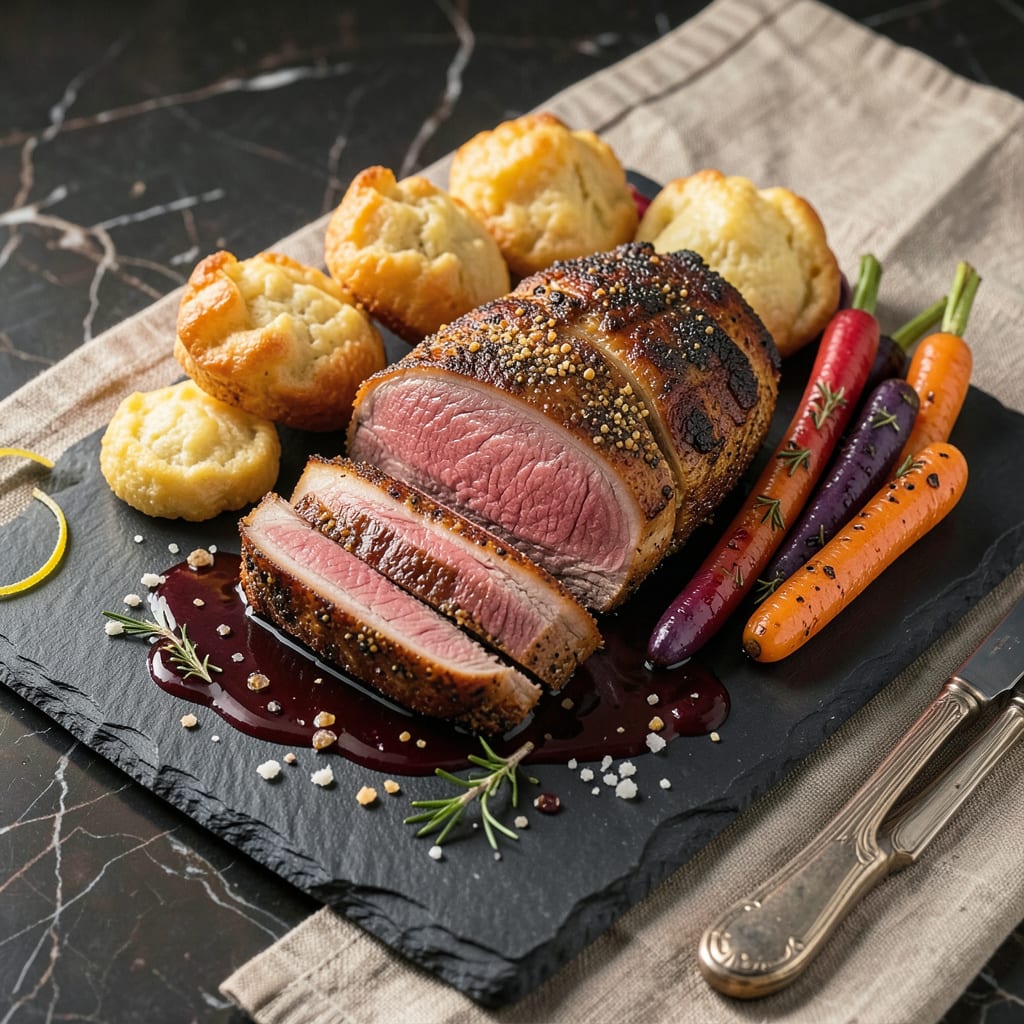
Roast beef is typically made from larger, well-marbled cuts like top round, sirloin tip, rib roast, or tenderloin. These cuts come from the cow’s hindquarters or rib section, offering ideal tenderness and flavor for slow-roasting.
I’ve spent years experimenting with different beef cuts, and what makes these selections special is their balance of connective tissue and fat distribution. The top round and sirloin tip deliver leaner profiles that still stay juicy when cooked low and slow, while rib roast brings that signature buttery richness from its fat cap. 🔥 What most home cooks don’t realize is that the muscle location determines how the fibers break down during cooking – hindquarter cuts like these have just the right amount of connective tissue to transform into gelatin, creating that melt-in-your-mouth texture we all love in perfect roast beef.
💡 In This Article
- Best Beef Cuts for Roast Beef and Their Characteristics
- How to Choose and Prepare the Perfect Roast Beef Cut
Best Beef Cuts for Roast Beef and Their Characteristics
The magic of roast beef starts with understanding muscle structure and fat distribution. Cuts from the hindquarters (like top round and sirloin tip) have dense muscle fibers that break down beautifully during slow cooking, while rib section cuts (like rib roast) offer more intramuscular fat that bastes the meat from within.
The top round, with its uniform shape and 3-5% fat content, becomes fork-tender when roasted at 275°F for 3-4 hours, as the collagen converts to gelatin. 🔥
Compare that to the rib roast, which boasts 15-20% fat marbling and that iconic fat cap. This higher fat percentage means it can handle higher heat (325-350°F) without drying out, developing a richer crust while staying juicy inside.
The sirloin tip sits between these extremes with 8-10% fat, offering a balance of leanness and flavor that works well for both oven roasting and slow cooker methods. What’s fascinating is how these fat percentages directly correlate with ideal cooking temperatures and times.
Then there’s the tenderloin, the most tender cut with minimal connective tissue. Its 2-4% fat content means it cooks faster (20-25 minutes at 425°F) but requires precise timing to avoid overcooking. I’ve found that wrapping it in bacon or brushing with butter helps compensate for its leanness.
The key difference between these cuts isn’t just flavor—it’s how their muscle structure responds to heat. Hindquarter cuts need low-and-slow to break down their fibers, while rib cuts can handle more aggressive heat. ✨
Here’s what most butchers won’t tell you: the grain direction matters as much as the cut itself. Cuts from the round have tighter grain that benefits from slicing against the fiber after cooking, while rib cuts have looser grain that’s more forgiving.
The bone-in vs. boneless debate also plays a role—bone-in roasts cook about 15% faster due to heat conduction through the bone, but boneless versions offer more even slicing for sandwiches. 💫
For those watching fat content, the top round delivers only 160 calories per 3 oz serving compared to rib roast’s 250 calories for the same portion. But here’s the tradeoff: that extra fat in the rib roast means it retains 30% more moisture during cooking.
The sirloin tip offers a middle ground with 190 calories and excellent flavor absorption for marinades. What I love about these cuts is how their characteristics guide the entire cooking process—from seasoning choices to resting times. ⚡
Pro tip: The color tells you everything about freshness and aging. A bright cherry-red indicates proper oxygenation (ideal for roasting), while darker purple-red suggests vacuum packaging (let it bloom 20-30 minutes before cooking). The fat should appear creamy white—not yellow—which would indicate oxidation.
When pressed gently, quality roast beef cuts should spring back slightly, a sign of good marbling distribution throughout the muscle. 🌟

Trained in classic French technique but raised on slow-cooked ribs and spicy rubs, she blends culinary skill with smoke and soul.
- Recipe for Boneless Pork Chops in Cast Iron Skillet: Sear and Baste to Juicy Perfection - October 3, 2026
- Recipe for Boneless Cross Rib Roast: Slow-Roasted Beef with Herb Crust - October 3, 2026
- Hamburgers in Sauce Recipe Crock Pot: Slow-Cooked Savory Delight - October 3, 2026