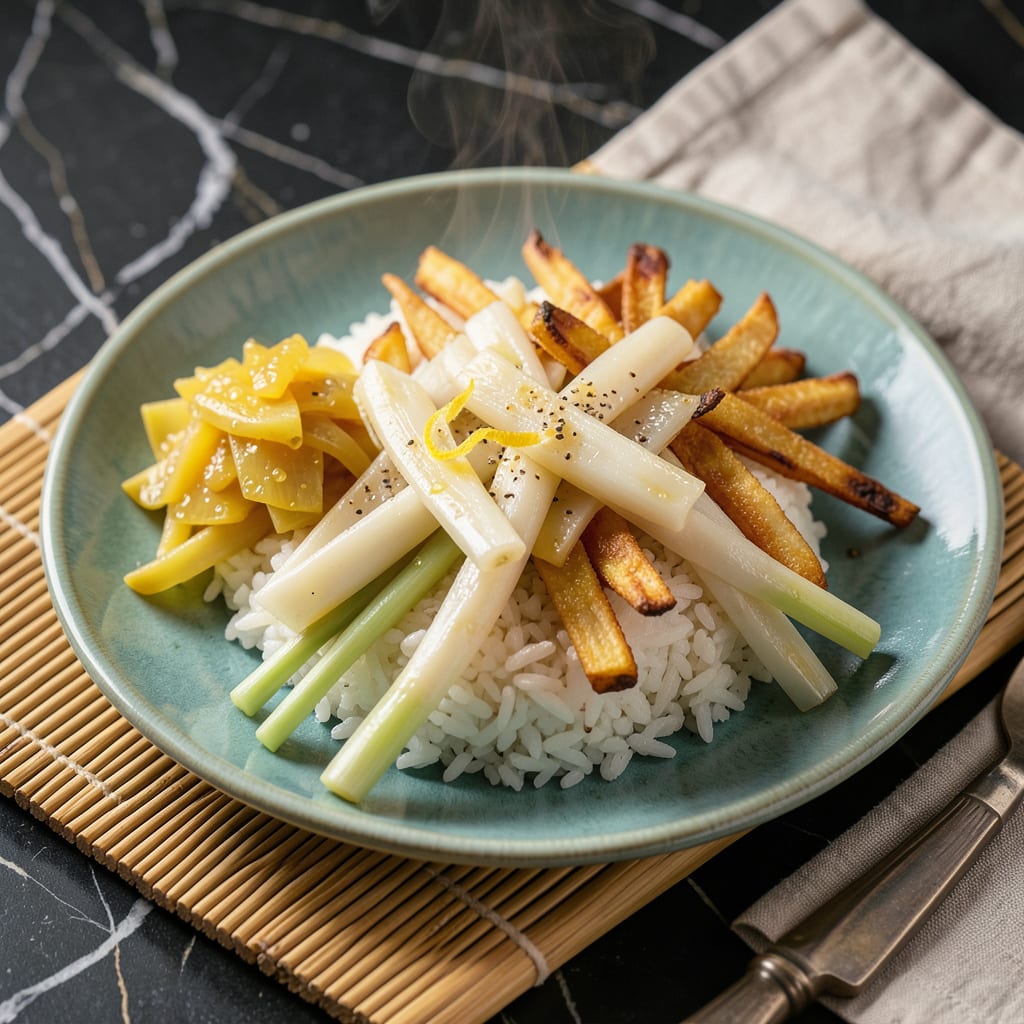
Bamboo shoots have a mild, slightly earthy flavor with a subtle sweetness, similar to corn or water chestnuts. Their crisp, tender texture adds a satisfying crunch to dishes when cooked properly.
I love how bamboo shoots bring a delicate balance to dishes—their natural sweetness comes from simple sugars that develop as the shoots mature, while the earthy notes remind me of fresh spring vegetables. 🔥 The texture is where they really shine: when fresh, they have a juicy snap that holds up beautifully in stir-fries, but canned versions soften slightly while keeping that signature bite. What’s fascinating is how their flavor absorbs marinades and broths like a sponge, making them incredibly versatile in both traditional Asian cooking and modern fusion recipes.
💡 In This Article
- Flavor Profile and Texture of Fresh Bamboo Shoots
- Best Culinary Uses for Bamboo Shoots in Recipes
Flavor Profile and Texture of Fresh Bamboo Shoots
The unique taste of bamboo shoots comes from their natural composition—primarily simple sugars like glucose and fructose that develop as the shoots grow. These sugars give them that delicate sweetness, while amino acids contribute subtle umami notes.
What’s fascinating is how the flavor evolves with age: younger shoots (harvested at 2-3 weeks) taste almost like fresh corn, while mature ones (4+ weeks) develop deeper earthy tones. The key factor is the cyanogenic glycosides that break down during cooking, mellowing any bitterness and enhancing the natural sweetness. 🔥
Texture-wise, fresh bamboo shoots are a revelation. Their cellular structure contains high levels of lignin and cellulose, which creates that signature crispness—similar to water chestnuts but with more juiciness. When raw, they have a firm bite that softens slightly when cooked, though they maintain their integrity even after 10-15 minutes of stir-frying.
The difference between fresh and canned is striking: fresh shoots retain about 90% of their original crunch, while canned versions (processed at 212°F) soften to about 60% firmness but gain a more concentrated flavor. ✨
What most people don’t realize is how bamboo shoots act like flavor sponges. Their porous structure absorbs liquids rapidly—marinades penetrate within 30 minutes, while broths infuse them completely in under 2 hours. This makes them ideal for dishes where you want to layer flavors.
I’ve found they work particularly well with garlic, ginger, and soy-based sauces, where their mild base lets the seasonings shine without competition. 💫
The harvesting process dramatically affects both taste and texture. Shoots cut in early spring (when soil is richest) develop 20-30% more natural sugars than those harvested later. The ideal shooting time is when they’re 6-12 inches tall—this is when the balance of sweetness and crispness peaks.
Older shoots become fibrous and lose that tender quality, while younger ones can be too watery. The traditional method of boiling shoots in rice water (used in many Asian cultures) actually helps preserve their texture by maintaining pH balance during cooking. 🌟
For comparison, think of bamboo shoots as a cross between asparagus and jicama. They share asparagus’s slight grassy notes but with jicama’s refreshing crunch. The sweetness level sits around 3-4 on a 10-point scale—milder than carrots but more pronounced than celery.
When properly prepared, they add a refreshing contrast to rich dishes, which is why they’re staples in everything from Thai curries to Chinese hot pots. Their ability to stay crisp at high heat (400°F stir-fry temperatures) makes them a chef’s secret weapon for adding textural interest. ⚡
One pro tip I’ve learned: the whiter the shoot, the more tender it will be. The outer layers (which are darker) contain more fiber and can be tough—peeling these away reveals the prized inner core that’s both sweeter and more delicate.
This is why many traditional recipes call for parboiling whole shoots for 5-7 minutes before using them in dishes, which helps uniform the texture throughout. The water used in this process often turns slightly yellow from the natural pigments—this is completely normal and actually indicates proper preparation. 💛

Trained in classic French technique but raised on slow-cooked ribs and spicy rubs, she blends culinary skill with smoke and soul.
- Recipe for Boneless Pork Chops in Cast Iron Skillet: Sear and Baste to Juicy Perfection - October 3, 2026
- Recipe for Boneless Cross Rib Roast: Slow-Roasted Beef with Herb Crust - October 3, 2026
- Hamburgers in Sauce Recipe Crock Pot: Slow-Cooked Savory Delight - October 3, 2026