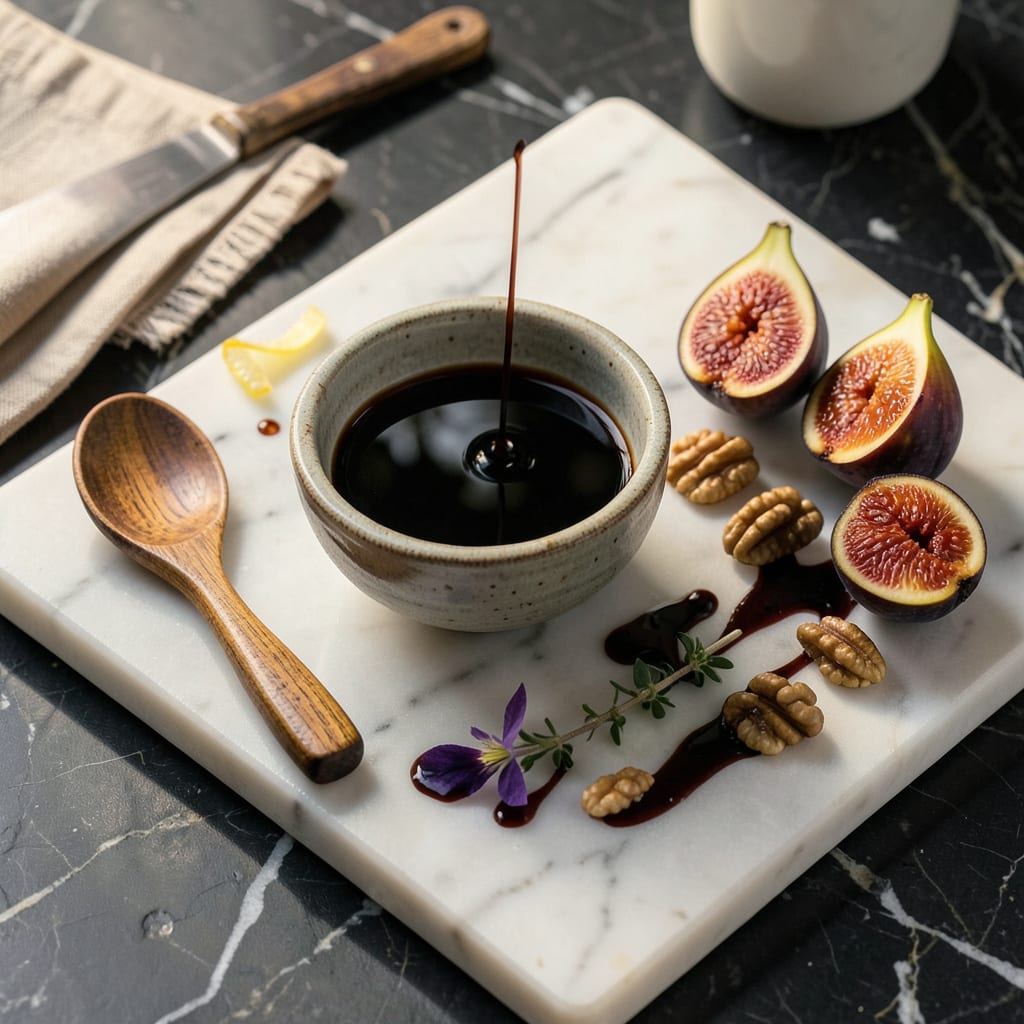
Balsamic vinegar delivers a rich, complex balance of sweet and tangy with deep caramelized notes from aged grape must. High-quality versions offer layered flavors of fig, cherry, or oak, while younger types are sharper and more acidic.
I love how this vinegar transforms dishes with its multidimensional character. The aging process in wooden barrels creates that signature syrup-like consistency and concentrated sweetness you can’t find in regular vinegar. 🔥 When I drizzle 25-year-aged balsamic over fresh mozzarella, the contrast between the creamy cheese and the vinegar’s dark fruit undertones creates magic. Younger versions work better for salad dressings where you want that bright acidity to cut through rich ingredients. The real secret lies in the grape reduction process – that’s where the depth comes from.
💡 In This Article
- How Aging Transforms Balsamic Vinegar’s Flavor
- Best Food Pairings for Balsamic Vinegar’s Bold Taste
How Aging Transforms Balsamic Vinegar’s Flavor
The magic happens in those wooden barrels where time works its alchemy. Traditional balsamic vinegar starts with cooked grape must (primarily from Trebbiano and Lambrusco grapes) that’s fermented and aged for 12 to 25+ years in a series of progressively smaller barrels. Each barrel—made from different woods like oak, cherry, or chestnut—imparts unique characteristics.
The longer it ages, the more the vinegar concentrates through evaporation, developing that signature syrup-like consistency and deep caramelized sweetness. 🔥
Here’s where the science gets fascinating. The Maillard reaction (the same process that browns your steak) occurs between the grape sugars and amino acids during aging. This creates hundreds of new flavor compounds that give aged balsamic its complex profile.
A 12-year balsamic might taste bright with hints of vanilla, while a 25-year version develops layers of dried fig, dark chocolate, and even subtle smokiness from the charred barrel interiors. The acidity mellows dramatically—young balsamic sits around 6% acidity, while aged versions drop to 4-5%, making them smoother on the palate.
The barrel progression system is crucial. Vinegar starts in large casks and gradually moves to smaller ones, increasing surface area contact with wood. Each transfer oxidizes the vinegar slightly, which softens harsh edges and builds complexity.
I’ve tasted balsamics where you could identify the specific woods used—cherry barrels add fruity notes, while oak contributes spicy vanilla undertones. The best producers use at least five different barrel types in succession.
Commercial “balsamic vinegar” you find in grocery stores often skips this process entirely. Many are just wine vinegar with caramel coloring and sugar added—what Italians call “condimento” rather than true Aceto Balsamico Tradizionale. The real stuff is aged in attics where temperature fluctuations (from 40°F winters to 90°F summers) create the perfect environment for concentration.
This natural reduction is why a single bottle of traditional balsamic can cost $100+—it’s literally decades of evaporation in each drop. ✨
What most people don’t realize is that the grape variety matters as much as the aging. Lambrusco grapes bring jammy berry notes, while Trebbiano offers more honeyed stone fruit characteristics.
The must is cooked down to about 30-50% of its original volume before aging even begins—this initial reduction is what gives balsamic its foundation of sweetness that balances the acidity. The older it gets, the more these flavors harmonize into something that’s neither purely sweet nor purely sour, but a perfect union of both.
You can actually see the difference in viscosity. A young balsamic will coat the back of a spoon lightly, while a properly aged one should flow like warm honey—leaving distinct “legs” on the glass that take 5+ seconds to dissipate.
This texture change comes from the gradual breakdown of pectin and sugars during aging, creating that luxurious mouthfeel that makes aged balsamic so special over ice cream or fresh berries. 💫
The acidity transformation is perhaps most noticeable. Fresh grape must starts with bright, almost citrusy acidity that gradually rounds out as the vinegar ages. By year 12, the sharp edges have softened into a warm, lingering finish. The tannins from the wood integrate with the grape’s natural phenols, adding structure without bitterness.
It’s this careful balance that allows aged balsamic to pair equally well with delicate strawberries or robust aged Parmesan.

Trained in classic French technique but raised on slow-cooked ribs and spicy rubs, she blends culinary skill with smoke and soul.
- Recipe for Boneless Pork Chops in Cast Iron Skillet: Sear and Baste to Juicy Perfection - October 3, 2026
- Recipe for Boneless Cross Rib Roast: Slow-Roasted Beef with Herb Crust - October 3, 2026
- Hamburgers in Sauce Recipe Crock Pot: Slow-Cooked Savory Delight - October 3, 2026