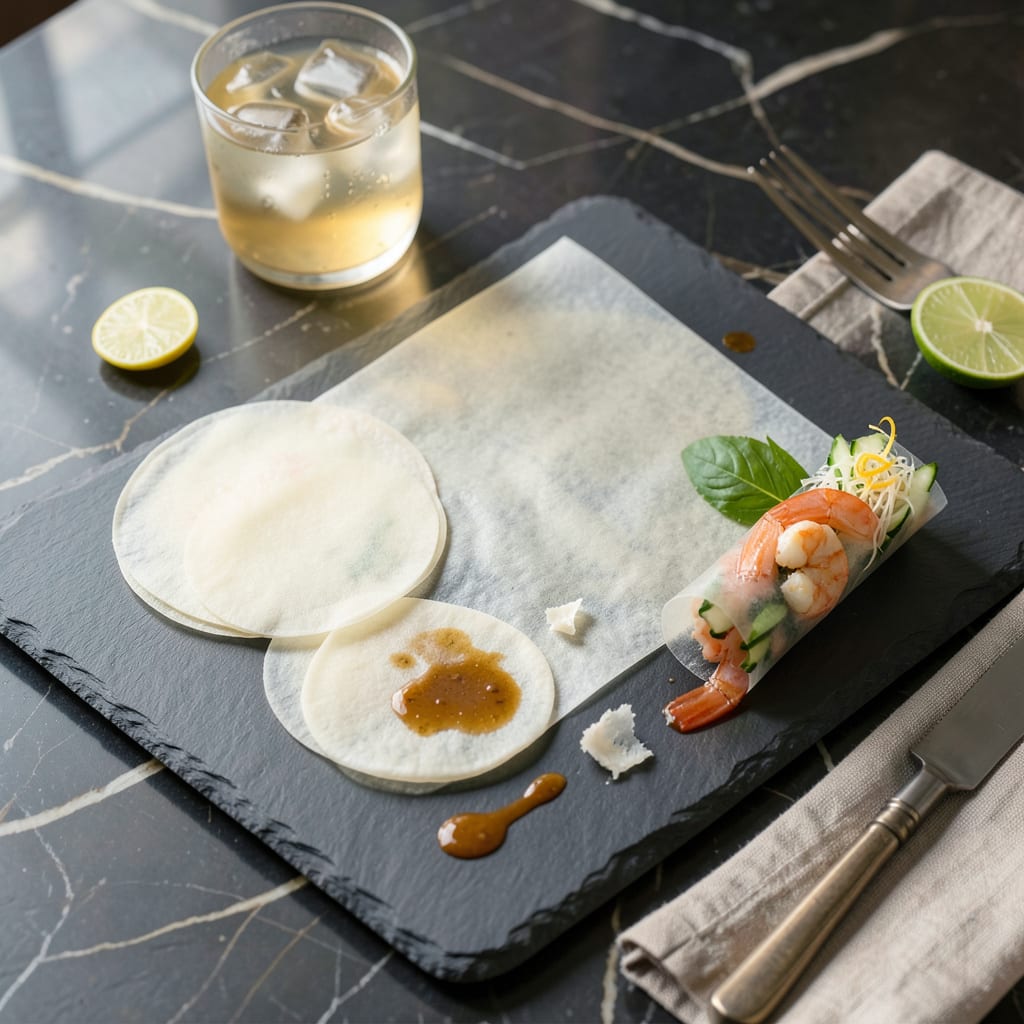
Rice paper has a very mild, almost neutral flavor with subtle rice-like sweetness. Its most distinctive quality is the chewy, slightly sticky texture when moistened, becoming soft and pliable when soaked in water.
Think of rice paper as the culinary equivalent of a blank canvas—it absorbs flavors beautifully while adding just a whisper of its own character. 🔥 The delicate sweetness comes from the rice starch, which transforms dramatically when hydrated, creating that signature springy yet tender bite. I love how it becomes almost translucent when properly softened, making it perfect for showcasing vibrant fillings in dishes like summer rolls or crispy fried appetizers. The magic happens in those first 10-15 seconds of soaking, where the texture shifts from brittle to supple right before your eyes.
💡 In This Article
- Breaking Down Rice Paper’s Flavor and Texture Profile
- Best Ways to Use Rice Paper in Recipes
Breaking Down Rice Paper’s Flavor and Texture Profile
The secret behind rice paper’s delicate flavor lies in its composition—it’s made from 90%+ rice starch, which gives it that whisper of sweetness reminiscent of steamed white rice. The starch molecules break down differently than wheat flour, creating a cleaner, more neutral base that doesn’t compete with fillings.
When you taste it alone, you might detect a faint earthiness from the rice itself, similar to what you’d find in a plain rice cracker but much more subdued. 🔥
What’s fascinating is how the texture transforms through hydration. Dry rice paper contains tightly packed starch granules that absorb water rapidly—about 3-4 times their weight in just 10-15 seconds. This causes the sheets to swell and develop that signature chewy elasticity.
The process is similar to how tapioca pearls behave when cooked, but with a more delicate structure that becomes translucent when properly softened. The ideal hydration window is brief: under-soaked paper remains brittle, while over-soaked becomes gummy.
The moisture absorption creates what chefs call “gelatinization”—where starch granules burst and form a gel-like network. This gives rice paper its unique dual personality: slightly sticky when fresh (perfect for summer rolls) yet capable of becoming crisp when fried.
The difference between fresh and fried applications is dramatic: fresh wrappers maintain a tender, almost noodle-like quality, while fried versions develop a shatteringly crisp exterior that gives way to a chewy center. ✨
Compared to other wrappers, rice paper stands apart in several ways. Wheat-based wrappers have a more pronounced gluten structure that makes them heartier but less translucent. Seaweed wrappers (like nori) offer umami but lack the chewy flexibility.
Rice paper’s neutral base makes it the most versatile—it won’t overpower delicate herbs in a Vietnamese gỏi cuốn, yet stands up to bold flavors in Thai miang kham. The starch composition also means it browns differently when fried, developing a lighter, more uniform crispness than wheat-based alternatives.
Temperature plays a crucial role in texture development. Cold water softens the paper more slowly, giving you better control for delicate applications. Warm water (80-90°F) speeds the process but requires immediate use. I’ve found that room temperature water (68-72°F) offers the best balance—quick enough for efficiency but gentle enough to prevent tearing.
The transformed paper should feel like well-cooked al dente pasta: springy with just enough resistance. 💫
Here’s what most people miss about rice paper’s flavor: it actually develops slightly when cooked. The Maillard reaction (the same process that browns bread) creates subtle toasty notes when fried at 350-375°F. These aren’t strong flavors, but they add depth that complements savory fillings.
The key is maintaining the right oil temperature—too cool and the wrappers absorb oil instead of crisping; too hot and they brown before the interior cooks through. This delicate balance is why professional kitchens often use rice paper for both fresh and fried applications.
For those with texture sensitivities, rice paper offers a unique mouthfeel that’s neither slimy nor dry. The hydrated wrapper provides just enough resistance to be satisfying without being tough.
This quality makes it particularly appealing in dishes where you want the filling to be the star—like in summer rolls where the wrapper should be felt but not dominate the eating experience. The slight stickiness also helps it adhere to itself when rolling, creating that perfect seal without needing additional binders. ⚡

Trained in classic French technique but raised on slow-cooked ribs and spicy rubs, she blends culinary skill with smoke and soul.
- Recipe for Boneless Pork Chops in Cast Iron Skillet: Sear and Baste to Juicy Perfection - October 3, 2026
- Recipe for Boneless Cross Rib Roast: Slow-Roasted Beef with Herb Crust - October 3, 2026
- Hamburgers in Sauce Recipe Crock Pot: Slow-Cooked Savory Delight - October 3, 2026