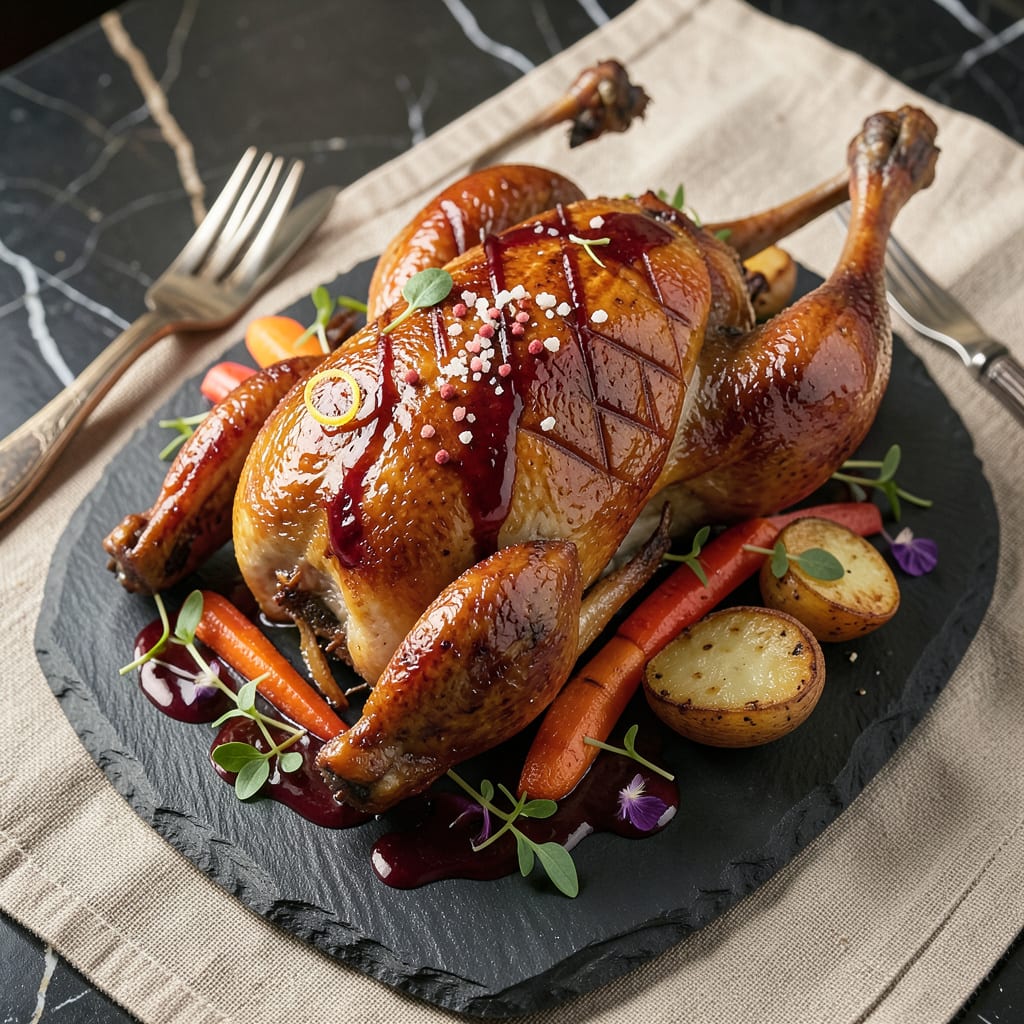
Roasted duck delivers a rich, gamey flavor with deep umami notes and a slightly sweet finish, complemented by crispy skin and tender, juicy meat beneath. The taste is more robust than chicken but milder than wild game like venison.
This complex flavor profile comes from duck’s higher fat content and unique muscle structure. 🔥 As the fat renders during roasting, it bastes the meat from within, creating that signature moistness while the skin crisps up beautifully. I’ve found the gamey notes actually mellow when cooked properly, revealing subtle caramelized undertones that pair wonderfully with fruit-based sauces. The contrast between the crackling skin and velvety meat is what makes roasted duck such a showstopper at the table.
💡 In This Article
- Flavor and Texture Breakdown of Perfectly Roasted Duck
- Best Wine, Side Dishes, and Sauces to Pair with Roasted Duck
Flavor and Texture Breakdown of Perfectly Roasted Duck
The magic of roasted duck begins with its fat content—duck meat contains about 28-30% fat, nearly triple that of chicken breast. As the duck roasts at 350-375°F, this fat slowly renders, basting the meat from within while creating that coveted crispy skin.
The Maillard reaction kicks in around 300°F, transforming amino acids and sugars into complex flavor compounds that give duck its deep, savory character. This is why properly roasted duck never tastes dry—it’s essentially self-basting throughout the cooking process. 🔥
What sets duck apart from chicken is its muscle fiber structure. Duck muscles are designed for sustained flight, containing more myoglobin (the protein that gives meat its red color) than chicken. This higher myoglobin content contributes to duck’s richer, slightly gamey flavor profile.
The dark meat, which makes up most of a duck, has a texture similar to Short Ribs Recipe Oven: Fall-Off-The-Bone Tender Perfection”>Beef Short Ribs Recipe Grill: Fall-Off-The-Bone Tender Perfection”>beef short ribs—tender with a satisfying chew, while the skin develops a crackling crispness that shatters with each bite. The contrast between the velvety meat and shatteringly crisp skin is what makes each mouthful so dynamic.
The sweet finish many people notice comes from the caramelization of duck’s natural sugars during roasting. As the skin renders and crisps, the sugars concentrate and brown, creating those subtle caramel notes.
I’ve found that brining the duck beforehand (in a 5% salt solution for 12-24 hours) enhances this sweetness by breaking down proteins and allowing more moisture retention. The result is meat that’s simultaneously rich, slightly sweet, and deeply savory—all balanced by that perfect crispy skin. ✨
Cooking method dramatically affects flavor intensity. Dry-roasting at lower temperatures (300-325°F) produces more tender meat with milder gamey notes, while high-heat roasting (400°F+) develops deeper Maillard flavors but risks drying. The French technique of starting with high heat to crisp the skin, then finishing low and slow, creates the ideal balance.
Seasoning plays a crucial role too—salt enhances the natural flavors, while herbs like thyme and rosemary complement without overpowering the duck’s inherent richness.
Here’s what most people don’t realize: the duck’s diet significantly impacts flavor. Farm-raised ducks fed on corn and grains develop a milder, sweeter taste, while wild ducks or those raised on natural diets have more pronounced gamey notes. The age matters too—young ducks (12-16 weeks) are most tender, while older ducks develop stronger flavors.
This is why restaurant-quality duck often tastes different from home-cooked—they carefully control both diet and age for optimal flavor. 💫
The final texture comes down to resting time. Letting the duck rest for 15-20 minutes after roasting allows the juices to redistribute throughout the meat. Cutting too soon causes all those precious juices to spill out, leaving you with drier meat.
During this rest, the skin also firms up slightly, making it easier to achieve those perfect crispy slices. The difference between a properly rested duck and one carved immediately is like night and day in both texture and flavor concentration.
What truly elevates roasted duck is how these elements work together—the crispy skin provides textural contrast, the rendered fat carries flavor, and the meat’s natural sweetness balances the gamey notes. It’s this complex interplay that makes roasted duck such a celebrated dish in culinary traditions worldwide, from French haute cuisine to Chinese Peking duck.
The key is understanding how each component develops during cooking and how to highlight duck’s unique characteristics rather than mask them. 🌟

Trained in classic French technique but raised on slow-cooked ribs and spicy rubs, she blends culinary skill with smoke and soul.
- Recipe for Boneless Pork Chops in Cast Iron Skillet: Sear and Baste to Juicy Perfection - October 3, 2026
- Recipe for Boneless Cross Rib Roast: Slow-Roasted Beef with Herb Crust - October 3, 2026
- Hamburgers in Sauce Recipe Crock Pot: Slow-Cooked Savory Delight - October 3, 2026