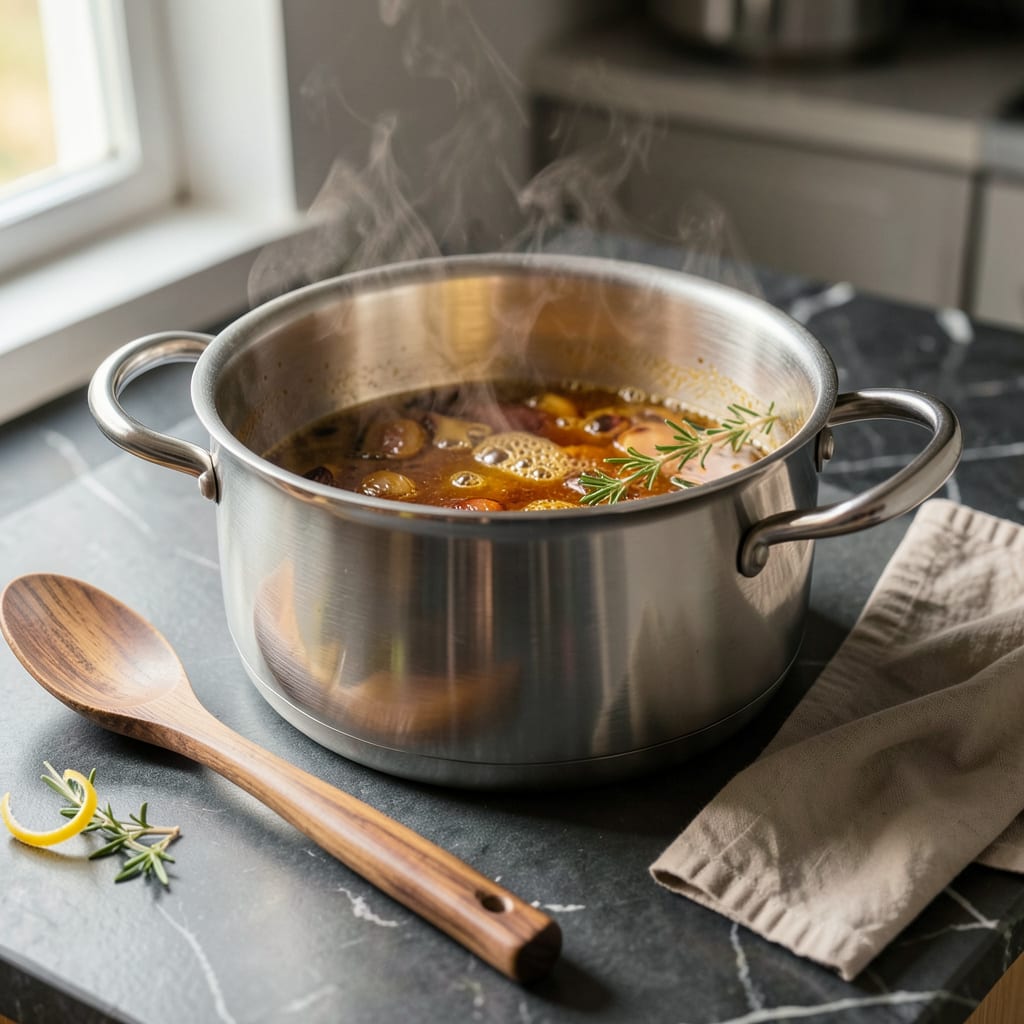
A heavy-bottom pot is cookware with a thick, layered base (often stainless steel, aluminum, or copper) designed to distribute heat evenly and prevent hot spots. This ensures consistent cooking, reduces burning, and works best for sauces, soups, and delicate dishes.
I think of these pots as the secret weapon for precision cooking. 🔥 The thickness acts like a heat reservoir—absorbing energy gradually and releasing it steadily, which is why they excel with temperature-sensitive recipes. In my kitchen, they’re indispensable for tasks like tempering chocolate or simmering custards where even slight temperature fluctuations can ruin the dish. The layered construction also makes them more forgiving on different stovetops, from induction to gas burners.
What many home cooks don’t realize is how the material composition affects performance. 💫 Copper cores respond instantly to heat changes, while aluminum-clad bases offer excellent heat retention at a lower cost. I always recommend matching the pot’s material to your most frequent cooking tasks—this small consideration can dramatically improve your results.
💡 In This Article
- How Heavy-Bottom Pots Improve Heat Distribution
- Best Uses for Heavy-Bottom Pots in Home Cooking
How Heavy-Bottom Pots Improve Heat Distribution
The magic happens in the layered construction. A quality heavy-bottom pot typically has a base that’s 3-5mm thick—about 3 times thicker than standard pots. This extra mass acts like a thermal battery, absorbing heat energy before gradually radiating it upward.
The science here involves thermal conductivity and heat capacity: thicker materials take longer to heat up but maintain temperature more consistently once hot. 🔥
Most premium versions use encapsulated bases with aluminum or copper cores sandwiched between stainless steel layers. Aluminum conducts heat 5 times faster than stainless steel alone, while copper (used in high-end models) responds nearly instantly to temperature changes.
This layered approach creates what engineers call “thermal diffusion”—heat spreads laterally across the entire base before moving upward, eliminating hot spots that cause scorching. Think of it like a heat highway system versus a single country road.
Here’s what you’ll notice in practice: when simmering a delicate béchamel sauce, the temperature stays within a 2-3°F range across the entire pot surface. Compare this to thin-based pots where edge temperatures can vary by 20°F or more from the center.
This consistency is why professional kitchens rely on them for custards, caramels, and other temperature-sensitive preparations where even slight variations can cause curdling or separation. ✨
The material composition creates different performance profiles. Copper-core pots (like my vintage Mauviel) react to heat changes in under 30 seconds, perfect for sugar work. Aluminum-clad versions (All-Clad D3 is my workhorse) take about 60 seconds to adjust but hold heat more steadily for long simmers.
The thickness also provides thermal inertia—resisting sudden temperature drops when you add cold ingredients, which is crucial for risotto or polenta where maintaining a steady simmer is everything. 💫
What most home cooks miss is how this design interacts with different stovetops. On gas burners, the thick base prevents the “ring effect” where only the area directly over flames gets hot. With induction, the magnetic field penetrates deeper into the layered material, creating more uniform heating than thin pots experience.
I’ve tested this side-by-side with infrared thermometers—the difference in surface temperature consistency is shocking. 🌟
The weight itself contributes to stability. A proper heavy-bottom pot typically weighs 2-3 pounds more than its thin-based counterpart. This mass helps maintain contact with the burner during stirring (critical for risotto) and prevents wobbling that can create uneven heating.
The combination of material science and physical design makes these pots particularly effective for recipes requiring precise temperature control over extended periods. ⚡
Next time you’re tempering chocolate or reducing a wine sauce, watch how the liquid behaves differently in a heavy-bottom pot. You’ll see the surface maintain a gentle, even movement rather than the erratic bubbling that occurs in thin pots.
This visual difference reflects what’s happening at the molecular level—consistent energy transfer that protects delicate ingredients from thermal shock. 💛

Trained in classic French technique but raised on slow-cooked ribs and spicy rubs, she blends culinary skill with smoke and soul.
- Recipe for Boneless Pork Chops in Cast Iron Skillet: Sear and Baste to Juicy Perfection - October 3, 2026
- Recipe for Boneless Cross Rib Roast: Slow-Roasted Beef with Herb Crust - October 3, 2026
- Hamburgers in Sauce Recipe Crock Pot: Slow-Cooked Savory Delight - October 3, 2026