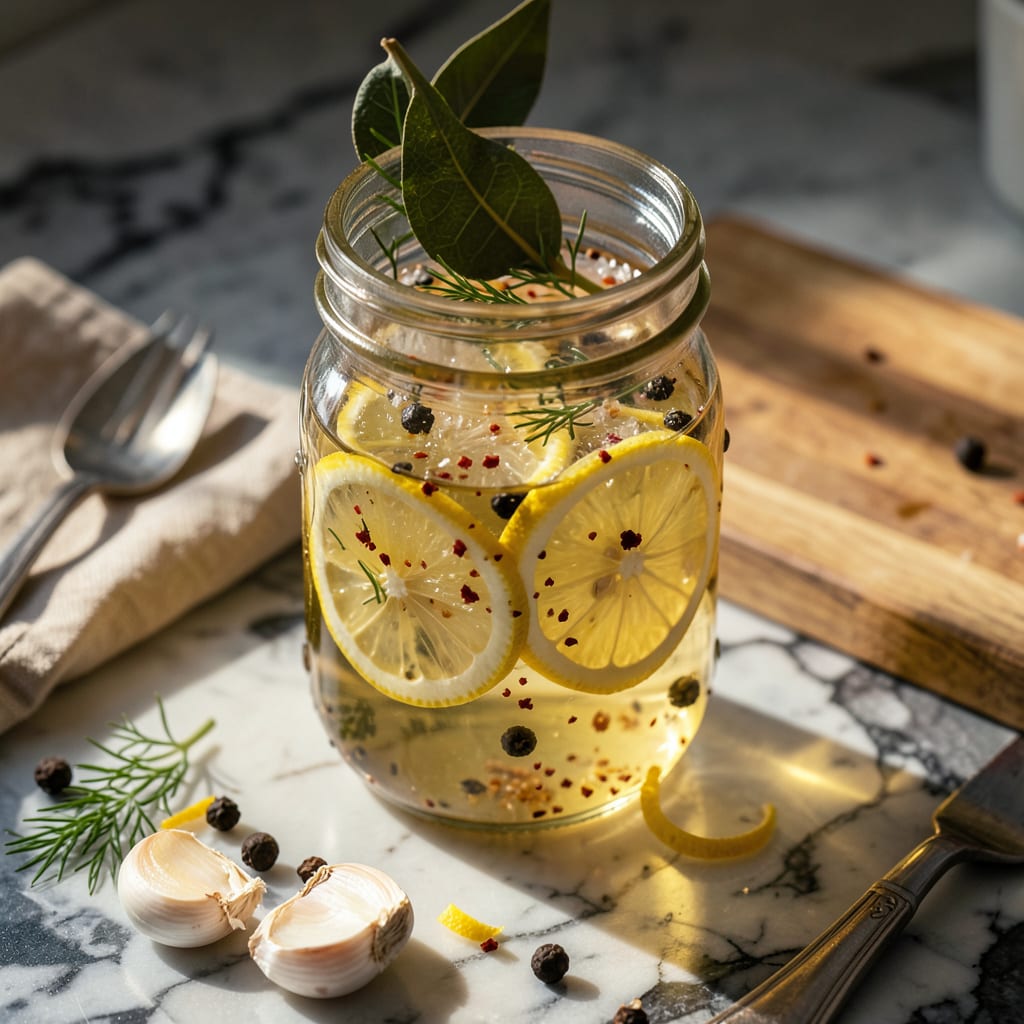
Brine is a saltwater solution used to preserve, flavor, or tenderize food—typically meat, fish, or vegetables. The basic mixture combines water with salt (and often sugar or spices) to enhance moisture and texture before cooking.
I think of brining as a culinary secret weapon—it’s what transforms dry, tough cuts into juicy masterpieces. 🔥 The magic happens through osmosis, where salt draws out natural juices then reabsorbs them with added flavor. My go-to ratio is 1/4 cup salt per gallon of water, but I’ll tweak it based on protein type and thickness. For example, delicate fish needs less time than a whole turkey. The real game-changer? Adding aromatics like bay leaves or citrus peels to build layers of flavor.
💡 In This Article
- How Brining Works to Transform Food Texture
- Wet Brine vs Dry Brine: Which Method to Use
How Brining Works to Transform Food Texture
When you submerge food in brine, you’re kicking off a molecular process called osmosis. The salt concentration outside the cells is higher than inside, so liquid rushes out initially.
But here’s the clever part: after about 30 minutes, the salt begins breaking down muscle proteins (actin and myosin), which then reabsorb the liquid—now infused with salt and any added flavors. This creates a 20-30% moisture increase compared to unbrined meat.
The protein breakdown also tenderizes by weakening the muscle fiber structure. For poultry, I use a 5-8% salt solution (about 1/2 cup salt per gallon), which is strong enough to penetrate but not overpower. Fish requires gentler treatment—3-5% salinity for just 15-30 minutes—because their proteins denature faster.
The difference is night and day: brined turkey stays juicy even when cooked to 165°F, while unbrined often dries out.
Temperature matters too. Cold brines (40°F) slow the process, giving you more control for large cuts like whole chickens. Warm brines (70°F) accelerate penetration but risk over-softening textures. I once ruined a brisket by brining it too warm—the fibers turned mushy instead of tender. Now I always use ice water for precision.
Here’s what most home cooks miss: sugar isn’t just for flavor. It helps form a light crust during cooking through Maillard reactions, especially on grilled items. My competition brisket brine includes 1/4 cup brown sugar per gallon—just enough to enhance caramelization without making it sweet. The science is simple but the results are extraordinary.
For vegetables, the process works differently. Salt draws out excess water (great for cucumbers before pickling) while also seasoning them throughout. I brine eggplant slices in 1/4 cup salt per quart of water for 20 minutes before frying—they absorb 30% less oil and stay crispier. The key is timing: too long and they turn soggy.
Pro tip: Always rinse brined foods before cooking to remove surface salt. This prevents over-seasoning while keeping the internal moisture benefits. I learned this the hard way after serving jerky-level salty chicken at a family BBQ. Now I rinse poultry under cold water for 30 seconds and pat dry thoroughly. 💫

Trained in classic French technique but raised on slow-cooked ribs and spicy rubs, she blends culinary skill with smoke and soul.
- Recipe for Boneless Pork Chops in Cast Iron Skillet: Sear and Baste to Juicy Perfection - October 3, 2026
- Recipe for Boneless Cross Rib Roast: Slow-Roasted Beef with Herb Crust - October 3, 2026
- Hamburgers in Sauce Recipe Crock Pot: Slow-Cooked Savory Delight - October 3, 2026