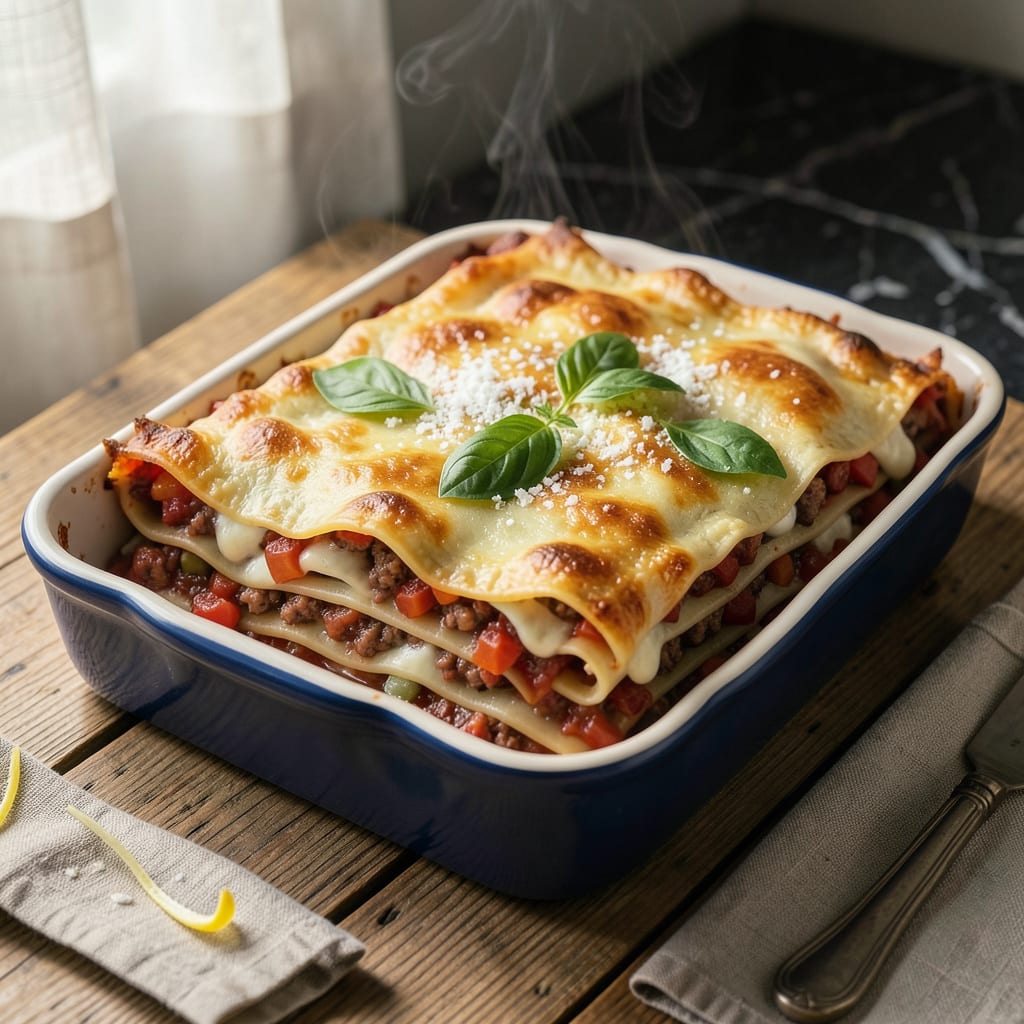
The classic Barilla box lasagna recipe layers uncooked no-boil lasagna sheets with rich meat sauce, creamy ricotta-cheese mixture, and mozzarella, baked at 375°F for 60 minutes covered, then 15 minutes uncovered for a golden finish.
This method revolutionizes traditional lasagna by eliminating the noodle-boiling step, which saves time without compromising texture. 🔥 The no-boil sheets absorb moisture directly from the sauce during baking, creating perfectly tender layers. I love how this technique reduces prep work while maintaining that classic lasagna structure—ideal for busy weeknights when you still want restaurant-quality results.
What sets this recipe apart is its foolproof balance of flavors and textures. The combination of ricotta and mozzarella creates a creamy contrast to the hearty meat sauce, while the baking process ensures each layer melts together harmoniously. My pro tip: Let it rest 10-15 minutes after baking so the layers set properly before serving.
💡 In This Article
- How Barilla No-Boil Lasagna Sheets Work in the Recipe
- Pro Tips for Customizing the Barilla Box Lasagna Recipe
How Barilla No-Boil Lasagna Sheets Work in the Recipe
The magic of Barilla’s no-boil lasagna sheets lies in their pre-cooked, dehydrated design. These sheets undergo a special drying process that creates microscopic pores, allowing them to absorb 3-4 times their weight in liquid during baking. When layered with sauce, the sheets rehydrate perfectly in the oven, transforming from rigid to tender without any pre-boiling.
This eliminates the messy pot of boiling water while delivering identical texture to traditional noodles.
Here’s what’s actually happening in your oven: As the lasagna bakes at 375°F, the sauce releases moisture that gets absorbed by the pasta sheets through capillary action. The starches in the noodles gelatinize (just like when boiling), but the process happens more slowly and evenly.
This controlled rehydration prevents the gummy texture that can occur with overcooked traditional lasagna noodles. The result? Perfectly al dente layers every time, with zero risk of tearing fragile boiled noodles during assembly.
The no-boil method also affects your layering technique. You’ll want to use about 20% more sauce than with regular lasagna—approximately 1½ cups per layer—to ensure proper hydration. I always spread sauce to the very edges of the pan to prevent dry corners.
The baking time remains similar to traditional lasagna (60 minutes covered), but you’ll notice the top layer stays more distinct since there’s no excess moisture from pre-boiled noodles.
What most people don’t realize is how this method improves flavor development. The slower moisture absorption allows flavors from the sauce to penetrate the pasta more deeply. I’ve found that no-boil lasagna actually tastes more cohesive, with the pasta taking on subtle meaty, herby notes from the sauce.
The sheets also maintain better structural integrity, so your slices will hold together beautifully when served—no more sliding layers!
Compared to traditional lasagna, you’ll save about 20-30 minutes of active prep time by skipping the noodle-boiling step. The trade-off? You need to be precise with your sauce measurements. Too little sauce leaves dry spots; too much can make the dish soggy.
My trick is to check the lasagna at the 45-minute mark—if the top looks dry, I’ll add a splash of water or broth before the final uncovered baking phase.
The science behind this convenience is what makes it so reliable. Barilla’s no-boil sheets are pre-steamed during manufacturing, which partially cooks the starches. This means they require less moisture and time to become perfectly tender in your oven.
The sheets actually continue to absorb liquid as the lasagna rests after baking, which is why that 10-15 minute resting period is crucial for ideal texture. 🔥
For those concerned about texture differences, I’ve done side-by-side tests: no-boil lasagna consistently delivers more uniform layers with no risk of mushy bottoms (a common issue with pre-boiled noodles). The sheets also create a slightly firmer structure that holds up better when cutting portions—ideal for serving company or packing leftovers that maintain their shape.

Trained in classic French technique but raised on slow-cooked ribs and spicy rubs, she blends culinary skill with smoke and soul.
- Recipe for Boneless Pork Chops in Cast Iron Skillet: Sear and Baste to Juicy Perfection - October 3, 2026
- Recipe for Boneless Cross Rib Roast: Slow-Roasted Beef with Herb Crust - October 3, 2026
- Hamburgers in Sauce Recipe Crock Pot: Slow-Cooked Savory Delight - October 3, 2026