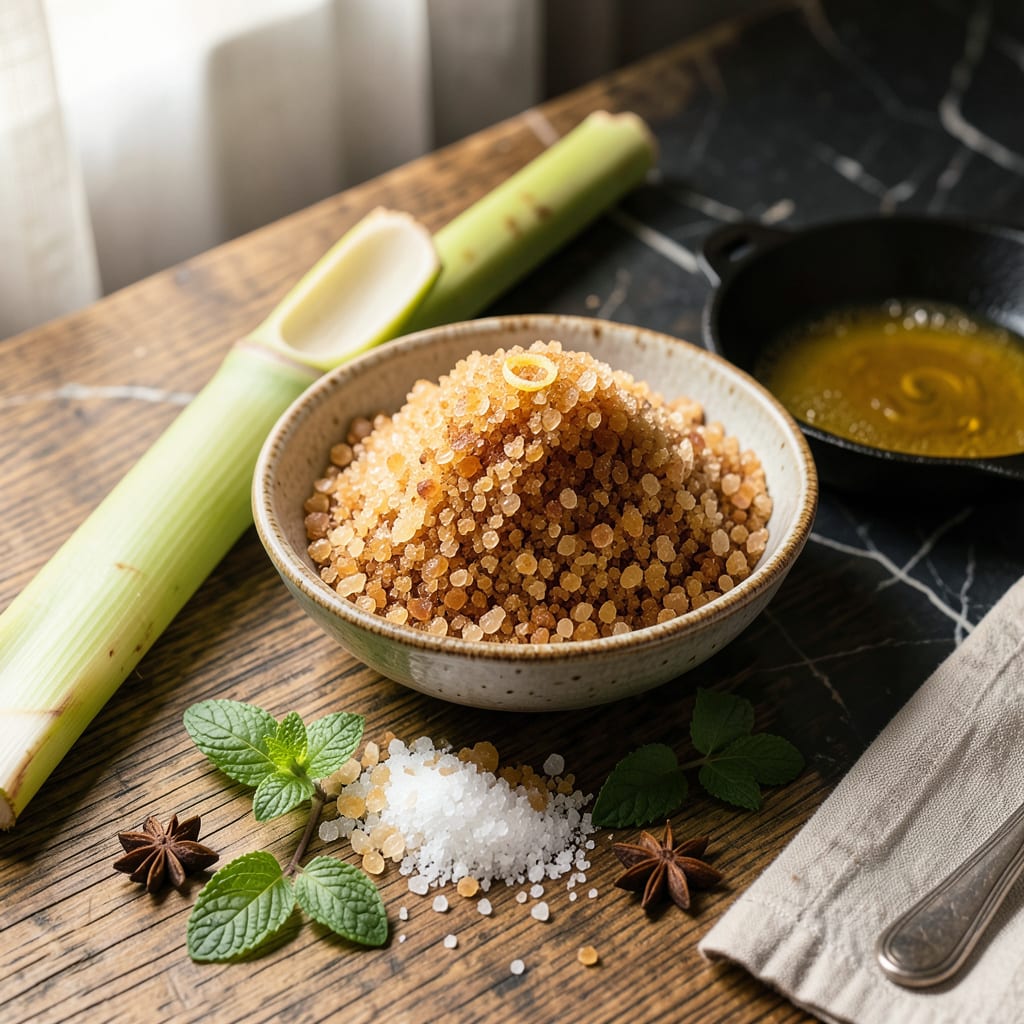
Evaporated cane sugar is a minimally processed sweetener made by dehydrating sugarcane juice into fine crystals. It retains trace molasses, giving it a light caramel flavor and golden hue, often used as a natural alternative to white sugar.
This sweetener stands out because it undergoes just one crystallization process, unlike white sugar which goes through multiple refining stages. 🔥 The minimal processing preserves more of the cane’s natural minerals like calcium and potassium, which is why some bakers prefer it for both flavor and nutritional benefits. I’ve found it works beautifully in coffee, baked goods, and even homemade caramel—its subtle molasses notes add depth without overpowering other ingredients.
💡 In This Article
- How Evaporated Cane Sugar Differs from Regular Sugar
- Cooking and Baking with Evaporated Cane Sugar
How Evaporated Cane Sugar Differs from Regular Sugar
The processing journey is where these sweeteners diverge dramatically. While white sugar undergoes multiple refining stages—including bleaching and chemical treatments—evaporated cane sugar gets just one crystallization. Sugarcane juice is simply heated to remove moisture, leaving behind fine golden crystals.
This single-step method preserves more of the cane’s natural compounds, including trace molasses that give it that subtle caramel whisper. 🔥
That retained molasses isn’t just about flavor—it carries minerals that get stripped from white sugar. We’re talking about measurable amounts of calcium (20mg per tbsp), potassium (48mg), and even trace iron. Compare that to white sugar’s nutritional void.
The molasses also affects texture: evaporated cane sugar crystals are slightly coarser and hold about 0.5% more moisture than refined sugar, which changes how they behave in recipes.
Here’s where it gets interesting for bakers: that extra moisture and mineral content means evaporated cane sugar caramelizes at a slightly lower temperature (320°F vs 338°F for white sugar). This creates deeper flavor development in cookies and cakes without burning.
The glycemic index difference is minimal (both hover around 65), but the mineral retention makes it a favorite in health-conscious kitchens where every nutrient counts.
You’ll notice the color difference immediately—evaporated cane sugar has a warm golden hue (think light amber) versus white sugar’s stark brightness. That color translates to flavor: where white sugar is purely sweet, evaporated cane sugar offers faint butterscotch notes.
In blind taste tests, most people can detect the difference in coffee or simple syrups, though the variance becomes subtle in complex baked goods. ✨
The real game-changer is in artisanal applications. Chocolate makers love it because those trace minerals enhance cocoa’s natural bitterness. Craft cocktail bars use it in simple syrups for old fashioneds—the molasses undertones complement bourbon’s vanilla notes perfectly.
Even in savory applications like BBQ rubs, that extra depth makes a noticeable difference compared to plain white sugar.
One caveat: because it’s less processed, evaporated cane sugar can clump more easily in humid environments. I store mine in airtight glass containers with a silica packet to maintain that perfect granular consistency.
The slight moisture content also means it dissolves just a hair slower in cold liquids, so give your iced tea an extra stir if you’re using it. 💫
What surprises most people is that despite being “less refined,” evaporated cane sugar actually has a more consistent crystal size than many brown sugars. That uniformity makes it behave more predictably in recipes than some coarser turbinado sugars, while still delivering that sought-after “natural” sweetness profile that’s become so popular in clean-label baking.

Trained in classic French technique but raised on slow-cooked ribs and spicy rubs, she blends culinary skill with smoke and soul.
- Recipe for Boneless Pork Chops in Cast Iron Skillet: Sear and Baste to Juicy Perfection - October 3, 2026
- Recipe for Boneless Cross Rib Roast: Slow-Roasted Beef with Herb Crust - October 3, 2026
- Hamburgers in Sauce Recipe Crock Pot: Slow-Cooked Savory Delight - October 3, 2026