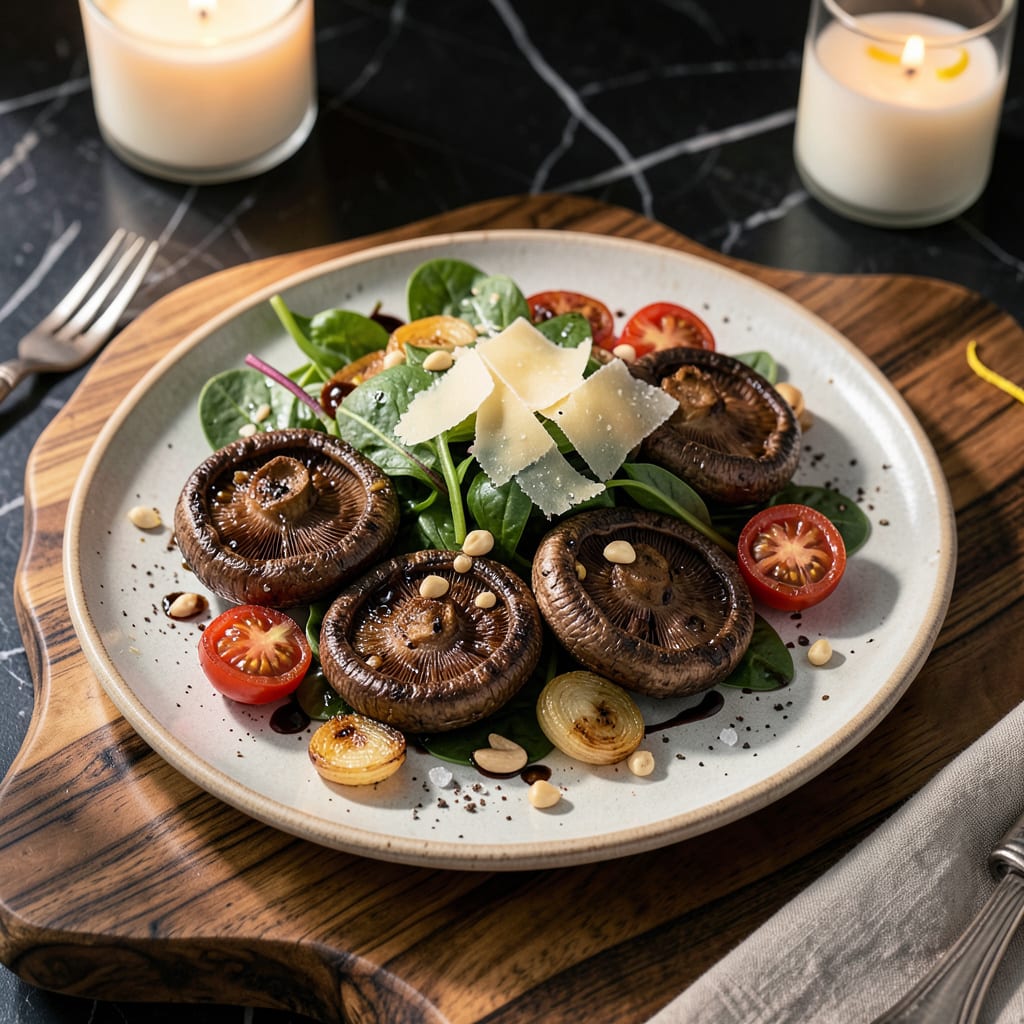
A warm portobello mix combines sautéed portobello mushrooms with garlic, herbs, and olive oil for a savory, meaty side dish. Ready in 15 minutes, it pairs perfectly with grilled meats or as a vegetarian main over polenta or rice.
This dish shines because portobellos have a unique ability to soak up bold flavors while maintaining their robust, meat-like texture. 🔥 I love how their earthy depth transforms when caramelized in a hot pan—it creates a rich foundation that balances well with bright herbs or tangy finishes. The quick cooking time makes it ideal for busy weeknights, yet it feels sophisticated enough for dinner parties when plated over creamy polenta or alongside seared steaks.
💡 In This Article
- Why Portobello Mushrooms Work Perfectly in Warm Mixes
- Customizing Your Warm Portobello Mix with Ingredients
Why Portobello Mushrooms Work Perfectly in Warm Mixes
Portobellos are the steak of the mushroom world, and here’s why they excel in warm dishes. Their dense, fibrous texture comes from mature cremini mushrooms that develop thick caps and gills. When exposed to heat, these fibers break down just enough to become tender while maintaining structure—unlike delicate button mushrooms that turn mushy.
The high water content (90%) evaporates during cooking, concentrating their natural umami compounds like glutamates and guanylates that create that deep, savory richness.
What makes them truly special is their ability to absorb flavors like a sponge. The porous surface area of a single portobello cap (about 4-6 inches in diameter) has thousands of tiny channels that soak up marinades, oils, and seasonings.
When you sauté them at medium-high heat (375-400°F), the Maillard reaction kicks in after 3-4 minutes, transforming their natural sugars into caramelized complexity. This is why they develop those beautiful browned edges that mimic seared meat so convincingly. 🔥
The nutritional profile makes them even more appealing. A single cup of cooked portobellos delivers 3g of fiber (11% DV) and significant B vitamins—especially riboflavin (30% DV) and niacin (20% DV)—that support energy metabolism. Their low calorie count (42 per cup) means you can enjoy that meaty satisfaction without the heaviness.
I’ve found they satisfy carnivores and vegetarians alike because of their 5g protein per cup, which is substantial for a plant-based ingredient.
Cooking method dramatically changes the outcome. Sautéing in a cast iron skillet creates the most intense caramelization, while roasting at 425°F for 15-20 minutes develops deeper, smokier notes. The key is patience—rushing the process means you’ll miss that perfect balance where the exterior crisps while the interior stays juicy.
I always recommend cutting them into 1/2-inch slices to maximize surface area for browning while keeping some bite.
Compare this to other mushrooms: Shiitakes offer more intense umami but can become rubbery, while oysters release too much water and shrink dramatically. Portobellos hit the sweet spot—meaty enough to stand alone, versatile enough to complement any protein, and substantial enough to anchor a vegetarian meal.
Their neutral pH (around 6.5) means they won’t clash with acidic ingredients like balsamic or lemon, making them endlessly adaptable. ✨
Here’s a pro tip from my pitmaster days: For extra depth, finish them with a splash of red wine vinegar or worcestershire sauce off the heat. The acidity brightens the earthiness while the vinegar’s acetaldehyde compounds react with the mushroom’s amino acids to create even more complex aromas.
It’s the same principle that makes deglazing pans so effective—just applied directly to your portobellos.
The moisture content also means they reheat beautifully. Unlike most cooked vegetables that turn soggy, portobellos actually improve the next day as their fibers reabsorb some moisture. Store leftovers in an airtight container and reheat gently in a dry pan to revive that just-cooked texture.
I’ve served day-old portobello mixes that tasted even better than fresh—something I can’t say about many vegetables. 💫

Trained in classic French technique but raised on slow-cooked ribs and spicy rubs, she blends culinary skill with smoke and soul.
- Recipe for Boneless Pork Chops in Cast Iron Skillet: Sear and Baste to Juicy Perfection - October 3, 2026
- Recipe for Boneless Cross Rib Roast: Slow-Roasted Beef with Herb Crust - October 3, 2026
- Hamburgers in Sauce Recipe Crock Pot: Slow-Cooked Savory Delight - October 3, 2026