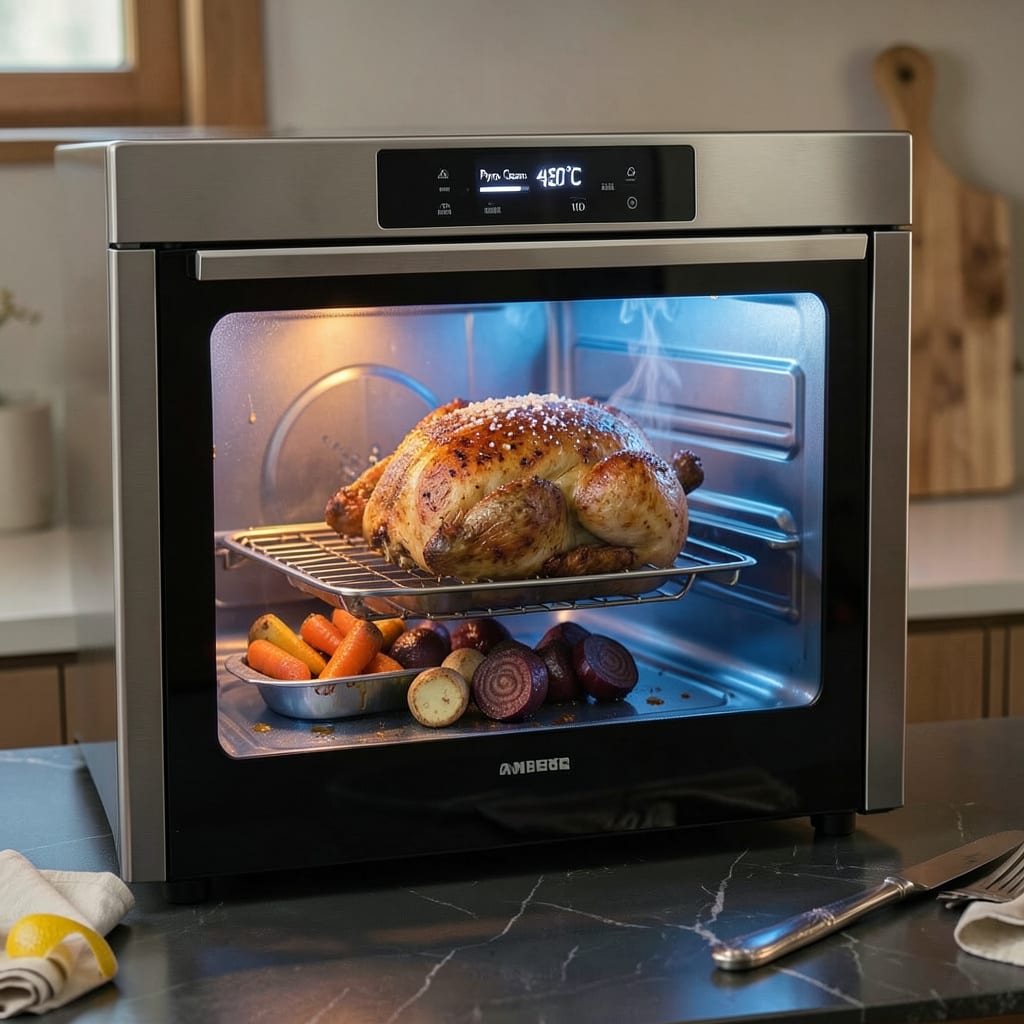
A pyrolytic oven is a self-cleaning appliance that heats to extreme temperatures (around 900°F) to burn off food residue, leaving only ash to wipe away. It eliminates the need for harsh chemicals or manual scrubbing while maintaining performance.
I love how this technology transforms oven maintenance from a chore into a hands-off process. 🔥 The secret lies in its ability to reach temperatures so high they trigger a chemical reaction called oxidation, which reduces grease and grime to a fine powder. Unlike traditional cleaning methods that require elbow grease or toxic sprays, this system handles everything internally—just lock the door and let the heat do the work. It’s particularly game-changing for home cooks who frequently bake or roast, as it maintains oven performance without the hassle of scrubbing.
💡 In This Article
- How Pyrolytic Oven Self-Cleaning Technology Works
- Pros and Cons of Pyrolytic Ovens for Home Cooks
How Pyrolytic Oven Self-Cleaning Technology Works
At its core, this system relies on extreme heat to trigger a chemical reaction called thermal oxidation. When the oven reaches 850-950°F, organic food residues—fats, sugars, proteins—break down at a molecular level.
The high temperature causes carbon bonds to rupture, converting grease and grime into carbon dioxide and water vapor, while any remaining solids turn to brittle ash. This process mimics industrial incineration but on a smaller, controlled scale. 🔥
The oven’s design includes critical safety features to handle these temperatures. Doors automatically lock to prevent accidental opening, while multiple layers of insulation (often ceramic fiber) contain the heat. Most models use 2-4 hours for a full cycle, with energy consumption comparable to running your oven at 450°F for the same duration.
Unlike catalytic liners that require manual activation and only work at lower temps (400-500°F), pyrolytic cleaning achieves complete residue removal in one go. ✨
Here’s what happens step-by-step during a cleaning cycle: First, the oven heats rapidly to 600°F to begin breaking down surface grease. Then it climbs to 900°F+ where oxidation peaks—this is when you might see smoke (normal for first-time users). The final phase cools gradually, allowing ash to settle.
A quick wipe with a damp cloth removes what’s left, typically 1-2 tablespoons of fine powder for an average-sized oven. 💫
The effectiveness comes from how thoroughly it addresses different residue types. Sugars caramelize then burn completely at these temps, while proteins denature and carbonize. Fats undergo thermal cracking, breaking into simpler compounds that either vaporize or ash. Traditional cleaners struggle with baked-on cheese or caramelized sugars, but pyrolytic heat handles them effortlessly—no scrubbing required. ⚡
Energy-wise, modern pyrolytic ovens are surprisingly efficient. They use about 1.5-2.5 kWh per cycle—similar to running a clothes dryer for an hour. The key is their insulated design: once at temperature, they maintain heat with minimal additional energy.
Compare this to catalytic systems that require frequent manual cleaning and replacement liners, or steam cleaning that leaves moisture behind. 🌟
What most people don’t realize is how this process actually improves oven performance over time. The extreme heat burns off not just visible grime but also microscopic bacteria and odors that accumulate in normal use.
After several cycles, you’ll notice your oven maintains a more consistent temperature and even heating pattern, as the clean interior reflects heat more uniformly. 💛
For home cooks who regularly bake pies, roast meats, or broil vegetables, this technology eliminates the dreaded “oven cleaning day.” No more chemical fumes, no more scrubbing burnt-on cheese from the ceiling.
Just set the cycle before bed, and wake up to an oven that’s literally cleaner than when you bought it—ready for your next culinary adventure. 💫

Trained in classic French technique but raised on slow-cooked ribs and spicy rubs, she blends culinary skill with smoke and soul.
- Recipe for Boneless Pork Chops in Cast Iron Skillet: Sear and Baste to Juicy Perfection - October 3, 2026
- Recipe for Boneless Cross Rib Roast: Slow-Roasted Beef with Herb Crust - October 3, 2026
- Hamburgers in Sauce Recipe Crock Pot: Slow-Cooked Savory Delight - October 3, 2026