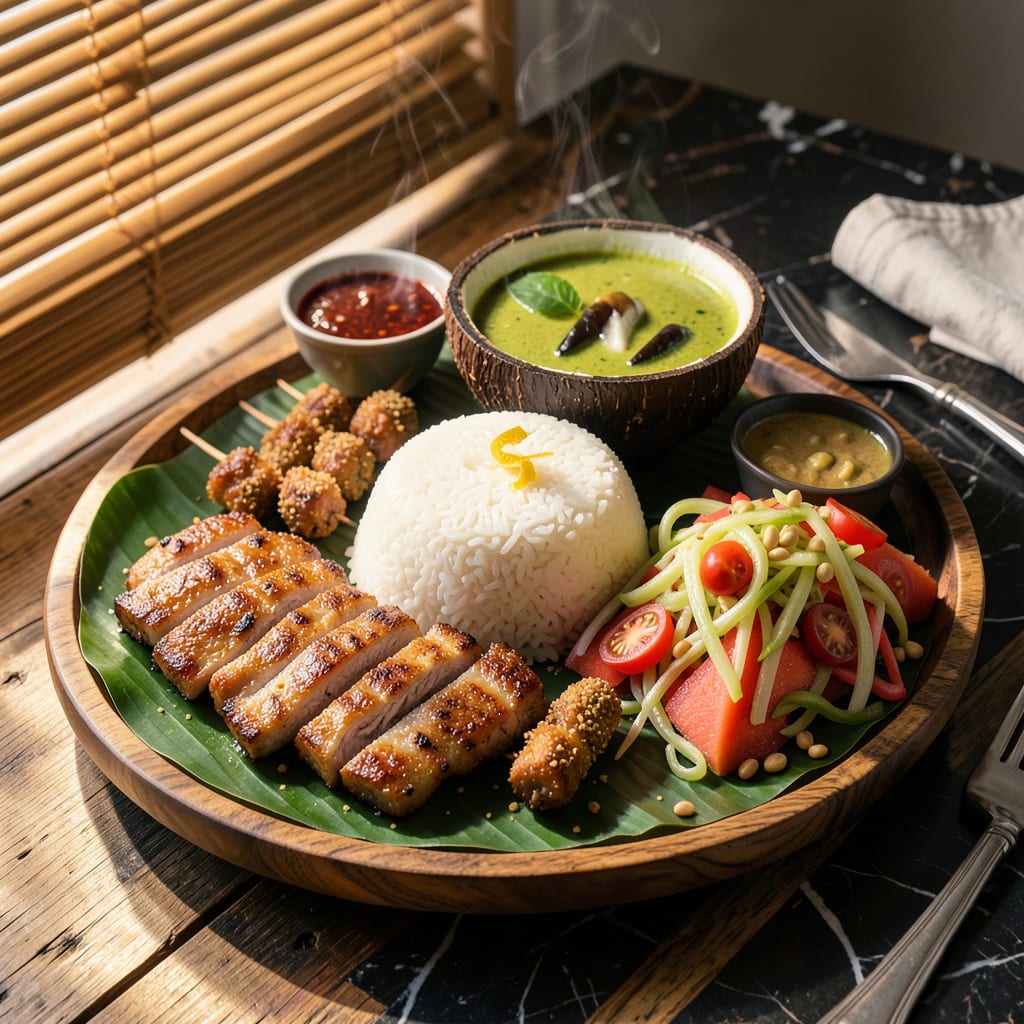
Thai food delivers a vibrant balance of five key flavors: sweet, sour, salty, bitter, and spicy. Dishes often combine fresh herbs like lemongrass and basil with fiery chilies, creamy coconut, and tangy lime for a complex, aromatic experience.
This isn’t just about heat or sweetness—it’s a carefully orchestrated symphony where each note plays a crucial role. 🔥 The magic happens in how these flavors layer: the bright acidity of tamarind cutting through rich coconut milk, or how fish sauce adds umami depth without overpowering. I’ve found that what makes Thai cuisine truly special is its ability to make your taste buds dance between extremes in a single bite—like the cooling mint in a spicy larb salad or the caramelized crunch of peanuts in Pad Thai.
What surprises many first-timers is how regional ingredients shape these flavors. 🌟 The north favors sticky rice and herb-heavy dishes, while southern cuisine amps up the heat with extra chilies and turmeric. Even street food vendors master this balance, proving you don’t need fancy techniques—just bold, fresh ingredients and fearless flavor combinations.
💡 In This Article
- The Five Core Flavors That Define Thai Cuisine
- 10 Must-Try Thai Dishes to Experience Authentic Flavors
The Five Core Flavors That Define Thai Cuisine
The secret to Thai food’s unforgettable taste lies in its yin-yang philosophy—every dish seeks perfect equilibrium between opposing forces. This isn’t just culinary tradition; it’s a cultural principle where sweet balances sour, heat cools with herbs, and richness gets cut by acidity.
The foundation starts with nam prik pao (chili jam) or fish sauce, which deliver umami depth while palm sugar and coconut milk round out sharp edges. What’s fascinating is how chefs adjust ratios in real-time, tasting constantly to achieve that elusive harmony. ✨
Let’s break down the science behind the flavors: Sour comes from lime juice (pH 2-3) or tamarind, which contains tartaric acid that literally makes your mouth water. Spicy isn’t just heat—it’s about capsaicin levels in Thai chilies (50,000-100,000 Scoville units) that trigger endorphins.
The salty element often uses fermented fish sauce with 20% sodium content, while sweet balances with palm sugar’s low glycemic index (35-50). Bitter notes from herbs like bitter melon or neem leaves add complexity by stimulating different taste receptors.
The magic happens when these interact—like how fat in coconut milk binds to capsaicin, reducing perceived heat while carrying flavors. 🔥
Fresh herbs act as flavor bridges in this system. Thai basil (with its anise-like estragole compound) cuts through richness, while cilantro‘s aldehydes add brightness. Lemongrass contains citral that enhances other flavors through aroma-volatility—when heated, its compounds rise first to prime your senses.
The timing matters too: herbs added late (like in pho) retain their vibrant green color and crisp texture, while those cooked long (like in curries) mellow into deeper, earthier notes. This layered approach means you’re experiencing flavors in waves, not all at once. 🌟
Regional differences show how adaptable this system is. Northern Thailand uses sticky rice as a neutral base for herb-heavy sausage (sai oua) with 20+ ingredients, while the south piles on chilies and turmeric in dishes like gaeng tai pla.
Central Thailand perfected the balance in dishes like tom yum goong, where 10-12 ingredients create a soup that’s simultaneously sour, spicy, and aromatic. Street vendors master this with limited ingredients by relying on freshness timing—lime squeezed tableside, herbs added last minute—proving the principles work at every level. ⚡
The texture contrast amplifies the flavor experience. Crunchy roasted peanuts in Pad Thai, chewy rice noodles in kuay teow, or the snap of green papaya in som tum—these aren’t accidental. Studies show crunch increases perceived flavor intensity by 15-20% through mechanical stimulation of taste buds.
Even the temperature plays a role: serving larb at room temperature preserves herb volatility, while tom kha gai‘s warmth at 160°F optimizes coconut milk’s creaminess and aroma release. This multisensory approach explains why Thai food feels so alive in your mouth. 💫
What most people miss is how Thai cuisine uses flavor memory—the way a dish evolves as you eat it. The first bite of massaman curry might taste sweet from potatoes and coconut, but the finish reveals cinnamon and nutmeg warmth.
A proper green papaya salad starts with lime’s pucker, then unfolds with chili heat, peanut richness, and finally the cooling effect of long beans.
This temporal layering, combined with the physical act of eating (wrapping food in lettuce, using hands), creates an experience that engages more than just taste—it’s why Thai meals feel like a journey, not just a dish. 💛

Trained in classic French technique but raised on slow-cooked ribs and spicy rubs, she blends culinary skill with smoke and soul.
- Recipe for Boneless Pork Chops in Cast Iron Skillet: Sear and Baste to Juicy Perfection - October 3, 2026
- Recipe for Boneless Cross Rib Roast: Slow-Roasted Beef with Herb Crust - October 3, 2026
- Hamburgers in Sauce Recipe Crock Pot: Slow-Cooked Savory Delight - October 3, 2026