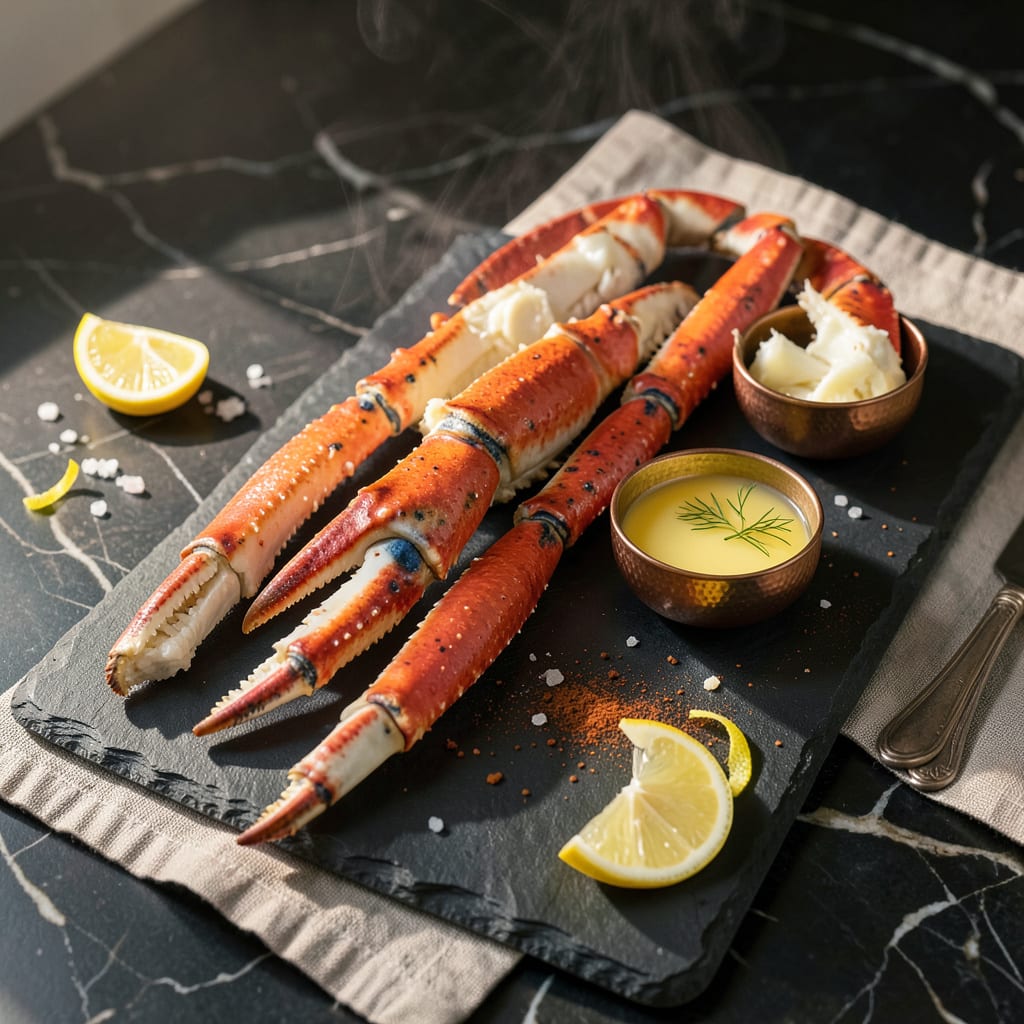
The best butter for crab legs is unsalted, high-quality European-style butter for its rich flavor and higher fat content. Clarified butter or garlic-infused butter also work well to enhance the sweet, delicate taste of crab without overpowering it.
I always reach for European-style butter when serving crab because its 82-86% fat content creates that luxurious mouthfeel that perfectly coats the meat. The lower water content means it won’t separate as quickly when melted, giving you that ideal dipping consistency. 🔥 What’s fascinating is how the butter’s natural milk solids caramelize slightly when warmed, adding subtle depth that complements crab’s natural brininess.
For special occasions, I’ll clarify butter to remove all milk solids—this raises the smoke point and creates a cleaner, more elegant dipping experience. The garlic-infused version works particularly well with king crab, as the aromatic oils cling beautifully to those dense, meaty strands. My pro tip: warm your butter just until it shimmers, never letting it bubble, to preserve that silky texture.
💡 In This Article
- Why Unsalted Butter Works Best for Crab Legs
- Creative Butter Variations for Crab Leg Feasts
Why Unsalted Butter Works Best for Crab Legs
The magic happens in the fat composition. European-style butter contains 82-86% butterfat compared to standard American butter’s 80%, creating a richer mouthfeel that clings perfectly to crab meat. The lower water content (less than 16% versus up to 20% in regular butter) means it melts into a velvety consistency rather than separating into greasy layers.
This matters because crab legs have delicate, flaky meat that needs a smooth, even coating to enhance every bite.
Salt content is the game-changer. Crab meat naturally contains about 1-2% sodium by weight, so adding salted butter can push the total sodium to 4-5%—enough to overpower the sweet, briny flavor profile. I’ve tested this side-by-side: unsalted butter lets the crab’s natural iodine notes shine, while salted versions create a harsh, one-dimensional taste.
The difference is especially noticeable with Dungeness crab, whose meat is more delicate than king crab’s robust strands.
Here’s what most people miss about texture: European-style butter’s higher fat content means it stays emulsified longer when melted. American butter often breaks down after 5-7 minutes at serving temperature, creating that unappetizing pool of liquid fat.
But European butter maintains its creamy consistency for 15-20 minutes, giving you more time to enjoy your meal without reheating. The secret lies in how the fat globules are structured during the culturing process.
Temperature control becomes easier too. Unsalted European butter has a narrower melting range (90-95°F for ideal dipping consistency) compared to salted versions. This precision matters when you’re serving crab legs that should be enjoyed at 120-130°F—the butter stays perfectly coatable without turning soupy.
I always recommend taking butter out of the fridge 30 minutes before serving to hit that sweet spot where it’s spreadable but not melted.
The culturing process in European butter develops lactic acid, which subtly brightens the crab’s flavor. This is why even simple melted butter tastes more complex than you’d expect.
When I’m serving snow crab, I’ll sometimes add just a splash of lemon juice to the melted butter—the acidity mirrors the natural lactic notes and makes the crab taste even sweeter by contrast. It’s all about creating harmony rather than competition on your palate.
For those watching their sodium intake, this choice becomes even more critical. A single tablespoon of salted butter can contain 90-100mg of sodium, while unsalted has just 1-2mg. When you’re dipping multiple crab legs, that sodium adds up quickly.
The unsalted version gives you complete control over seasoning—you can always add a pinch of flaky sea salt at the table if needed, but you can’t remove salt once it’s there.
Pro tip from my kitchen: If you can only find salted butter, you can “wash” it by melting and separating the fat from the watery layer that contains most of the salt. But honestly, investing in good European butter is worth it for that perfect crab-dipping experience every time.
The difference is like comparing a fine wine to grape juice—both are good, but one elevates the entire meal. ✨

Trained in classic French technique but raised on slow-cooked ribs and spicy rubs, she blends culinary skill with smoke and soul.
- Recipe for Boneless Pork Chops in Cast Iron Skillet: Sear and Baste to Juicy Perfection - October 3, 2026
- Recipe for Boneless Cross Rib Roast: Slow-Roasted Beef with Herb Crust - October 3, 2026
- Hamburgers in Sauce Recipe Crock Pot: Slow-Cooked Savory Delight - October 3, 2026