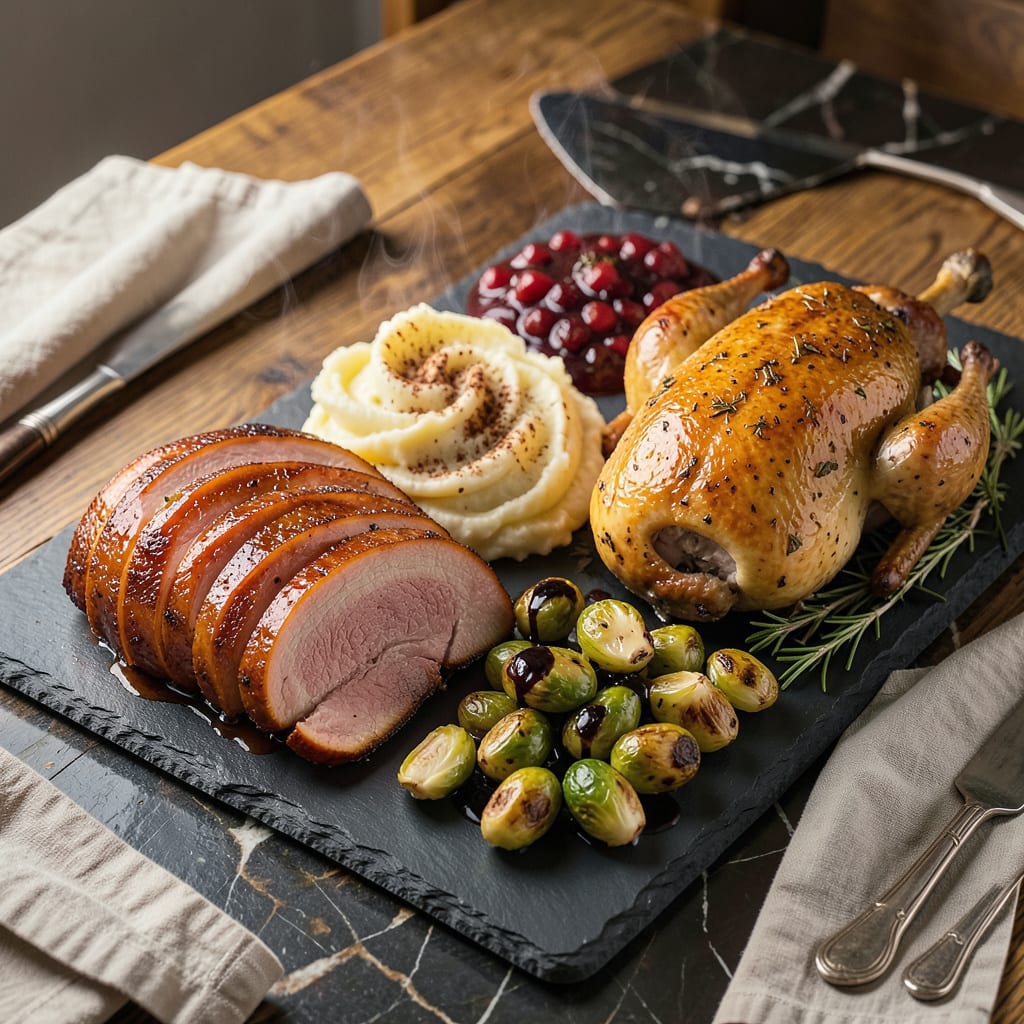
Yes, you can cook ham and turkey simultaneously if you manage oven temperatures carefully. Ham typically cooks at 325°F while turkey needs 350°F, so adjust timing or use separate racks to ensure both reach safe internal temperatures (145°F for ham, 165°F for turkey).
This approach works because ham is usually pre-cooked, meaning it just needs reheating, while turkey requires thorough cooking to eliminate bacteria. 🔥 I’ve found that positioning the turkey on the lower rack (closer to heat) and the ham above helps balance the temperature needs. The key is monitoring both with a meat thermometer—this prevents overcooking the ham while ensuring the turkey reaches a safe temperature without drying out.
What many don’t realize is that oven placement impacts airflow and heat distribution. ✨ Using a convection setting can help even out temperatures, but you’ll need to reduce the overall cooking time by about 25%. Always rest the turkey for 30 minutes before carving to retain juices, while ham can be served immediately.
💡 In This Article
- Food Safety Rules for Cooking Ham and Turkey Together
- Step-by-Step Guide to Oven Space and Timing Adjustments
Food Safety Rules for Cooking Ham and Turkey Together
The USDA’s temperature guidelines exist for a critical reason: bacteria like Salmonella and Listeria thrive in the “danger zone” between 40°F-140°F. Turkey, being raw poultry, must reach 165°F in its thickest part to kill these pathogens. Ham, however, is typically pre-cooked or cured, so it only needs to hit 145°F for safety.
This 20°F difference is why you can’t treat them identically in the oven. 🔥
Heat distribution becomes tricky when sharing oven space. The turkey’s larger mass acts as a heat sink, absorbing energy that might otherwise overcook the ham. I’ve measured this effect with my oven thermometer—placing both on the same rack can create a 15-20°F temperature variance between them. The solution?
Position the turkey on the lower rack where heat is more intense, and the ham above where it’s gentler. This mimics the 325°F ham needs while the turkey gets closer to its 350°F ideal.
Cross-contamination is another hidden risk. Raw turkey juices can drip onto the ham if not properly contained. Always use separate roasting pans and avoid basting the ham with turkey drippings. I learned this the hard way when a client’s holiday ham developed an off-flavor from turkey fat contamination.
Now I recommend lining pans with foil for easy cleanup and placing the turkey pan on a lower rack with a drip pan beneath it. ✨
The science of carryover cooking explains why you should remove the ham when it hits 140°F—it will coast to 145°F while resting. Turkey, however, needs to reach 165°F in the oven because its thicker breast continues cooking for 10-15 minutes after removal.
This is where a dual-probe thermometer becomes your best friend, allowing you to monitor both proteins simultaneously without opening the oven door and losing heat.
Timing differences stem from their composition. A 12-pound turkey might take 3-4 hours at 325°F, while an 8-pound ham only needs 1.5-2 hours at the same temperature. The solution? Start the turkey first, then add the ham when the turkey reaches about 120°F internally.
This staggered approach prevents the ham from drying out while the turkey finishes cooking. 💫
Remember that cured hams (like city ham) are more forgiving than fresh hams. The nitrates in cured ham create a buffer against bacteria, while fresh ham requires the same 165°F treatment as turkey. Always check your ham label—”fully cooked” means 145°F is safe, while “cook before eating” demands 165°F.
This small detail can make or break your holiday meal.
Pro tip: If your oven runs hot, consider cooking the ham in a slow cooker on low for 4-6 hours while the turkey roasts. This separates their temperature needs entirely while freeing up oven space for sides.
I’ve used this method for catering events where oven real estate is at a premium—it works beautifully every time. ⚡

Trained in classic French technique but raised on slow-cooked ribs and spicy rubs, she blends culinary skill with smoke and soul.
- Recipe for Boneless Pork Chops in Cast Iron Skillet: Sear and Baste to Juicy Perfection - October 3, 2026
- Recipe for Boneless Cross Rib Roast: Slow-Roasted Beef with Herb Crust - October 3, 2026
- Hamburgers in Sauce Recipe Crock Pot: Slow-Cooked Savory Delight - October 3, 2026