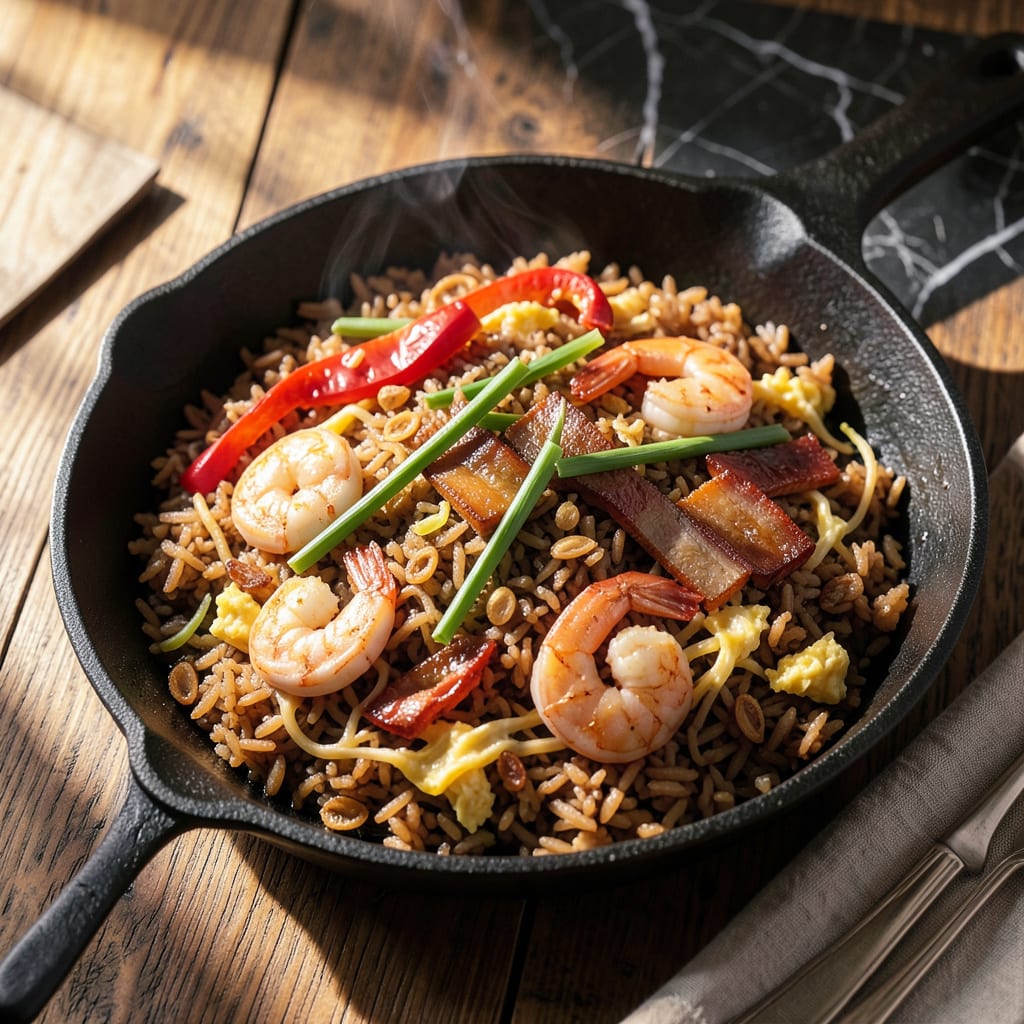
Fried rice turns brown primarily from caramelization of sugars in the rice and soy sauce, combined with the Maillard reaction between amino acids and reducing sugars during high-heat cooking.
That rich golden-brown hue comes from two key chemical processes working in harmony. The sugars in soy sauce and rice break down under intense heat, creating complex flavors and that signature caramelized color. Meanwhile, proteins in the ingredients react with sugars to form hundreds of new flavor compounds through the Maillard reaction—this is what gives properly cooked fried rice its deep, savory character. 🔥 I’ve found that controlling your wok’s temperature is crucial: too low and you’ll get pale rice, too high and you risk burning before the flavors develop fully.
💡 In This Article
- The Chemistry Behind Fried Rice Browning Reactions
- How to Control Fried Rice Color for Perfect Results
The Chemistry Behind Fried Rice Browning Reactions
When you fire up that wok, you’re creating the perfect laboratory for two critical reactions. First, the sugars in cooked rice (about 0.5-1% by weight) and fermented soy sauce (3-5% sugar content) begin breaking down at temperatures above 320°F.
This is where caramelization kicks in—those simple sugars transform into complex molecules that deliver both color and flavor. The longer you cook, the deeper the brown hues develop, but there’s a sweet spot before they turn bitter. 🔥
The real magic happens when amino acids from proteins in the rice, eggs, or meat meet those sugars. This Maillard reaction (different from caramelization) starts at around 284°F and creates hundreds of new flavor compounds.
What’s fascinating is how soy sauce accelerates this process—its fermentation produces free amino acids like glutamic acid that react more readily than intact proteins. That’s why fried rice made with fresh soy sauce develops color faster than with older, more oxidized sauce.
Heat intensity plays a crucial role in balancing these reactions. At 375-400°F, you get optimal browning without burning, but most home stoves can’t maintain that heat consistently. I’ve found that cast iron skillets come closest to replicating wok hei (breath of the wok) because they retain heat better than stainless steel.
The key is keeping ingredients moving—static rice will develop hot spots that turn black rather than golden brown. ✨
Here’s what most home cooks miss: the moisture content of your rice dramatically affects browning. Freshly cooked rice contains about 60% water, while day-old rice drops to 40-45%. That reduction in moisture allows the surface temperature to climb higher, promoting better Maillard reactions.
The starches also retrogradate (recrystallize) overnight, giving you those distinct, separate grains that brown more evenly than sticky fresh rice.
Soy sauce isn’t just adding color—it’s participating in the chemistry. The fermentation process creates reducing sugars that caramelize more readily than table sugar. Dark soy sauce contains added caramel color (E150a) and has been aged longer, which is why it produces deeper brown tones than light soy.
A typical recipe uses about 1-2 tablespoons of soy sauce per 3 cups of rice—that’s enough to contribute significant browning without making the dish overly salty. 💫
What about those little black specks you sometimes see? Those are from protein-rich ingredients like garlic or ginger that have undergone advanced Maillard reactions. While they add flavor complexity, too many indicate your heat was too high.
The ideal fried rice should have an even golden-brown color with just a few darker flecks for visual contrast and flavor depth.
Next time you make fried rice, try this pro trick: add a pinch of baking soda (1/8 teaspoon) to your soy sauce. The alkaline environment promotes browning by increasing the reactivity of the amino acids.
Just don’t overdo it—too much will make your rice taste soapy and turn an unappetizing yellow-brown instead of that perfect golden hue. ⚡

Trained in classic French technique but raised on slow-cooked ribs and spicy rubs, she blends culinary skill with smoke and soul.
- Recipe for Boneless Pork Chops in Cast Iron Skillet: Sear and Baste to Juicy Perfection - October 3, 2026
- Recipe for Boneless Cross Rib Roast: Slow-Roasted Beef with Herb Crust - October 3, 2026
- Hamburgers in Sauce Recipe Crock Pot: Slow-Cooked Savory Delight - October 3, 2026