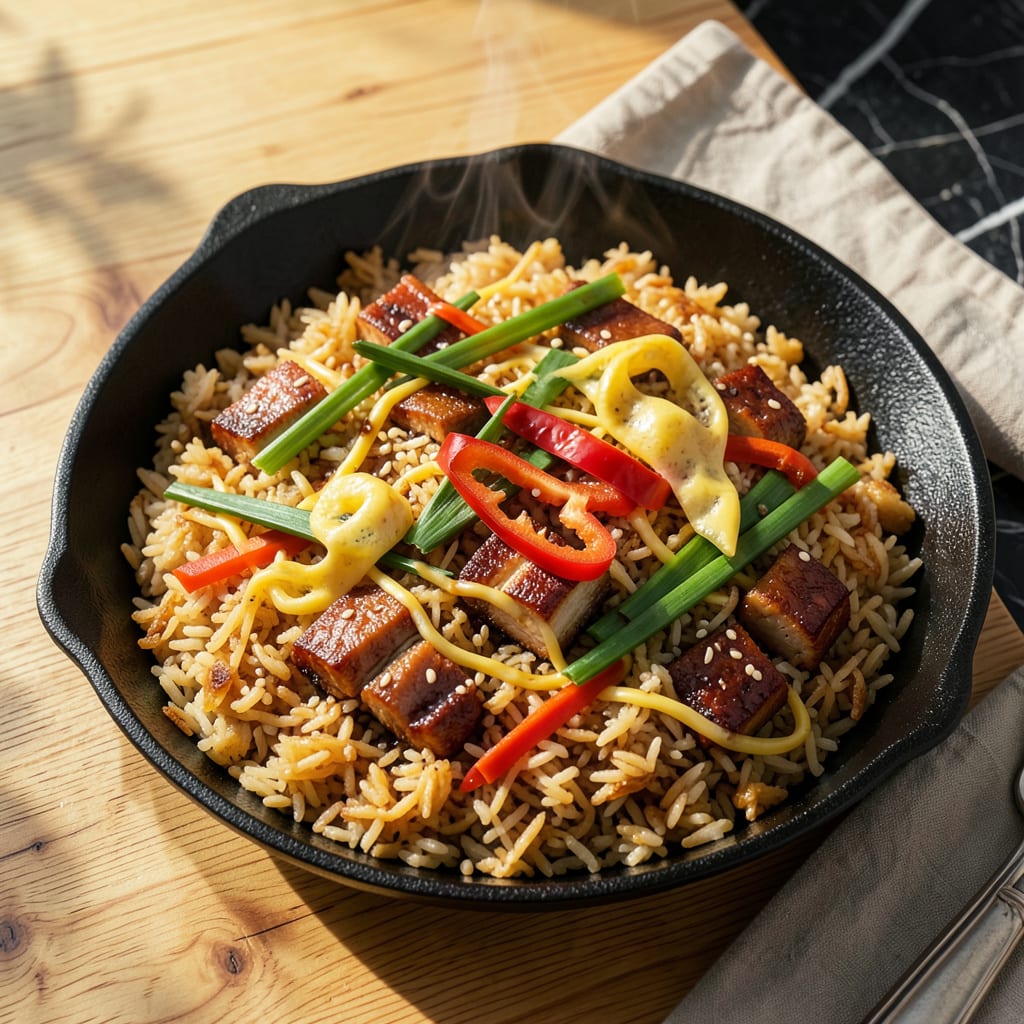
Fried rice gets its golden-brown hue primarily from soy sauce and the natural caramelization of rice during high-heat stir-frying. Turmeric or curry powder may also add yellow tones in some regional variations.
That rich color you see comes from a perfect storm of chemistry and technique. The Maillard reaction—where amino acids and sugars react under intense heat—transforms plain white rice into those appetizing golden-brown specks. 🔥 I’ve found that the type of soy sauce matters too: dark soy adds deeper caramel tones, while light soy keeps things more subtle. Regional twists like turmeric in Thai versions or kecap manis in Indonesian nasi goreng create entirely different visual (and flavor) profiles.
What’s fascinating is how the wok’s temperature plays a role. A properly heated wok at 400-450°F creates that signature “wok hei” effect, which isn’t just about flavor—it actually intensifies the color development through rapid surface browning. The soy sauce’s pigments penetrate the rice grains during this process, bonding with the starches to lock in that classic fried rice appearance.
💡 In This Article
- How Soy Sauce and Caramelization Create Fried Rice Color
- Regional Variations That Change Fried Rice Appearance
How Soy Sauce and Caramelization Create Fried Rice Color
The golden-brown magic starts with the Maillard reaction—a chemical dance between amino acids and reducing sugars in the rice when exposed to 400-450°F heat. This isn’t just browning; it’s flavor development at a molecular level. The rice grains’ surface proteins and carbohydrates transform, creating complex compounds that give fried rice its signature speckled appearance.
What’s wild is that this reaction happens in seconds when your wok is properly heated. 🔥
Soy sauce acts as both a coloring agent and flavor enhancer. Dark soy sauce contains 10-15% caramel color and has been fermented longer, giving it deeper pigmentation that stains rice more intensely than light soy.
When you add soy sauce to hot rice, the liquid evaporates quickly, leaving behind concentrated pigments that bond with the starches. I’ve noticed that rice cooked with 1-2 tablespoons of dark soy develops a richer color than batches with only light soy.
The wok’s temperature creates what Chinese chefs call “wok hei” (breath of the wok). This intense heat causes rapid surface dehydration, which concentrates the soy sauce pigments and accelerates the Maillard reaction. The result? Those beautiful charred bits that make fried rice visually appealing.
A properly heated wok can reach 600°F at its hottest spots, creating micro-areas of intense color development that you can’t replicate in a regular skillet.
Here’s what most home cooks miss: the rice’s moisture content before frying dramatically affects color. Day-old rice with 30-40% less moisture than freshly cooked rice browns more evenly because there’s less steam interfering with the Maillard reaction. The drier surface allows for better pigment absorption from the soy sauce and more consistent caramelization. ✨
Timing matters too. When you add soy sauce at the beginning of stir-frying, the pigments have more time to penetrate the rice grains, creating a uniform color. Add it too late, and you’ll get uneven coloring with some white patches.
I’ve found the sweet spot is adding soy sauce when the rice is about 70% cooked through—hot enough to absorb color but not so late that the pigments can’t distribute evenly.
The oil you use plays a supporting role in color development. Peanut oil, with its 450°F smoke point, allows for higher heat cooking that enhances browning. Sesame oil adds its own golden hue and nutty aroma, though I use it sparingly (1 teaspoon) since its strong flavor can dominate.
The oil creates a thin coating on each rice grain that helps distribute heat evenly, promoting consistent color development throughout the dish. 💫
What really fascinates me is how the starch gelatinization from pre-cooking the rice interacts with the soy sauce pigments. The partially gelatinized starch molecules on the rice surface act like tiny sponges, absorbing and locking in the soy sauce color during the stir-fry process.
This is why properly cooked and cooled rice develops such vibrant color compared to freshly cooked rice that hasn’t had time for starch retrogradation to occur.

Trained in classic French technique but raised on slow-cooked ribs and spicy rubs, she blends culinary skill with smoke and soul.
- Recipe for Boneless Pork Chops in Cast Iron Skillet: Sear and Baste to Juicy Perfection - October 3, 2026
- Recipe for Boneless Cross Rib Roast: Slow-Roasted Beef with Herb Crust - October 3, 2026
- Hamburgers in Sauce Recipe Crock Pot: Slow-Cooked Savory Delight - October 3, 2026