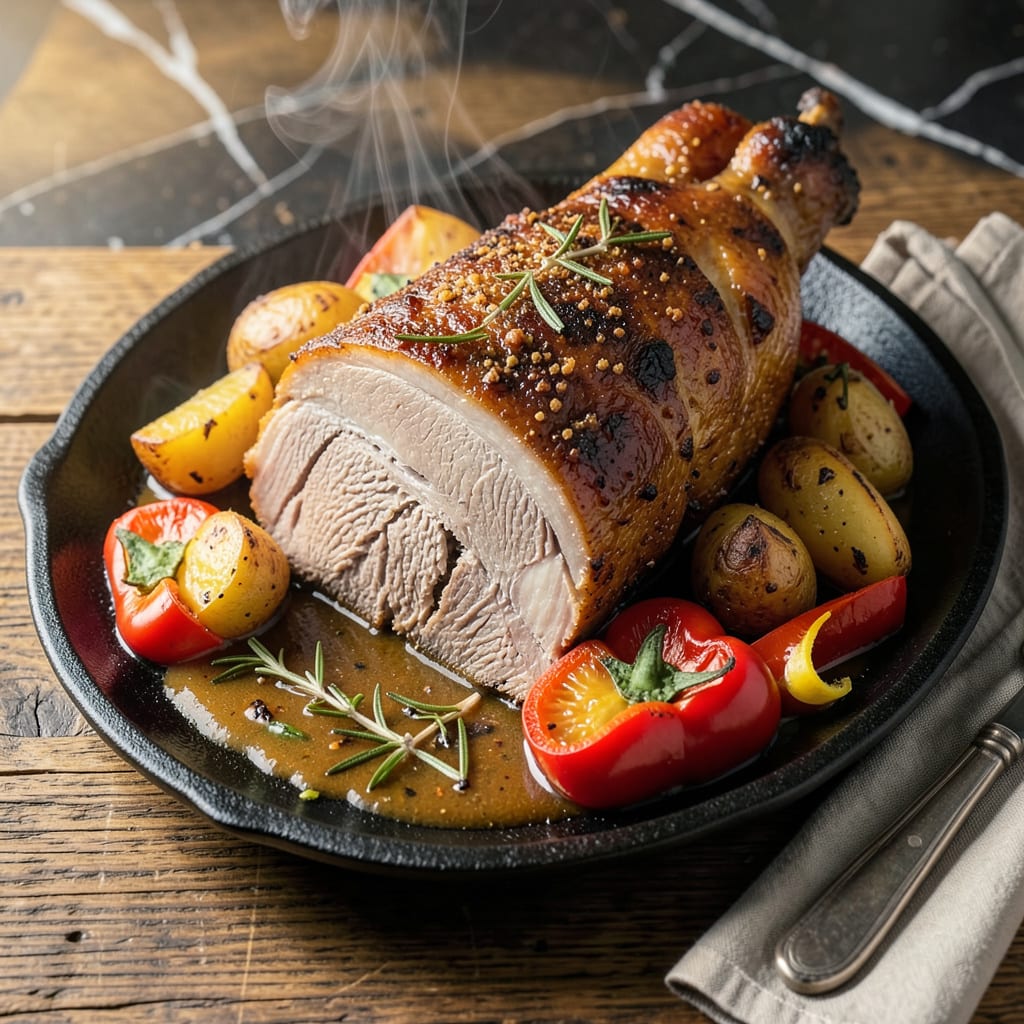
Cook pork shoulder to an internal temperature of 195–203°F for tender, pull-apart results. For sliced pork, aim for 145°F (USDA safe minimum). Low-and-slow methods like smoking or braising work best for ideal texture.
This temperature range isn’t arbitrary—it’s where magic happens. 🔥 The connective tissues in pork shoulder start breaking down around 160°F, but they fully transform into silky gelatin between 195–203°F. I’ve found this is when the meat becomes so tender it practically falls apart at the touch of a fork. The difference between 195°F and 203°F is subtle but noticeable: the higher end gives you that competition-style pull-apart texture, while the lower end maintains just enough structure for perfect shredding.
💡 In This Article
- Why Pork Shoulder Needs Higher Cooking Temperatures
- Best Cooking Methods for Perfect Pork Shoulder Temperature
Why Pork Shoulder Needs Higher Cooking Temperatures
Pork shoulder is packed with collagen—the tough connective tissue that makes raw meat chewy. Around 160°F, this collagen begins to melt, but it doesn’t fully transform until reaching 195–203°F. At these higher temperatures, the collagen breaks down into gelatin, giving the meat that luscious, melt-in-your-mouth texture.
This process is why low-and-slow cooking works so well for this cut. 🔥
Compare this to leaner cuts like pork loin, which only needs to reach 145°F for safe consumption. The loin has minimal connective tissue, so higher temps would dry it out. But pork shoulder thrives at those elevated temperatures because the fat and collagen need time to render properly.
I’ve found that pulling it at 195°F gives you shreddable meat, while 203°F delivers that ultra-tender, competition-style texture.
The science behind this lies in the muscle structure. Shoulder muscles work hard (unlike the loin), so they’re rich in connective tissue. When cooked slowly, these tissues dissolve into gelatin, which coats the muscle fibers and keeps them moist.
This is why rushed cooking at lower temps leaves you with tough, stringy meat instead of that perfect pull-apart consistency. ✨
Here’s what happens at each stage:
- 145°F: Safe to eat but tough and chewy
- 160°F: Collagen starts breaking down
- 195°F: Gelatin forms, meat becomes tender
- 203°F: Maximum gelatinization, ultra-tender
This transformation is why you can’t rush pork shoulder. The collagen needs time to convert—typically 1-2 hours per pound at 225–250°F when smoking.
I remember my first attempt cutting into a shoulder at 180°F and being disappointed by the texture. Now I know patience is the secret ingredient. 💫
Even the resting period matters. After reaching temp, let it rest 30-60 minutes wrapped in foil. This allows the gelatin to redistribute throughout the meat, ensuring every bite is juicy. The internal temperature will actually rise another 5-10°F during resting, so factor that into your target. ⚡

Trained in classic French technique but raised on slow-cooked ribs and spicy rubs, she blends culinary skill with smoke and soul.
- Recipe for Boneless Pork Chops in Cast Iron Skillet: Sear and Baste to Juicy Perfection - October 3, 2026
- Recipe for Boneless Cross Rib Roast: Slow-Roasted Beef with Herb Crust - October 3, 2026
- Hamburgers in Sauce Recipe Crock Pot: Slow-Cooked Savory Delight - October 3, 2026