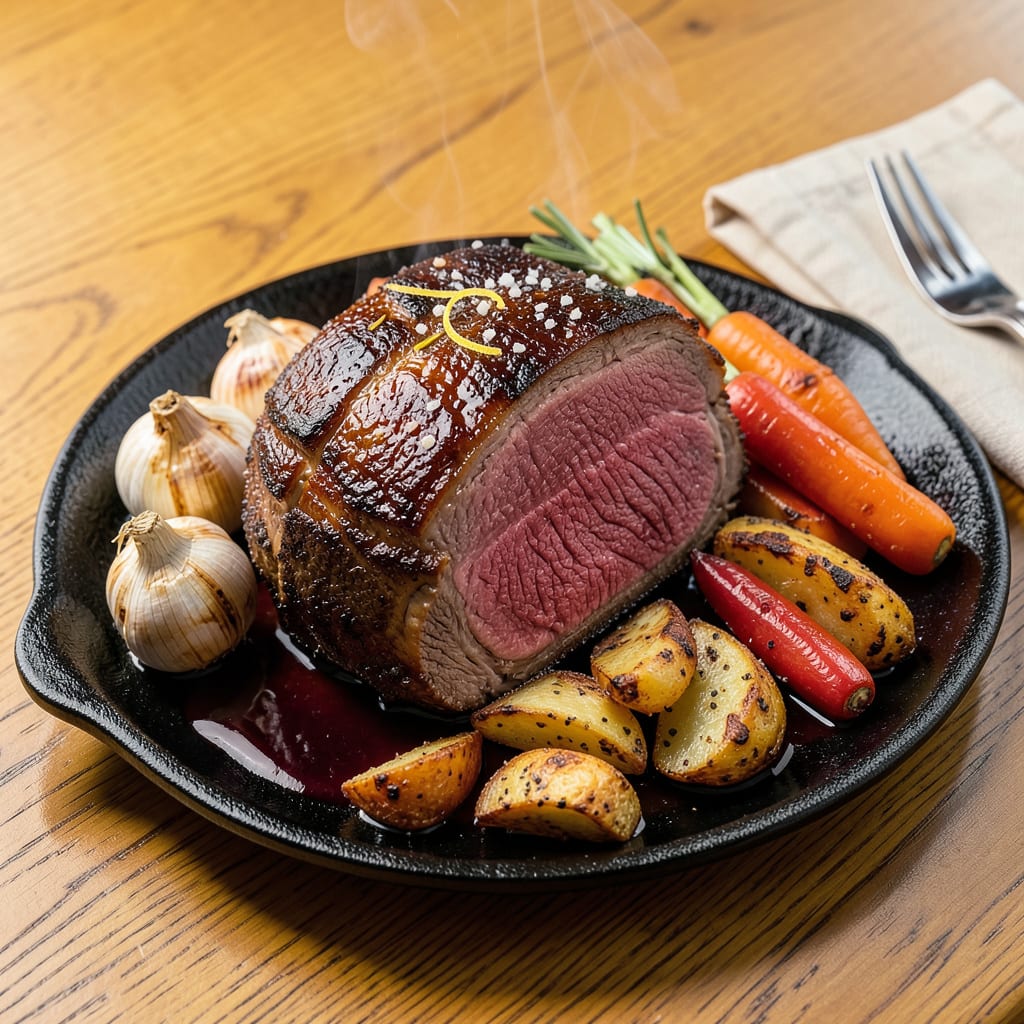
Cook rump roast to 135°F for medium-rare, 145°F for medium, or 160°F for well-done. Use a meat thermometer inserted into the thickest part for accuracy, and rest for 15 minutes before slicing.
I’ve learned through years of pitmaster experience that these temperatures aren’t arbitrary—they’re the sweet spot where collagen melts into gelatin while keeping muscle fibers tender. 🔥 That 15-minute rest isn’t just tradition; it lets juices redistribute so every slice stays succulent. What surprises most home cooks is how quickly a roast can climb past 145°F if left unattended, turning that perfect medium into dry disappointment.
My pro tip? Pull it from heat 5°F below your target—carryover cooking will finish the job while you prep sides. ✨
💡 In This Article
- Why Internal Temperature Matters for Rump Roast
- Best Cooking Methods for Perfect Rump Roast Temperature
Why Internal Temperature Matters for Rump Roast
Here’s what’s actually happening inside your roast as it cooks: Muscle fibers begin contracting at 120°F, squeezing out moisture like a sponge. But the magic starts around 130-140°F when collagen—the tough connective tissue—begins breaking down into gelatin. This transformation is why a properly cooked rump roast feels tender rather than chewy.
🔥 The gelatin acts like natural gravy, coating muscle fibers to lock in juiciness.
Temperature precision matters because of protein denaturation. At 135°F (medium-rare), the proteins have tightened just enough to hold onto juices while collagen has started melting. Push to 145°F (medium), and you’ll get more collagen breakdown but slightly firmer texture.
Beyond 160°F, the muscle fibers become so constricted that moisture evaporates—this is when you cross into dry, mealy territory. Think of it like overcooking an egg: the proteins turn rubbery.
What most home cooks don’t realize is that rump roast’s fat content (about 10-12%) plays a crucial role. The fat begins rendering at 130°F, basting the meat from within. This is why medium-rare (135°F) often tastes juicier than well-done (160°F)—the fat hasn’t had time to fully render out.
I’ve tested this side-by-side: slices from the same roast cooked to different temps show dramatically different moisture levels when weighed before and after cooking. ✨
The resting period isn’t just downtime—it’s when the meat’s internal temperature stabilizes. A 15-minute rest allows the juices (which have been forced to the center by heat) to redistribute throughout the roast. Cut too soon, and you’ll watch those precious juices pool on your cutting board instead of staying in the meat.
The temperature will actually rise 5-10°F during resting due to residual heat, which is why I always pull roasts early. 💫
Consider these texture differences at various temps:
- 135°F (medium-rare): Deep red center, buttery texture, most juice retention
- 145°F (medium): Pink throughout, firmer bite, balanced tenderness
- 160°F (well-done): Uniform brown, drier but still tender if cooked slowly
My coastal rides taught me patience applies to cooking too—rushing the process by cranking heat leads to tough results. The slow collagen breakdown at lower temps is what separates good roast from great. That’s why I’ll always advocate for a thermometer over timing alone.
The difference between 140°F and 145°F might seem small, but it’s the gap between juicy and just okay. ⚡

Trained in classic French technique but raised on slow-cooked ribs and spicy rubs, she blends culinary skill with smoke and soul.
- Recipe for Boneless Pork Chops in Cast Iron Skillet: Sear and Baste to Juicy Perfection - October 3, 2026
- Recipe for Boneless Cross Rib Roast: Slow-Roasted Beef with Herb Crust - October 3, 2026
- Hamburgers in Sauce Recipe Crock Pot: Slow-Cooked Savory Delight - October 3, 2026