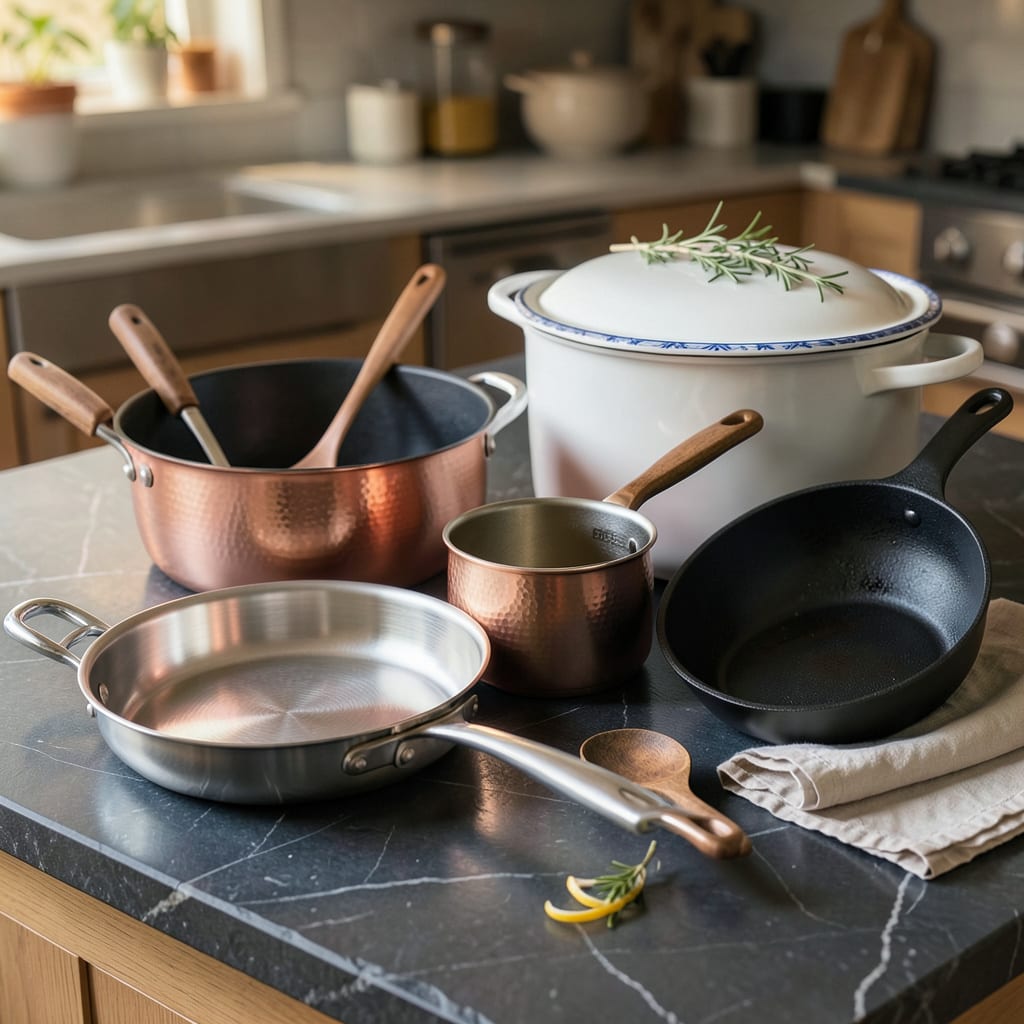
Stainless steel offers durability and even heating for most cooks, while cast iron excels at heat retention for searing. Nonstick works best for delicate foods like eggs or fish but requires gentle handling. Copper provides precise temperature control for professional results.
I’ve spent years testing cookware in professional kitchens and home setups, and here’s what matters most: the material directly impacts your food’s texture and flavor. 🔥 Cast iron develops that coveted crust on steaks because it holds heat like no other, while copper’s responsiveness lets you adjust temperatures instantly for delicate sauces. What many home cooks overlook is how stainless steel’s durability makes it the workhorse of most kitchens—it won’t warp or degrade with daily use. The real secret? Matching the material to your cooking style rather than chasing what’s “best” in general.
💡 In This Article
- How Cookware Materials Affect Heat Distribution and Cooking
- Matching Cookware Materials to Your Cooking Style and Budget
How Cookware Materials Affect Heat Distribution and Cooking
Heat conductivity is where materials reveal their true colors. Copper leads the pack with a conductivity rating of 231 BTU per hour, meaning it heats up and responds to temperature changes almost instantly. 🔥 This makes it ideal for delicate sauces where precise control prevents scorching.
Aluminum follows closely at 118 BTU, which is why it’s often used as a core in multi-ply stainless steel pans—providing even heating without copper’s price tag.
Stainless steel alone conducts heat poorly (9 BTU), which is why quality pieces use layered construction. A 3-ply stainless pan with aluminum core distributes heat 40% more evenly than single-layer stainless, eliminating hot spots that burn your food.
Cast iron’s 54 BTU conductivity might seem modest, but its massive heat retention (holding heat 3x longer than stainless) creates that perfect sear on steaks by maintaining consistent high temperatures.
Thickness matters more than you’d think. A 3mm cast iron skillet will develop better crusts than a 1.5mm version because it stores more thermal energy. Nonstick pans typically use 0.8-1.2mm aluminum for quick heating, but this thinness makes them prone to warping if heated empty.
The sweet spot for most home cooks? 2.5-3mm multi-ply stainless that balances responsiveness with durability.
Real-world example: Try making a French omelette in copper versus stainless. The copper’s instant response lets you control the delicate curds at 212°F, while stainless might overshoot to 250°F before you adjust the burner. Conversely, cast iron’s slow response makes it terrible for omelettes but perfect for blackening fish at 450°F without temperature fluctuations.
What most cooks don’t realize is how material affects flavor development. Cast iron’s seasoning creates a natural nonstick surface that adds subtle depth to dishes through polymerization of oils. Copper reacts with acidic foods (like tomato sauce) to form trace compounds that enhance umami notes.
Stainless steel remains neutral, making it the safest choice for precise flavor control in professional kitchens.
Here’s the pro tip: Material thickness impacts cooking times dramatically. A 1/4-inch cast iron skillet might take 8 minutes to preheat properly, while a thin nonstick pan reaches temperature in 90 seconds. This explains why restaurant kitchens keep cast iron on burners all day—they’re always “ready” for that perfect sear. ✨
The science becomes obvious when you compare how different materials handle the same recipe. A stainless steel saucepan will reduce a wine reduction 20% faster than cast iron because it transfers heat more efficiently to the liquid.
Meanwhile, that same cast iron skillet will give your steak a 3mm deeper crust because it maintains higher surface temperatures during cooking.

Trained in classic French technique but raised on slow-cooked ribs and spicy rubs, she blends culinary skill with smoke and soul.
- Recipe for Boneless Pork Chops in Cast Iron Skillet: Sear and Baste to Juicy Perfection - October 3, 2026
- Recipe for Boneless Cross Rib Roast: Slow-Roasted Beef with Herb Crust - October 3, 2026
- Hamburgers in Sauce Recipe Crock Pot: Slow-Cooked Savory Delight - October 3, 2026