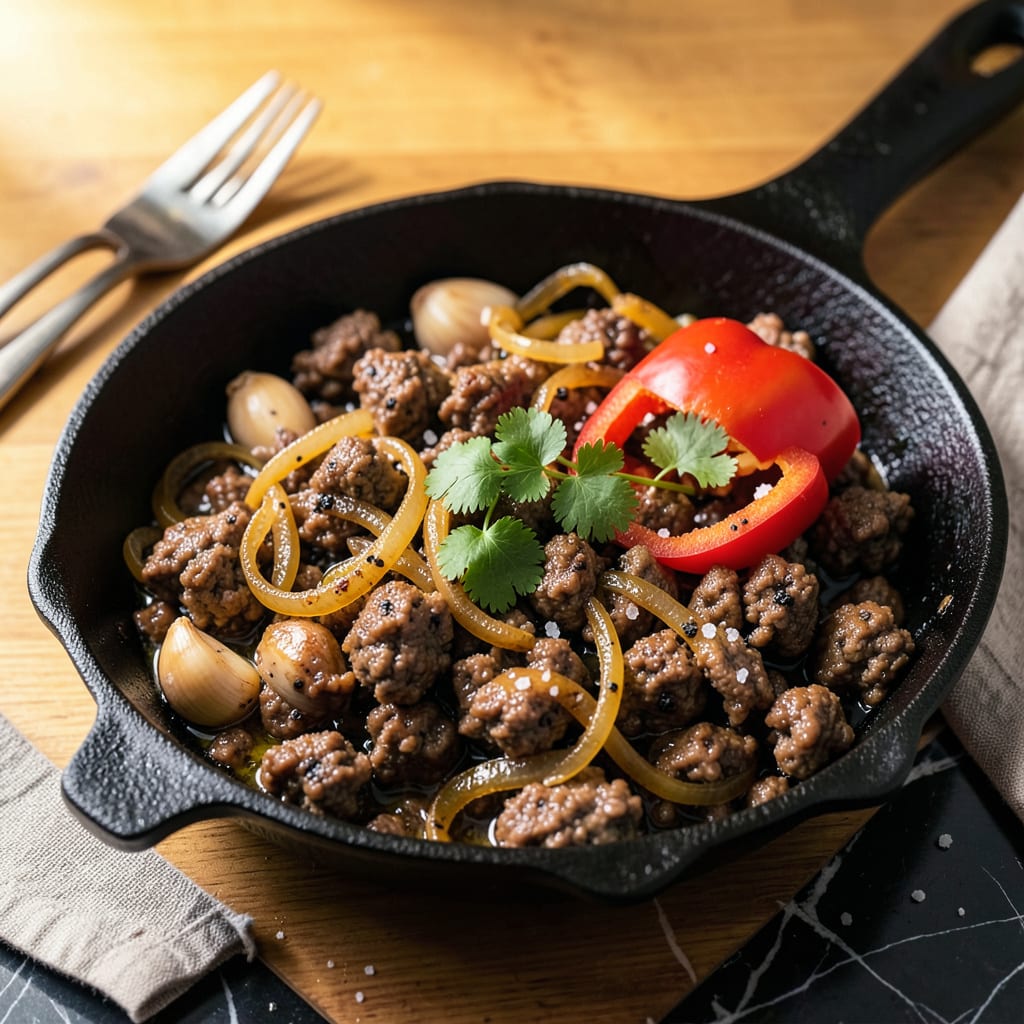
Here’s the thing—adding spices to ground beef isn’t just about tossing them in whenever. I learned this the hard way after years of making taco meat that tasted flat and Bolognese that lacked depth. The secret? Timing is everything, and it changes depending on what you’re cooking.
For quick-cooking dishes like tacos or burgers, I add spices right as the beef hits the pan. The heat blooms the flavors immediately, creating that bold, aromatic punch we all crave. But for slow-simmered dishes like chili or meat sauce? Wait until after browning. Adding spices too early can burn them, leaving bitter notes instead of rich, developed flavors.
I’ll be real with you: the difference between adding spices at the right moment versus the wrong one is night and day. Early addition gives you surface-level flavor. Strategic timing? That’s how you get layers of taste that penetrate every bite. It’s the difference between good ground beef and restaurant-quality results.
Whether you’re making meatloaf, stuffed peppers, or a simple weeknight skillet, understanding when to season transforms your cooking. Let me show you exactly how to time it for maximum flavor impact in every dish.
📚 In This Guide
- What You’ll Need
- Instructions
- Tips and Common Mistakes
What Youll Need
- ● Ground beef: 1 lb (80% lean/20% fat for best flavor 🥩)
- ● Spices: 1–2 tbsp total (e.g., salt, pepper, garlic powder, paprika, or taco seasoning—adjust to taste!)
- ● Cooking oil: 1 tbsp (neutral oil like vegetable or avocado oil for searing)
- ● Mixing bowl: Medium-sized (for pre-seasoning, if needed)
- ● Skillet or pan: 10–12″ cast iron or stainless steel (for even browning)
- ● Wooden spoon or spatula: Heat-resistant for stirring
- ○ Meat thermometer: (Optional but handy for precision—aim for 160°F 🌡️)
- ○ Plastic wrap: (Optional, for resting seasoned meat)
- ○ Timer: (Optional, to track cooking time ⏰)
Instructions: When to Add Spices to Ground Beef for Maximum Flavor
Mastering the timing of seasoning transforms ordinary ground beef into something extraordinary. Here’s exactly how to do it right.
Season Raw Beef Before Cooking (The Flavor Foundation)
I always start by seasoning raw ground beef before it hits the pan. This gives the spices time to penetrate the meat fibers as they cook, creating deeper flavor throughout rather than just on the surface. Use about 1 teaspoon of salt per pound of beef as your base – this enhances the meat’s natural flavor and helps other spices adhere.
Add your dry spices (like garlic powder, onion powder, or chili powder) at this stage too. I find that rubbing the spices into the meat with your hands works best – the warmth from your hands helps activate the aromatic oils in the spices. Don’t worry about overworking the meat; ground beef can handle this treatment without becoming tough.
Cook Until Just Browned (The Critical Flavor Window)
Cook the seasoned beef in a hot skillet over medium-high heat, breaking it up with a wooden spoon as it browns. Here’s the thing – you want to cook it until it’s about 80% done before adding any wet ingredients or additional spices. This usually takes 5-7 minutes, depending on your stove.
You’ll notice the beef changes color from pink to brown and starts to release its juices. At this point, the meat has absorbed the initial spices but still has capacity to take on more flavor. The browned bits at the bottom of the pan (called fond) are pure flavor gold – we’ll use these in the next step.
Add Aromatic Spices Mid-Cook (The Flavor Boost)
Now’s the time to add any aromatic spices like cumin, smoked paprika, or Italian seasoning. I’ve found that adding these when the beef is partially cooked allows their essential oils to bloom in the rendered fat without burning. Sprinkle them evenly over the beef and stir well to incorporate.
If your recipe includes onions or garlic, add them now too. Cook for another 2-3 minutes until you can smell the spices becoming fragrant – that’s your signal they’re properly toasted. The residual moisture in the beef will help distribute these new flavors evenly throughout the dish.
Finish with Fresh Herbs and Liquid (The Final Layer)
Once the beef is fully cooked and any vegetables are tender, it’s time for the finishing touches. Stir in any fresh herbs like parsley or cilantro – these delicate flavors should be added last to preserve their brightness. If your recipe calls for liquid (like tomato sauce or broth), add it now and let everything simmer together for 3-5 minutes.
This final simmering step allows all the flavors to meld together. I always taste at this point and adjust the seasoning if needed – sometimes a pinch more salt or a dash of acid (like lemon juice) can make all the difference. The beef should be fully cooked through but still juicy, with all the spices perfectly balanced.
Rest Before Serving (The Secret Weapon)
Here’s what I do that most people skip: let the seasoned beef rest for 5 minutes off the heat before serving. This brief rest allows the meat to reabsorb its juices, keeping it moist and flavorful. It also gives the spices one last chance to penetrate deeply into the meat.
During this rest, I’ll often prepare whatever I’m serving with the beef – warming tortillas for tacos or toasting buns for burgers. When you’re ready to serve, give the beef one final stir to redistribute any accumulated juices. The result should be perfectly seasoned beef where every bite delivers balanced flavor from the first seasoning all the way through to the final herbs.
Tips and Common Mistakes
Perfecting spiced ground beef is all about timing and technique. Here’s what I’ve learned from years of testing different approaches.
The Heat Factor: When cooking at medium-high heat in Step 2, pay close attention to your pan’s hot spots. I’ve found that moving the beef around the pan every 30 seconds during those 5-7 minutes prevents uneven browning. The goal is consistent color change from pink to brown across all pieces, not just the edges. This even browning creates more fond (those flavorful browned bits) that will enhance your final dish.
Spice Activation Secret: In Step 3, when you add aromatic spices like cumin or smoked paprika during that 2-3 minute window, here’s what makes the difference: let them toast just until you can smell them. I learned this the hard way after burning several batches – the moment you catch that first fragrant whiff is when they’re perfectly toasted. Any longer and they’ll turn bitter instead of rich and aromatic.
Resting Revelation: That 5-minute rest in Step 5 isn’t just about juices – it’s your final flavor opportunity. I always cover my skillet with a lid during this rest. The trapped steam helps the spices penetrate even deeper into the meat fibers. You’ll notice the difference when you taste it – the flavors will be more uniform throughout each bite rather than just on the surface.
Layering Technique: Between us, the real magic happens when you follow the exact layering sequence from the instructions. I’ve experimented with adding all spices at once, and the flavor is always flatter. Adding dry spices first to raw meat, then aromatic spices mid-cook, and finishing with fresh herbs creates distinct flavor layers that make each bite more interesting. Trust me, the 2-3 minutes you spend adding spices in stages pays off in the final taste.
Pro Tips for When To Add Spices To Ground Beef
- Perfecting spiced ground beef is all about timing and technique. Here’s what I’ve learned from years of testing diffe…
- The Heat Factor: When cooking at medium-high heat in Step 2, pay close attention to your pan’s hot spots. I’ve found …
- Spice Activation Secret: In Step 3, when you add aromatic spices like cumin or smoked paprika during that 2-3 minute …
Frequently Asked Questions
Can I add spices to ground beef after cooking?
You can, but flavor absorption won’t be as deep! Add a pinch of spices post-cooking for a quick flavor boost (great for tacos or stir-fries), but for rich, even seasoning, mix them in before or during cooking. Pro tip: Bloom spices in oil first to wake up their aromas!
What’s the best time to add spices for burgers vs. meatballs?
For burgers, mix spices into the meat just before forming patties (overmixing = tough texture!). For meatballs, combine spices with breadcrumbs and liquids first, then fold into beef. This ensures even distribution without compacting the meat.
Can I use dried herbs instead of fresh? How does timing change?
Yes! Dried herbs (like oregano or thyme) need longer to rehydrate, so add them 10+ minutes before cooking ends or mix into raw beef. Fresh herbs? Toss them in last 1–2 minutes to preserve their bright flavor. Rule of thumb: Use ⅓ less dried than fresh.
Why does my spiced ground beef taste bland? Did I add spices too late?
Likely! Spices need time + moisture to penetrate. If added late, they’ll just coat the surface. Fix it by: 1) Salting beef 15+ mins before cooking (opens fibers), or 2) blooming spices in oil before mixing. Acid (lemon, vinegar) at the end can also brighten flavors!
Are there spices that should never be added early?
Avoid adding delicate spices (like paprika, chili powder, or ground cumin) too early—they can burn and turn bitter. Instead, toast them in a dry pan for 30 seconds, then mix into raw beef. Exception: Salt and pepper are always safe to add first!
Timing is everything when it comes to spicing ground beef—whether you’re browning it for tacos, simmering it in sauce, or grilling burgers. Add dry spices early for deep flavor infusion, and fresh herbs or delicate seasonings later to preserve their brightness. Now that you’ve got the know-how, grab your skillet and experiment! Try a new recipe (like spiced beef stuffed peppers or Korean-style bulgogi bowls) and taste the difference for yourself. 🌶️ Happy cooking!

Trained in classic French technique but raised on slow-cooked ribs and spicy rubs, she blends culinary skill with smoke and soul.
- Recipe for Boneless Pork Chops in Cast Iron Skillet: Sear and Baste to Juicy Perfection - October 3, 2026
- Recipe for Boneless Cross Rib Roast: Slow-Roasted Beef with Herb Crust - October 3, 2026
- Hamburgers in Sauce Recipe Crock Pot: Slow-Cooked Savory Delight - October 3, 2026