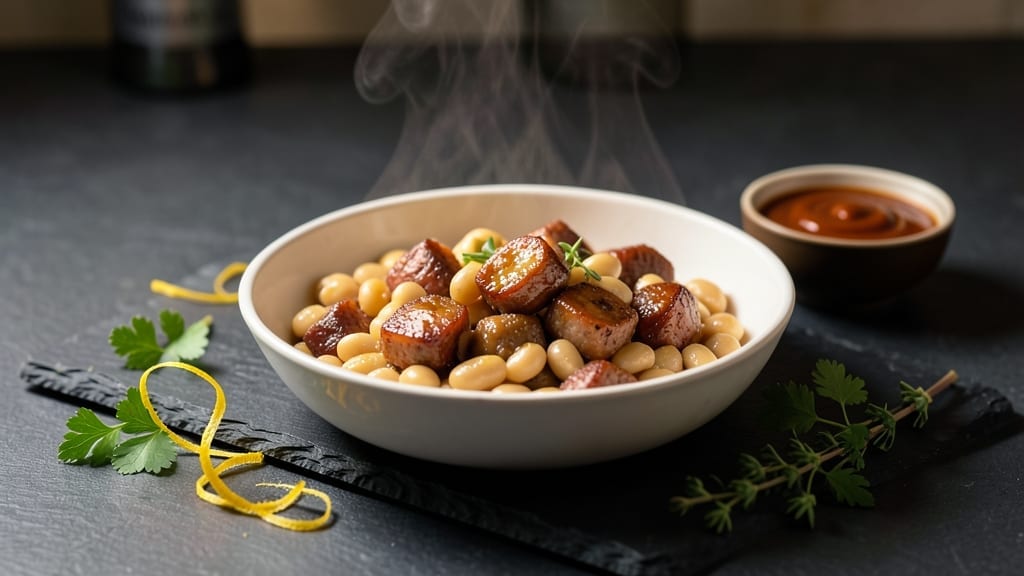
A white bean and smoked sausage skillet transforms weeknight dinners into hearty, restaurant-worthy meals without the fuss. The smoky depth of the sausage pairs beautifully with tender white beans and aromatic vegetables, all coming together in a single pan.
I developed this recipe during a particularly busy Portland winter when I needed something filling, fast, and packed with protein—no takeout delivery required.
The magic happens in the skillet: crispy sausage slices caramelize while onions and garlic release their sweet, fragrant aromas. White beans absorb all those flavors, turning into a rich, creamy base that holds everything together.
With just 25 minutes of active time, you’ll have a complete dinner that feels indulgent yet comes together effortlessly—perfect for feeding a family or meal prepping for the week.
What you end up with is a dish that’s hearty enough to stand alone but flexible enough to pair with crusty bread, a simple salad, or roasted potatoes. The combination of smoky sausage, earthy beans, and bright herbs creates a flavor harmony that’s impossible to resist.
This is comfort food at its finest, with minimal cleanup and maximum satisfaction.
Whether you’re cooking for a crowd or just treating yourself, this skillet recipe delivers restaurant-quality results with pantry staples and one pan. The technique is straightforward, but the flavors are anything but basic—each bite is a perfect balance of smoky, savory, and slightly tangy notes. Let’s get cooking!
Ingredients for white bean and smoked sausage skillet
Pantry staples meet smoky sausage for a quick, hearty skillet dinner everyone will love.
| Ingredient | Amount | Notes |
|---|---|---|
| Smoked Sausage 🌭 | 1 lb | Pre-sliced or sliced thin |
| Canned White Beans 🥫 | 32 oz | Great Northern or cannellini |
| Yellow Onion 🧅 | 1 whole | Diced, medium size |
| Garlic Cloves 🧄 | 4 cloves | Minced, aromatic |
| Diced Tomatoes 🍅 | 15 oz | Canned, no salt added |
| Fresh Basil Leaves 🌿 | ½ cup | Chopped, bright green |
| Olive Oil 🫒 | ½ cup | Extra-virgin, fruity |
| Dried Italian Seasoning 🌿 | 1 tbsp | For aromatic depth |
| Salt 🧂 | 1 tsp | Kosher or sea salt |
| Black Pepper 🌶️ | ½ tsp | Freshly ground |
| Red Wine Vinegar 🍷 | 1 tbsp | For tangy brightness |
| Crushed Red Pepper Flakes 🔥 | ¼ tsp | Optional, for heat |
| Crusty Bread 🍞 | 4 slices | For serving, optional |
[recipe_ingredient_scaler]
The smoked sausage is your flavor anchor here. Pre-sliced is a lifesaver—no chopping when you’re already rushed. I always grab Applegate or Costco’s store brand for that authentic, smoky kick. The beans? Great Northern or cannellini work best—they hold up to the sausage’s richness. If you’re using canned beans, rinse them first to cut down on the sodium. The diced tomatoes should be no salt added so you control the seasoning yourself.
No red wine vinegar? Apple cider vinegar or lemon juice gets you close. Fresh basil is ideal but dried oregano at half the amount works in a pinch. Want more depth? Swap the Italian seasoning for a mix of thyme and rosemary. The crushed red pepper flakes are optional but worth it if you love heat. If your diced tomatoes are canned in juice, drain and rinse them to keep the sauce lighter. The garlic can be minced roughly—no need to be precise here.
This skillet reheats beautifully—honestly tastes better the next day. Store leftovers in an airtight container for 4-5 days in the fridge. For longer storage, freeze portions for up to 3 months. I like to portion mine into containers so lunches are sorted for the week. The crusty bread? Toast it quickly in the oven while the skillet cooks—crispy bread makes all the difference. The sausage slices crisp up best if you don’t overcrowd the pan.
Why You’ll Love This Recipe
- One-Pot Magic: I don’t know about you, but I’m always looking for a dish that requires zero extra cleanup. This skillet? Just one pan, a spatula, and boom—dinner’s done. The smoked sausage crisps up in minutes, the onions caramelize while you’re chopping the garlic, and the beans just get tossed in. No pre-cooking, no fuss. My kitchen stays spotless, and my family never knows the difference.
- Smoky, Tangy, Addictive: The way the smoked sausage’s deep, woodsy flavor marries the creamy white beans and bright red wine vinegar? Chef’s kiss. That first bite—crispy sausage edges, velvety beans, and a tangy kick from the tomatoes—is what keeps me coming back. The crushed red pepper flakes add just enough heat to make it dangerously good, and the fresh basil at the end? Pure magic. Honestly, I’ve never met a skillet I’d rather eat out of.
- Leftover Legend: Between work and errands, I’m always scrambling for dinner ideas that won’t leave me staring at sad leftovers. This? It’s perfect for meal prep. The flavors only deepen overnight, so I’ll reheat it for lunch the next day and still be obsessed. Freeze portions too—just pop a serving in the microwave when I’m too tired to cook. My freezer’s full of these, and my wallet’s happy because I’m not ordering takeout.
- Budget-Friendly Feast: Let’s talk practicality. A pound of smoked sausage, a can of beans, and a few pantry staples? This skillet costs me less than a takeout order, but it feeds a crowd. I’ll make it for game day, potlucks, or even a cozy Tuesday night. My picky eater daughter insists on picking the sausage at the store, but she’ll devour every last bite. It’s affordable, filling, and somehow always the star of the table.
Step-by-step instructions for white bean and smoked sausage skillet
Here’s how to make this hearty skillet dinner that brings all the flavors together in one delicious pan.
Sauté the Sausage and Onion
Heat the ½ cup olive oil in a large skillet over medium-high heat. Add the 1 lb smoked sausage, sliced into ½-inch rounds, and cook for 5-6 minutes until the sausage begins to brown and crisp slightly at the edges. Remove the sausage and set it aside on a plate.
In the same skillet, add the 1 diced yellow onion and cook for 4-5 minutes until softened and translucent. Here’s the thing—you want the onions to caramelize just a bit, so keep an eye on them. They’re ready when they smell sweet and the edges start to turn golden. This step builds the flavor foundation for everything else.
Add Garlic, Tomatoes, and Seasonings
Reduce the heat to medium and add the 4 minced garlic cloves to the skillet. Cook for 30 seconds** until fragrant—don’t let it burn, or you’ll get a bitter taste. Next, add the 15 oz diced tomatoes, 1 tbsp dried Italian seasoning, 1 tsp salt, and ½ tsp black pepper. Stir everything together and let it simmer for 3-4 minutes until the tomatoes begin to break down and thicken slightly.
This is where the sauce starts to take shape. You’ll notice the mixture becomes more cohesive and flavorful as the tomatoes release their juices. If it looks too thick, you can add a splash of water later—just don’t rush this step. The tomatoes need time to soften and meld with the other flavors.
Combine with White Beans and Simmer
Return the cooked sausage to the skillet and add the 32 oz canned white beans, drained and rinsed. Stir everything together and bring the mixture to a gentle simmer. Let it cook for 8-10 minutes until the flavors are well combined and the beans are heated through. The skillet should be bubbling gently, and you’ll see the sausage and beans mingling together beautifully.
During this time, taste the mixture and adjust the seasoning if needed. If it needs more brightness, add the 1 tbsp red wine vinegar and the ¼ tsp crushed red pepper flakes. The vinegar adds a tangy kick, and the red pepper flakes bring a subtle heat that balances the richness of the sausage and beans.
Finish with Fresh Basil and Serve
Remove the skillet from the heat and stir in the ½ cup chopped fresh basil leaves. The basil adds a bright, fresh note that cuts through the richness of the sausage and beans. Let the mixture sit for 2-3 minutes so the basil can infuse its flavor into the dish.
Serve the skillet immediately, with the 4 slices crusty bread on the side for soaking up the delicious sauce. The bread adds a perfect textural contrast to the hearty skillet. Each bite should deliver a mix of smoky sausage, creamy beans, and tangy tomatoes with a hint of fresh basil. Enjoy it while it’s hot—this dish tastes even better the next day, but it’s hard to wait!
Pro Tips For Making White Bean And Smoked Sausage Skillet
- CRISP THE SAUSAGE FIRST: After slicing the 1 lb smoked sausage into ½-inch rounds, don’t rush the 5-6 minutes of browning—this is where the smoky flavor really develops. I used to skip this and just toss it in later; now I let it get those crisp edges, then set it aside so it doesn’t steam when the beans go in.
- CARAMELIZE THE ONIONS LOW AND SLOW: The 1 whole yellow onion needs that golden edge, but medium-high heat will burn it before it sweetens. After the sausage comes out, drop the heat to medium and let those onions cook for the full 4-5 minutes—stir occasionally, and resist the urge to crank it up. Sweet onions make all the difference.
- DRAIN AND RINSE THOSE BEANS: The 32 oz canned white beans might be salted, and no one wants a briny skillet. Drain them well, then give them a quick rinse under cold water. I learned this the hard way—skipping this step left my dish tasting like a salt lick. A quick rinse keeps the flavors balanced.
- STIR IN THE BASIL LAST (AND LET IT SIT): The ½ cup fresh basil wilts fast, so toss it in off the heat and let the skillet sit for those 2-3 minutes. The leaves will soften just enough to release their flavor without turning to mush. I used to add it earlier, and it always ended up sad and limp—now it’s bright and aromatic every time.
Regional styles of this dish
Southern-Inspired Spice Twist
In the South, we don’t just cook with sausage and beans—we make them sing. I like to add ½ tsp smoked paprika and ¼ tsp cayenne pepper to the sausage while it crisps, which deepens the smoky flavor and adds a slow-building heat.
The beans benefit from a pinch of cayenne mixed into the olive oil before sautéing the onions—it infuses the whole dish with warmth. I grab my Penzeys spices for this step; their smoked paprika is a game-changer. 🔥
Italian Market Fusion
If you’re near an Italian market in Portland, you’ll find San Marzano tomatoes and fresh basil that elevate this skillet to restaurant level. Swap out the dried Italian seasoning for 1 tsp dried oregano and ½ tsp dried basil—it’s a subtle but noticeable difference.
I also add a splash of balsamic vinegar instead of red wine vinegar for a caramelized sweetness that pairs beautifully with the smoky sausage. The result? A dish that feels like a cross between a Tuscan farmhouse meal and a Southern potluck.
Pacific Northwest Adaptation
Living in the Pacific Northwest, I’ve adapted this recipe to use local smoked trout sausage (available at New Seasons Market) for a milder, fishier smokiness. It’s less fatty than traditional pork sausage and pairs surprisingly well with the beans.
I also toss in ½ cup roasted fingerling potatoes from my backyard garden—just cube them and roast them in the same skillet during the last 5 minutes of cooking. The earthy sweetness of the potatoes balances the dish perfectly. My daughter Lily loves helping me pick them!
Cincinnati-Style Hearty Version
Back in Cincinnati, Mrs. Henderson would add ½ cup cooked barley to this skillet for extra heartiness—it’s a staple in Ohio comfort food. I also like to include 1 tbsp Dijon mustard mixed into the tomato sauce before adding the beans.
The mustard adds a tangy depth that cuts through the richness of the sausage. If you’re craving nostalgia, this version is for you! Honestly, it’s the kind of dish that makes you feel like you’re sitting at Grandma’s kitchen table.
Vegan White Bean Swap
For a vegetarian twist, I swap the sausage for 1 block firm tofu, pressed and cubed, then pan-fried until crispy. I also add 1 tsp liquid smoke to the olive oil for that smoky depth.
The beans still take center stage, but the tofu adds a satisfying texture. I’ve even used smoked tempeh for a nuttier flavor—both work beautifully. It’s amazing how versatile this dish can be!
Nutrition facts
Frequently asked questions
Can I use frozen white beans instead of canned?
Frozen white beans work in a pinch, but they’ll need extra cooking time. Thaw them first, then simmer for 10-12 minutes instead of 8-10 minutes to ensure they’re tender. The texture won’t be as creamy as canned beans, but the flavor will still shine through. Just make sure to drain any excess liquid before adding them to the skillet.
What if I don’t have red wine vinegar?
No problem! Substitute 1 tbsp apple cider vinegar or 1 tbsp lemon juice for the red wine vinegar. Both add brightness and tang without changing the dish’s core flavors. If you’re avoiding vinegar entirely, a splash of tomato juice can help balance the richness of the sausage and beans.
Is this skillet recipe gluten-free?
Yes, this recipe is naturally gluten-free as long as you use certified gluten-free smoked sausage. Double-check the label on your sausage since some brands contain fillers or stabilizing agents with gluten. The crusty bread is optional, so you can easily serve it without any gluten-containing sides.
Can I make this skillet ahead of time?
The flavors actually improve overnight. Let the skillet cool completely, then store it in an airtight container in the fridge for up to 4-5 days. Reheat gently on the stovetop or in the oven until warmed through. The beans will absorb all the delicious flavors even more as they sit. This makes it perfect for meal prep!
What’s the best way to crisp the sausage?
For the crispiest sausage, don’t overcrowd the pan. Cook in batches if needed, and use medium-high heat until the edges brown. After removing the sausage, let it rest on a plate for 1-2 minutes before returning it to the skillet. This resting time helps it crisp up even more when you add it back. The key is patience—rushing the cooking will make it greasy instead of crispy.

Trained in classic French technique but raised on slow-cooked ribs and spicy rubs, she blends culinary skill with smoke and soul.
- Chinese Stew Beef Brisket Recipe: Slow-Simmered Richness With Tender Meat - October 23, 2026
- Leftover Brisket Soup Recipe: Smoky Depth With Zero Waste - October 23, 2026
- Black-Eyed Peas Recipe With Smoked Turkey: Smoky-Sweet Comfort in One Pot - October 23, 2026