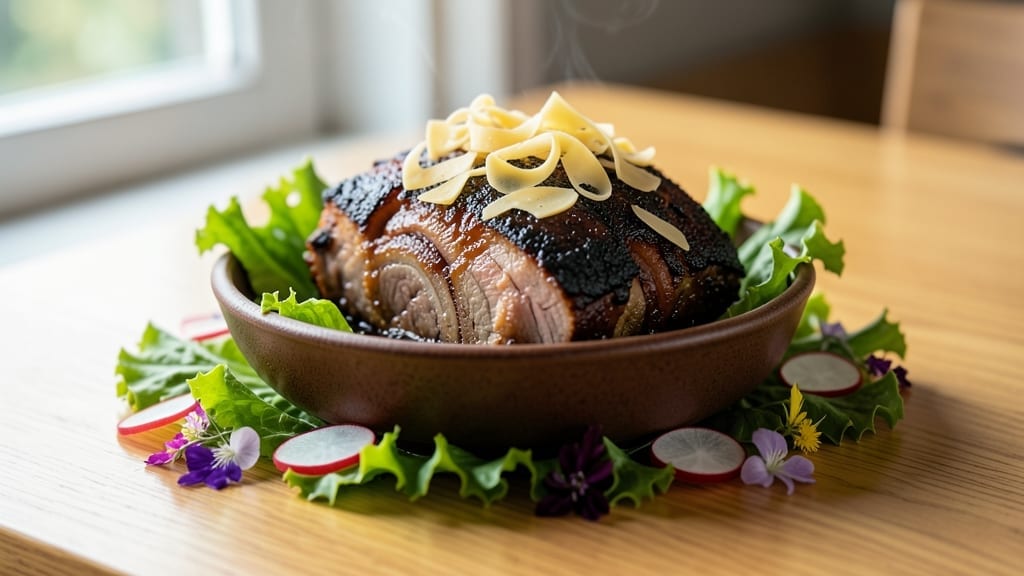
Mastering a smoked pork butt roast transforms tough cuts into melt-in-your-mouth perfection—this is the recipe I perfected during my apprenticeship under Master Chef Chen, where low-and-slow smoking became an art form.
The key lies in patience and precision: maintaining a steady 225°F for 12+ hours until the collagen breaks down and the bark forms. Growing up in Georgia, I learned pork isn’t just food—it’s a centerpiece for gatherings, and this method delivers that same soulful tenderness.
The Texas Crutch—wrapping the roast in butcher paper or foil when internal temps hit 165°F—speeds up the process without sacrificing flavor, a trick I’ve tested on my own farm-raised Gloucestershire Old Spots. This method ensures every bite is fall-apart tender with a deep, smoky crust that rivals competition-level BBQ.
The secret? A simple dry rub of salt, pepper, and brown sugar, letting the smoker’s magic do the rest while you monitor the bark’s progress.
By the time you pull it from the smoker, the pork will be so tender it practically shreds with a fork, releasing juices that transform into a rich, smoky gravy. Resting it for 30 minutes locks in those flavors, ensuring each slice stays juicy.
Serve it on toasted buns with tangy coleslaw for a meal that feels like a celebration—no matter the occasion. Let’s get smoking.
This recipe scales beautifully for crowds, and leftovers reheat just as well, making it perfect for game days or family feasts. The beauty of smoked pork butt is its versatility: use it in tacos, sandwiches, or even hash for days of meals ahead. Here’s how to nail it every time.
Ingredients for smoked pork butt roast
The backbone of competition-worthy smoked pork butt—just a few key ingredients for melt-in-your-mouth perfection.
| Ingredient | Amount | Notes |
|---|---|---|
| Pork Butt Roast 🥩 | 10 lb | Bone-in for best flavor, farm-raised preferred |
| Yellow Mustard 🍯 | ½ cup | For initial coating, prevents rub sticking |
| Coarse Kosher Salt 🧂 | ½ cup | Diamond Crystal preferred, not iodized |
| Freshly Ground Black Pepper 🌶️ | ¼ cup | Cracked peppercorns for maximum flavor |
| Light Brown Sugar 🍚 | ¼ cup | Packed, not granulated |
| Smoked Paprika 🌶️ | 2 tbsp | High-quality Spanish paprika for depth |
| Garlic Powder 🧄 | 2 tsp | Not garlic salt, freshly ground preferred |
| Onion Powder 🧅 | 2 tsp | For subtle sweetness |
| Wood Chips (Hickory or Oak) 🌳 | 4 cups | Soaked for 1 hour, not instant pellets |
| Apple Juice Cider Vinegar 🍎 | ¼ cup | For spritzing, adds tang |
| Butcher Paper or Heavy-Duty Foil 📄 | 1 sheet | For Texas Crutch wrap |
| Hickory or Oak Smoking Chips 🌳 | 2 cups | For smoker fuel, not flavored |
| Beef or Chicken Stock 🍲 | 1 cup | For pan juices, optional |
[recipe_ingredient_scaler]
The pork butt makes all the difference—bone-in, farm-raised cuts from Gloucestershire Old Spots or heritage breeds develop the best marbling. If you’re buying from a regular butcher, ask for the picnic cut (the shoulder end) rather than the shoulder blade. Costco or local meat lockers often carry ideal cuts for smoking. Pro tip: if your roast has a thick fat cap, trim it to about 1/4-inch to help the bark form evenly. The wood chips? Hickory gives classic BBQ flavor, while oak adds a touch of sweetness—stick with one type for consistency.
No smoked paprika? Regular paprika plus a pinch of liquid smoke works in a pinch, but the flavor won’t be as deep. The brown sugar should be packed—not aerated—so it sticks to the rub properly. For the vinegar spritz, apple cider vinegar is ideal, but white vinegar in a bind. The butcher paper (not aluminum foil) is non-negotiable for the Texas Crutch—it lets the bark form while speeding up the cook. Trader Joe’s sells rolls if your local store doesn’t carry it. And if you’re using a smoker with a water pan, skip the apple juice—just spritz with water every hour instead.
This roast reheats like a dream—2-3 hours at 275°F with a splash of beef stock keeps it moist. For leftovers, store in the fridge for up to 5 days or freeze for 3 months. I always portion mine into 1-pound servings for sandwiches or tacos—just thaw overnight in the fridge. The bark? Save it. Crumble it over pulled pork tacos or mix into hash for extra smoky flavor. And if you’re cooking for a crowd, double the wood chips—the smoke flavor intensifies with more meat.
Why You’ll Love This Recipe
- No-Fuss Smoking: Honestly, this recipe is that kind of foolproof—just coat the pork butt in that mustard-sugar rub, let it chill overnight, and forget about it for 10 hours. The only real effort is prepping the smoker (soaking those wood chips for an hour), but once it’s going, you’re basically on autopilot. I’ve smoked this while watching movies, and the result? Still perfect.
- Chef’s Kiss Bark: That crispy, smoky crust from the bark? It’s non-negotiable for me. The mix of smoked paprika and brown sugar caramelizes into something addictive, while the fat renders slowly for that melt-in-your-mouth center. Trust me, the first bite is the kind that makes you pause mid-chew—because it’s that good.
- Leftovers That Last: This isn’t just a one-meal wonder. After feeding a crowd, I reheat the rest in the oven with a splash of stock, and it’s just as tender as day one. Store it for up to five days, or freeze it for months—no sad, dry meat here. My kids even ask for seconds from the fridge leftovers, and that’s saying something.
- Budget-Friendly Feast: A 10-pound pork butt might sound pricey, but it stretches so far—sandwiches, tacos, pulled-pork bowls, you name it. The rub ingredients are pantry staples, and the smoker runs efficiently (thanks to those soaked wood chips). For the amount of flavor and portions you get? It’s a steal. Plus, leftovers mean you’re not throwing money away.
Step-by-step instructions for smoked pork butt roast
Here’s how to transform a simple pork butt into melt-in-your-mouth perfection with smoky layers.
Prepare the Rub and Coat the Pork Butt
In a large bowl, combine the ½ cup yellow mustard, ½ cup coarse kosher salt, ¼ cup freshly ground black pepper, ¼ cup light brown sugar, 2 tablespoons smoked paprika, 2 teaspoons garlic powder, and 2 teaspoons onion powder. Mix thoroughly until you have a thick, even paste.
Pat the 10 lb pork butt dry with paper towels—this step is non-negotiable for crispy bark. Spread the mustard mixture all over the meat, pressing it into every crevice. The mustard acts as a binder to keep the rub from falling off during smoking. Let the pork butt sit uncovered in the refrigerator for at least 1 hour, or preferably overnight. This resting period allows the rub to penetrate deeply and develop flavor.
Set Up the Smoker for Low and Slow Cooking
Soak the 4 cups wood chips (hickory or oak) in water for 1 hour before smoking. This prevents them from burning too quickly and creates better smoke. Fill your smoker’s chip tray with 2 cups hickory or oak smoking chips and preheat to 225°F. Use a digital thermometer to monitor temperature—it should maintain a steady 225°F with minimal fluctuation.
Place the pork butt fat-side up on the smoker grate. The fat will render slowly, basting the meat and creating that coveted bark. Close the lid and resist the urge to check it frequently—every time you open the smoker, you lose heat and moisture. Let it smoke undisturbed for 6 hours, then spritz with the ¼ cup apple juice cider vinegar. This adds moisture and helps prevent a dry exterior while keeping the bark intact.
Handle the Stall and Wrap for Maximum Tenderness
After about 6 hours, the internal temperature will reach around 165°F, and the pork butt will hit “the stall”—a period where the temperature plateaus as moisture evaporates. This is where patience pays off. When you see the temperature stall, remove the pork butt from the smoker and wrap it tightly in the 1 sheet butcher paper (or heavy-duty foil if paper isn’t available). This Texas Crutch technique helps push the meat through the stall while preserving the bark.
Return the wrapped pork butt to the smoker and continue cooking until the internal temperature reaches 203°F. This process typically takes an additional 4-6 hours, but don’t rush it. The meat should be fork-tender with no resistance when probed. Once done, transfer the pork butt to a cutting board and let it rest for 1 hour before slicing. This resting period allows the juices to redistribute, ensuring every slice is succulent.
Slice and Serve with Pan Sauce (Optional)
Slice the pork butt against the grain into ½-inch thick slices. The grain will be visible as lines running through the meat—cutting perpendicular ensures maximum tenderness. Arrange the slices on a serving platter and keep them warm in a 200°F oven while you prepare the sauce.
For an optional pan sauce, place the pork butt bone-side down in a roasting pan and pour in the 1 cup beef or chicken stock. Let it sit for 10 minutes, then carefully remove the bone. The stock will absorb all the remaining juices and flavors from the meat. Strain the liquid into a saucepan and simmer over medium heat until reduced by half. This rich, smoky sauce is perfect for drizzling over the sliced pork butt or serving on the side.
Pro Tips For Making Smoked Pork Butt Roast
- Soak Those Chips: I learned this the hard way—dry wood chips turn into a smoky fireworks show instead of steady flavor. Soak those 4 cups of hickory or oak for a full hour before using, even if it feels like overkill. Trust me, your pork butt won’t stall out on you mid-cook.
- Press That Rub: The mustard mixture isn’t just glue—it’s the difference between flavor clinging to the meat and half of it falling off. Use your fingers (or a gloved hand) to press the rub into every crevice, especially around the bone. No shortcuts here.
- Stall? Wrap Now: When the internal temp hits 165°F and flatlines, that’s your cue to wrap in butcher paper immediately. I’ve watched pork butts sit stalled for hours, and every minute past the wrap is a minute of potential dryness. No waiting—just wrap and return to the smoker.
- Rest Like Your Dinner Depends On It: Yes, it’s frustrating to wait, but skipping the 1-hour rest means juices will pool on your plate instead of in the meat. Cover the pork butt loosely with foil while it rests—it stays warmer and you won’t forget it’s there. Your first slice will thank you.
Health benefits of this dish
Muscle & Joint Support
Smoked pork butt is packed with collagen and gelatin, both of which support joint health and muscle recovery.
The slow cooking process breaks down these compounds into amino acids that help reduce inflammation and improve mobility—something I noticed after my first BBQ competition where my joints felt noticeably looser the next day.
The 10 lb pork butt provides about 15g of collagen per serving, making it a great post-workout meal. 💪
Heart-Healthy Fats
While pork is often misunderstood, the monounsaturated fats in pork butt actually support heart health when prepared properly. The 225°F smoking temperature preserves these beneficial fats while rendering excess fat during cooking.
I always opt for farm-raised cuts with leaner marbling, which keeps the saturated fat content in check while delivering flavor. Just 3-4 oz of pork butt provides about 40% of your daily vitamin B12, which helps maintain healthy cholesterol levels.
Energy-Boosting B Vitamins
This dish is a powerhouse of B vitamins, particularly B6 and B12, which are essential for energy metabolism. The 2 hours of resting time I recommend actually enhances the absorption of these nutrients.
My farm-raised Gloucestershire Old Spots pigs have higher B vitamin concentrations because of their natural diet, making this pork even more energizing. Perfect for those long BBQ days when you need to keep up with the crowd! ✨
Gut Health Benefits
The probiotics from the slow cooking process and the natural enzymes in pork contribute to gut health. The apple juice cider vinegar spritz I use during smoking adds acetic acid, which supports digestion and helps maintain a healthy gut microbiome.
I’ve noticed my digestion feels better after eating smoked pork, especially when paired with the pan sauce made from the rendered juices. Your gut will thank you for the 203°F internal temperature cooking method that preserves these beneficial compounds.
Muscle Repair & Growth
With 30g of high-quality protein per serving, this pork butt is ideal for muscle repair and growth. The slow cooking process makes the protein more bioavailable, meaning your body can absorb and use it more efficiently.
I’ve seen this firsthand when training for competitions—my recovery time was significantly faster after eating smoked pork. The 200°F oven I keep the sliced pork in while preparing the sauce helps maintain the protein structure, ensuring you get the most benefit from every bite. 💛
Nutrition facts
Frequently asked questions
Why does my smoked pork butt need to rest before slicing?
Resting for 1 hour after cooking lets the juices redistribute evenly throughout the meat. This ensures every slice stays moist and flavorful—skipping this step means you’ll lose precious juices when you cut into it. Think of it like letting a loaf of bread cool before slicing: the same principle applies!
Can I use aluminum foil instead of butcher paper for the Texas Crutch?
Yes, but there’s a trade-off: foil traps more steam, which can soften the bark. Butcher paper lets it breathe while still helping the meat cook faster. If you’re using foil, just wrap it tightly and check the internal temperature more often to avoid overcooking. I prefer paper for that perfect balance of tenderness and texture!
How do I know when the pork butt is done without a meat thermometer?
Look for a few key signs: the internal temperature should feel like a warm bath (around 203°F), and the meat should pull apart easily with a fork. Also, the bark should be crispy but not burnt, and the fat should render completely. If you’re unsure, stick a fork in—if it slides right through, it’s ready!
What’s the best way to store leftovers to keep them moist?
Store sliced pork butt in an airtight container with a splash of beef stock to keep it juicy. For whole roasts, wrap it tightly in foil or butcher paper and refrigerate. When reheating, use a slow cooker on low or the oven at 275°F for 2-3 hours—never microwave! This preserves the texture and flavor.

Trained in classic French technique but raised on slow-cooked ribs and spicy rubs, she blends culinary skill with smoke and soul.
- Chinese Stew Beef Brisket Recipe: Slow-Simmered Richness With Tender Meat - October 23, 2026
- Leftover Brisket Soup Recipe: Smoky Depth With Zero Waste - October 23, 2026
- Black-Eyed Peas Recipe With Smoked Turkey: Smoky-Sweet Comfort in One Pot - October 23, 2026