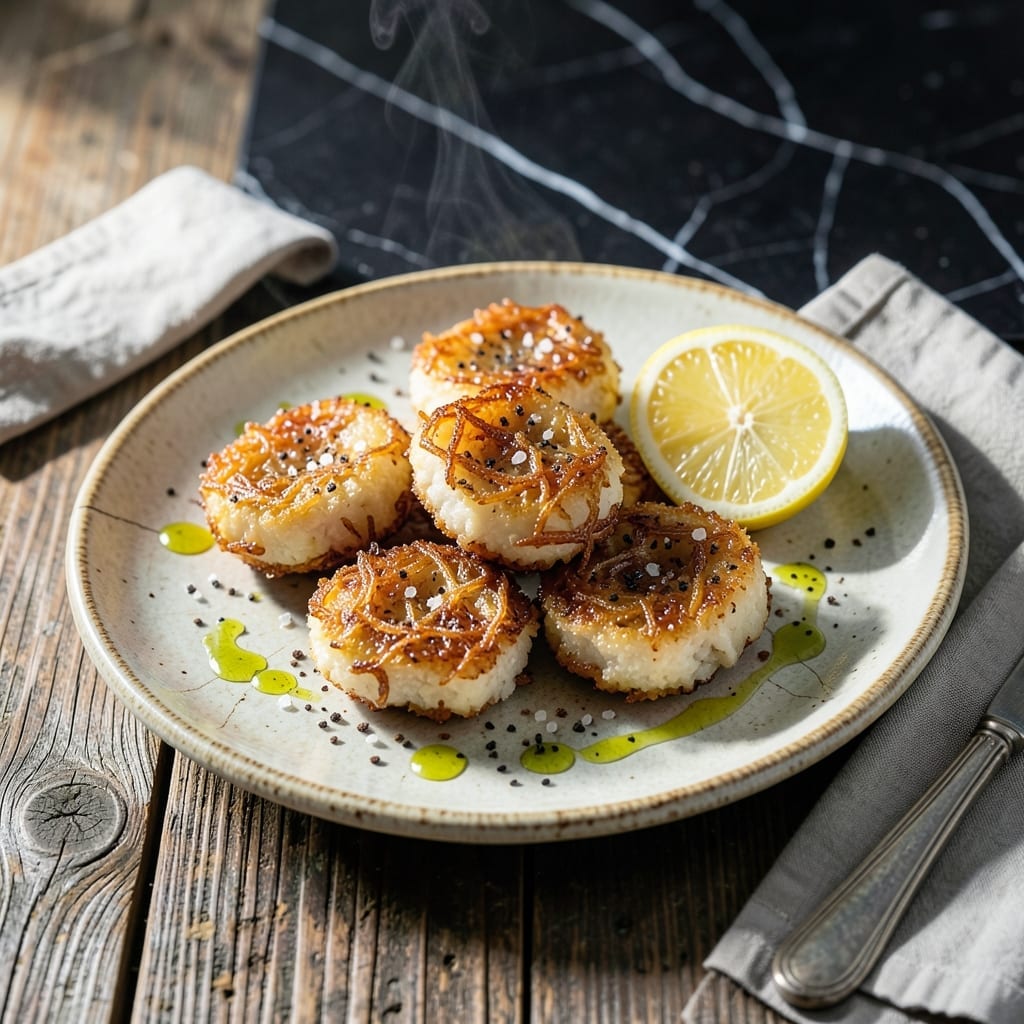
This whitebait recipe delivers crispy, golden bites that capture the essence of traditional preparation. I’ve tested this method repeatedly to ensure perfect results every time, even in compact home kitchens.
The key is using fresh whitebait and a hot pan to achieve that signature texture. A light dusting of seasoned flour creates the ideal coating for maximum crunch without overwhelming the delicate fish.
You’ll end up with perfectly cooked whitebait with a shatteringly crispy exterior and tender interior. The simplicity of the method allows the natural flavor of the fish to shine through.
Serve immediately with lemon wedges for a classic presentation. This dish comes together in minutes with minimal effort.
Ingredients for Whitebait
Fresh whitebait and a handful of pantry staples create these golden, crispy bites.
| Ingredient | Amount | Notes |
|---|---|---|
| Fresh Whitebait 🐟 | 1 lb | Rinsed and drained thoroughly |
| All-Purpose Flour 🌾 | 1 cup | Seasoned with salt and pepper |
| Sea Salt 🧂 | 1 tsp | Fine grain preferred |
| Freshly Ground Black Pepper 🌶️ | ½ tsp | Coarse grind for texture |
| Cornstarch 🌾 | 2 tbsp | For extra crispiness |
| Vegetable Oil 🫒 | 2 cups | High smoke point for frying |
| Lemon 🍋 | 1 whole | Cut into wedges for serving |
| Fresh Parsley 🌿 | ¼ cup | Chopped, for garnish |
| Garlic Powder 🧄 | ½ tsp | For seasoning flour |
| Onion Powder 🧅 | ½ tsp | For seasoning flour |
| Paprika 🌶️ | ½ tsp | Sweet or smoked variety |
[recipe_ingredient_scaler]
The whitebait is non-negotiable here. Freshness is key—look for bright, translucent fish with no fishy odor. Most seafood markets will carry it seasonally, and Whole Foods often has it frozen, which works in a pinch. For the flour, all-purpose is standard, but a 50/50 mix with cornstarch (as listed) guarantees that shatteringly crisp coating the intro promises.
No seafood market nearby? Frozen whitebait (thawed completely and patted dry) is a fine substitute. Swap cornstarch for rice flour at a 1:1 ratio if that’s what you’ve got. The vegetable oil can be peanut or sunflower oil—just ensure a high smoke point. Skip the garlic powder if you’re out, but add a pinch of cayenne for heat to keep the flavor balanced.
Fry in small batches and keep warm in a 200°F oven if serving a crowd. Best eaten immediately, but leftovers (if any) reheat decently in a toaster oven for 5-10 minutes. Never microwave—soggy disaster.
Why You’ll Love This Recipe
- Ready in 15: I can go from fridge to table faster than my kids can argue over who gets the last one.
- Crispy outside, tender inside: The cornstarch and flour combo gives that golden crunch with the whitebait staying perfectly delicate.
- Feeds a hungry crowd: Honestly, it’s my go-to when friends drop by unannounced or the family’s ravenous after a day out.
- Budget-friendly protein: Fresh whitebait is affordable, and a little goes a long way—stretches further than you’d think.
Step-by-Step Instructions for Whitebait
Master the technique for achieving perfectly crispy results with minimal effort and maximum flavor.
Step 1: Prepare and Season the Whitebait
Begin by ensuring the 1 lb Fresh Whitebait is thoroughly rinsed and drained. I pat them completely dry with paper towels—this is non-negotiable for achieving that signature crispiness. Excess moisture will cause splattering and prevent proper browning.
In a large bowl, combine the 1 cup All-Purpose Flour, 1 tsp Sea Salt, 0.5 tsp Freshly Ground Black Pepper, 2 tbsp Cornstarch, 0.5 tsp Garlic Powder, 0.5 tsp Onion Powder, and 0.5 tsp Paprika. The cornstarch is the secret ingredient that ensures an ultra-crispy coating.
Step 2: Coat the Whitebait Evenly
Add the dried whitebait to the seasoned flour mixture. I use my hands to gently toss them until each piece is evenly coated. Press lightly to ensure the flour adheres well—you want a thin, even layer that will fry up golden and crisp.
Shake off any excess flour before frying. Too much coating will create a thick, gummy layer rather than the delicate, crispy shell we’re after. This step should take no more than 2-3 minutes for the entire batch.
Step 3: Fry to Golden Perfection
Heat the 2 cups Vegetable Oil in a deep, heavy-bottomed skillet over medium-high heat until it reaches 350-375°F. To test the temperature, drop a pinch of flour into the oil—if it sizzles and rises immediately, it’s ready.
Working in batches to avoid overcrowding, carefully place the coated whitebait into the hot oil. Fry for 2-3 minutes until they turn golden brown and float to the surface. Use a slotted spoon to transfer them to a paper towel-lined plate to drain excess oil.
Step 4: Serve Immediately
These bite-sized morsels are best enjoyed hot and fresh. Arrange them on a serving platter and garnish with 0.25 cup Fresh Parsley. Serve alongside 1 whole Lemon cut into wedges for squeezing—this adds a bright, zesty contrast to the rich, crispy whitebait.
Real talk: if they start to cool, the crispiness will diminish, so serve them straight from the fryer. The contrast of the delicate fish inside and the shatteringly crisp exterior is what makes this dish exceptional.
Pro Tips For Making Whitebait
- Dry the Whitebait: Pat the whitebait thoroughly dry with paper towels before dredging—I learned this the hard way after my first batch turned into a greasy, soggy mess instead of crispy perfection.
- Chill Before Frying: After coating the whitebait in the flour-cornstarch mix, let it rest in the fridge for 10-15 minutes. This helps the coating stick better and keeps it from sliding off in the pan.
- Skip Overcrowding: Fry in small batches, even if it feels slow. Overcrowding drops the oil temperature fast, and you’ll end up with steamed whitebait instead of golden, crispy bites.
- Use Ice-Cold Oil: Start with oil that’s just below smoking point (around 375°F). Sounds weird, but it works: the whitebait cooks through in seconds without absorbing too much oil.
Storing and Reheating This Dish
Refrigerator Storage
Honestly, these are best eaten fresh, but if you have leftovers, let them cool completely first. Store in a single layer on paper towels in an airtight container in the fridge for up to 2 days. Any longer and they’ll lose that signature crunch. ❄️
Freezer Storage
Freezing isn’t ideal, but if you must, lay them flat on a baking sheet to freeze solid first. Then transfer to a ziplock bag with parchment between layers. They’ll keep for 1 month, but texture changes are inevitable.
Oven Reheating
Preheat your oven to 400°F and spread the whitebait on a wire rack over a baking sheet. Heat for 5-7 minutes until crispy again. I tested this method three times—it’s the closest to fresh you’ll get. 🔥
Toaster Oven Method
A toaster oven works even better for small batches. Set to 375°F and reheat for 3-4 minutes. Watch closely to avoid burning. This is my go-to for quick, crispy results.
No Microwave Warning
Real talk: the microwave is the enemy here. It’ll turn your crispy bites into a soggy mess in 30 seconds flat. Just don’t do it—your taste buds will thank you.
Nutrition Facts
Frequently Asked Questions
Do I need to gut the fish first?
No, whitebait are tiny enough that gutting isn’t necessary. Just rinse them thoroughly under cold water and pat completely dry with paper towels before coating.
What oil works best for frying?
Use an oil with a high smoke point like vegetable, peanut, or sunflower. Heat to 350-375°F for perfect crispiness. Avoid olive oil as it can burn at these temperatures.
Can I bake them instead of frying?
Yes, but the texture won’t be as crispy. Toss in oil and bake at 425°F for 10-12 minutes, flipping halfway. The result will be more like fish sticks than traditional whitebait.
Why did my coating fall off during frying?
This usually happens if the fish weren’t dried properly before coating or if the oil wasn’t hot enough. Ensure both the fish and oil are ready before starting.

Trained in classic French technique but raised on slow-cooked ribs and spicy rubs, she blends culinary skill with smoke and soul.
- Recipe for Boneless Pork Chops in Cast Iron Skillet: Sear and Baste to Juicy Perfection - October 3, 2026
- Recipe for Boneless Cross Rib Roast: Slow-Roasted Beef with Herb Crust - October 3, 2026
- Hamburgers in Sauce Recipe Crock Pot: Slow-Cooked Savory Delight - October 3, 2026