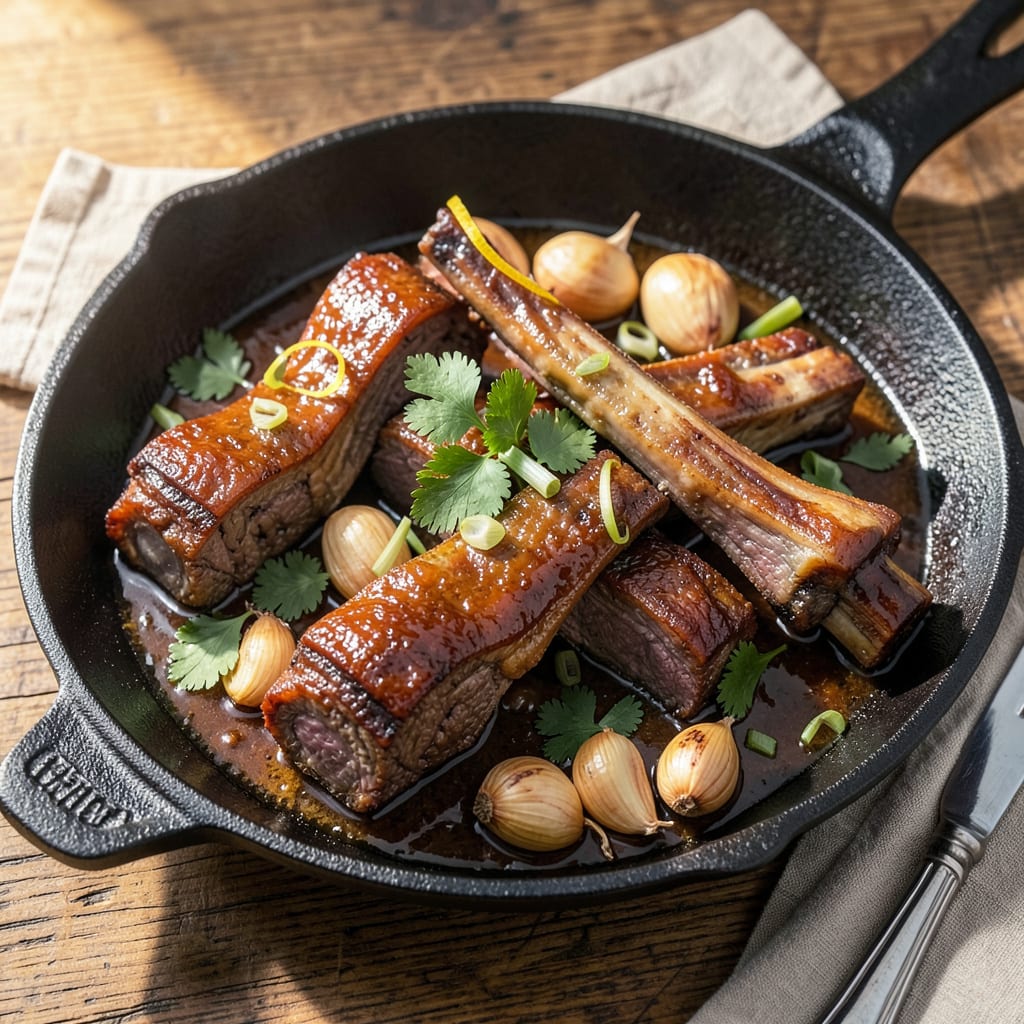
Whole oxtails require slow cooking—braising, stewing, or pressure cooking—for 2.5 to 4 hours to break down collagen and connective tissue, yielding rich, gelatinous meat packed with deep beefy flavor. Marinate overnight for maximum tenderness and taste.
This isn’t just about cooking time—it’s about transforming a tough cut into something extraordinary. 🔥 The magic happens when collagen melts into silky gelatin, turning what was once chewy into meat that practically dissolves on your tongue. I’ve found that overnight marinating with acidic ingredients like vinegar or citrus doesn’t just add flavor—it actually jumpstarts the tenderizing process by gently breaking down muscle fibers before they even hit the heat.
What most home cooks miss is how oxtails respond differently than other beef cuts. Their high connective tissue content means they need both time and moisture to reach that perfect fall-off-the-bone stage. Think of them like beef short ribs‘ more flavorful cousin—they demand patience but reward you with layers of taste you won’t get from quicker-cooking cuts.
💡 In This Article
- Why Whole Oxtails Need Slow Cooking for Best Texture
- Step-by-Step Guide to Preparing Whole Oxtails Like a Pro
Why Whole Oxtails Need Slow Cooking for Best Texture
Here’s what’s actually happening when you cook oxtails low and slow: The tough connective tissues are packed with collagen—a structural protein that gives meat its chew. When exposed to moist heat between 160-200°F for extended periods, collagen molecules unwind and transform into gelatin.
This process requires time—at least 2.5 hours—because collagen’s triple-helix structure resists breaking down quickly.
The muscle fibers in oxtails are surrounded by elastin (another connective tissue) that doesn’t dissolve like collagen. Instead, it needs prolonged heat to soften. Compare this to ribeye steaks, where muscle fibers are separated by fat marbling rather than dense connective tissue.
Oxtails have about 30% more connective tissue than short ribs, which is why they need nearly double the cooking time to achieve that buttery texture. 🔥
What most people don’t realize is that the gelatin created during cooking acts as a natural thickener and flavor enhancer. As the collagen breaks down, it releases amino acids that contribute to the meat’s deep umami profile.
The transformation is visible—raw oxtails feel firm and rubbery, while properly cooked ones develop a jelly-like coating when chilled (a sign of successful gelatin conversion).
Temperature control is everything. Below 160°F, collagen barely softens. Above 205°F, muscles contract violently and squeeze out moisture, making the meat dry. The sweet spot is 180-195°F, where collagen melts at about 1% per hour.
This is why pressure cookers work so well—they reach 250°F internally, breaking down collagen in just 45-60 minutes instead of hours.
Consider how oxtails compare to other tough cuts:
- Beef shank: Similar collagen content but with larger muscle groups, requiring 3-4 hours of braising
- Short ribs: More fat marbling means they become tender in 2-3 hours despite comparable connective tissue
- Pork shoulder: Collagen breaks down faster (due to different protein structure) in just 1.5-2 hours
The overnight marinade recommendation isn’t just for flavor—it’s science. Acidic ingredients like vinegar or citrus begin breaking down muscle proteins through a process called denaturation. This creates microscopic channels that help moisture penetrate deeper during cooking, resulting in meat that’s tender all the way through rather than just at the surface. ✨

Trained in classic French technique but raised on slow-cooked ribs and spicy rubs, she blends culinary skill with smoke and soul.
- Recipe for Boneless Pork Chops in Cast Iron Skillet: Sear and Baste to Juicy Perfection - October 3, 2026
- Recipe for Boneless Cross Rib Roast: Slow-Roasted Beef with Herb Crust - October 3, 2026
- Hamburgers in Sauce Recipe Crock Pot: Slow-Cooked Savory Delight - October 3, 2026