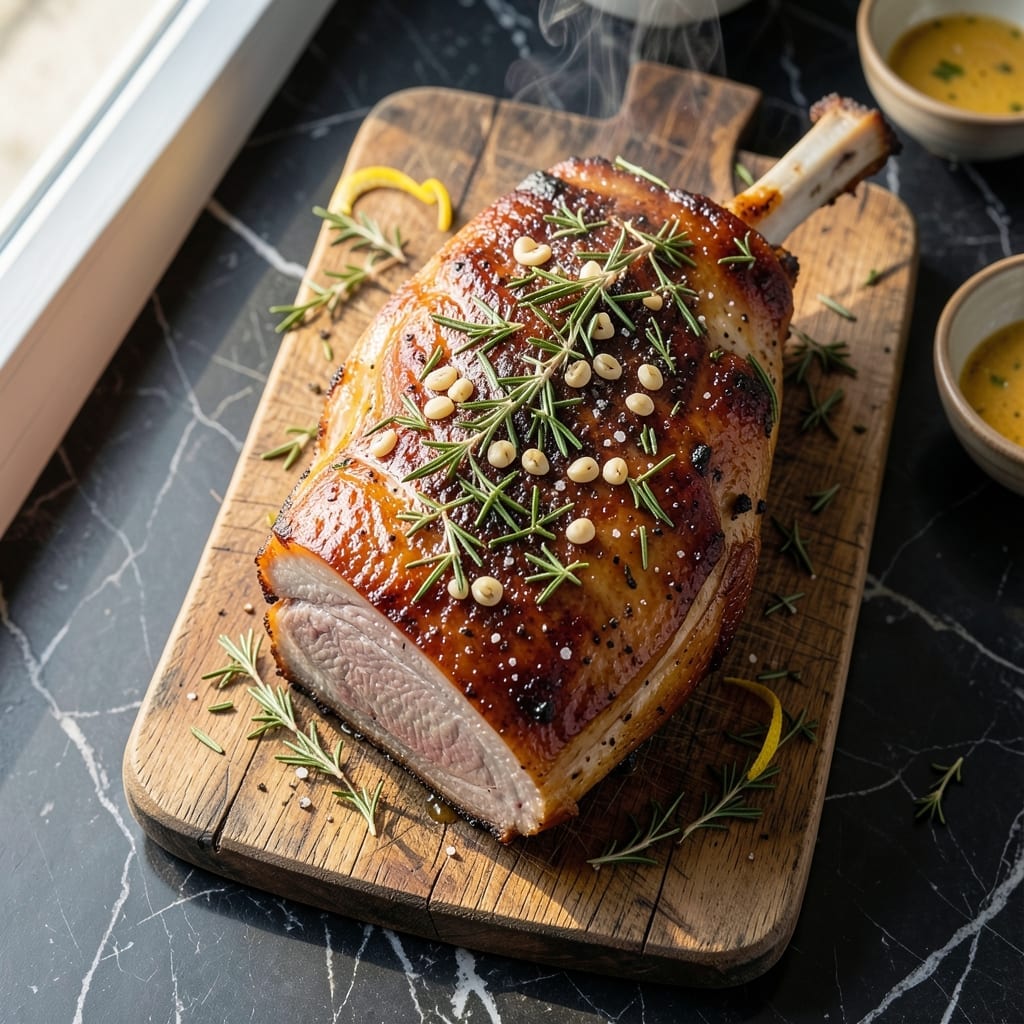
There’s nothing quite like the aroma of a herb-crusted pork loin roasting in the oven, filling your kitchen with savory anticipation.
This method transforms a simple cut into a succulent centerpiece, perfect for Sunday dinners or special occasions.
Ingredients for Whole Roasted Pork Loin
A center-cut pork loin with fresh herbs and aromatic compounds delivers restaurant-quality results at home.
| Ingredient | Amount | Notes |
|---|---|---|
| Bone-in Pork Loin 🥩 | 3 lb | Center-cut, trimmed of excess fat |
| Kosher Salt 🧂 | 2 tbsp | Diamond Crystal preferred for even seasoning |
| Freshly Ground Black Pepper 🌶️ | 1 tbsp | Coarse grind for texture |
| Fresh Rosemary 🌿 | 3 tbsp | Finely chopped, stems discarded |
| Fresh Thyme 🍃 | 2 tbsp | Leaves only, no stems |
| Fresh Sage 🍃 | 1 tbsp | Finely minced for even distribution |
| Garlic Cloves 🧄 | 6 cloves | Peeled and minced to paste consistency |
| Dijon Mustard 🟡 | 3 tbsp | Whole-grain variety for texture |
| Extra-Virgin Olive Oil 🫒 | ¼ cup | High-quality for herb crust adherence |
| Dry White Wine 🍷 | ½ cup | For deglazing pan juices |
| Chicken Stock 🥣 | 1 cup | Low-sodium preferred for reduction control |
| Unsalted Butter 🧈 | 2 tbsp | For finishing sauce |
| Shallots 🧅 | 2 whole | Finely diced for sauce base |
[recipe_ingredient_scaler]
The pork loin should be bone-in for optimal flavor and moisture retention. Source from a trusted butcher like Whole Foods or a local purveyor for consistent quality. Look for even marbling and a bright pink color—avoid pieces with excessive fat caps. The herb quality is paramount; organic fresh herbs from a farmers market or Whole Foods ensure vibrant flavor. Always check the sell-by date on pre-packaged pork to guarantee freshness.
No fresh herbs? Dried herbs at one-third the quantity work in a pinch, though the flavor profile will be less bright. For the wine, any dry white wine like Sauvignon Blanc or Pinot Grigio is ideal—avoid oaky Chardonnays. If avoiding alcohol, substitute with additional chicken stock and a splash of apple cider vinegar. The Dijon mustard can be replaced with whole-grain mustard, but avoid yellow mustard as it lacks depth.
The herb crust can be prepared 1 day ahead and stored refrigerated. Roast the pork immediately after applying the crust for best adhesion. Leftovers keep well for 4-5 days refrigerated, or freeze the cooked pork for up to 3 months. Reheat gently in a low oven to maintain moisture.
Why You’ll Love This Recipe
- Hands-Off Cooking: I season the pork loin with salt, pepper, rosemary, and thyme, pop it in the oven, and let it do the work.
- Herb-Crusted Perfection: The rosemary and thyme create a fragrant crust that makes every bite irresistibly savory.
- Sunday Supper Star: It’s my go-to for family dinners, holidays, or even a fancy weekend meal with leftovers for sandwiches.
- Feeds Many, Costs Little: A bone-in pork loin is budget-friendly and stretches to feed a crowd with minimal effort.
Step-by-Step Instructions for Herb-Crusted Roasted Pork Loin
Master the technique for perfectly roasted pork loin with a fragrant herb crust and rich pan sauce.
Step 1: Prepare the Herb Crust and Season the Pork Loin
In a small bowl, combine the 3 tbsp fresh rosemary, 2 tbsp fresh thyme, 1 tbsp fresh sage, 6 cloves minced garlic cloves, 2 tbsp kosher salt, and 1 tbsp freshly ground black pepper. The finely chopped herbs will adhere better to the meat and distribute flavor evenly.
Pat the 3 lb bone-in pork loin dry with paper towels, then rub it all over with the 3 tbsp Dijon mustard. This acts as a binder for the herb mixture. Press the herb mixture onto all surfaces of the pork loin, ensuring an even, thorough coating. The mustard’s tanginess balances the richness of the pork.
Step 2: Sear the Pork Loin for a Golden Crust
Heat the 0.25 cup extra-virgin olive oil in a large oven-safe skillet or Dutch oven over medium-high heat. When the oil shimmers, add the pork loin, fat-side down. Sear undisturbed for 4-5 minutes until the crust turns deep golden brown.
Flip the pork loin and sear the remaining sides for 2-3 minutes each until uniformly browned. The searing step enhances the flavor of the herb crust and creates a beautiful caramelized exterior. Transfer the pork loin to a plate and set aside momentarily.
Step 3: Roast the Pork Loin to Perfection
Preheat your oven to 375°F. Return the skillet to the stovetop over medium heat and add the 2 finely diced shallots. Sauté for 2-3 minutes until softened and translucent, stirring frequently to prevent burning.
Place the pork loin back into the skillet, fat-side up. Transfer the skillet to the preheated oven and roast for 45-60 minutes, or until the internal temperature reaches 145°F on an instant-read thermometer inserted into the thickest part. Baste the pork loin with the pan juices halfway through the roasting time for added moisture and flavor.
Step 4: Rest the Pork Loin and Prepare the Pan Sauce
Remove the pork loin from the oven and transfer it to a cutting board. Tent loosely with aluminum foil and let it rest for 15 minutes. This resting period allows the juices to redistribute, ensuring a moist and tender result.
Place the skillet on the stovetop over medium heat. Add the 0.5 cup dry white wine and deglaze the pan, scraping up any browned bits with a wooden spoon. Simmer for 2-3 minutes until the liquid reduces by half.
Add the 1 cup chicken stock and simmer for another 5-7 minutes until slightly thickened. Stir in the 2 tbsp unsalted butter and whisk until melted and fully incorporated. The sauce should be rich, silky, and full of depth from the pan drippings.
Step 5: Slice and Serve with Pan Sauce
After resting, slice the pork loin between the bones into 1-inch thick chops. Arrange the slices on a serving platter and spoon the pan sauce over the top. The sauce should pool slightly around the pork, adding moisture and a glossy finish.
Serve immediately while warm, ensuring each serving includes a generous portion of the herb crust and pan sauce. The pork should be tender and juicy, with a fragrant, flavorful crust that complements the succulent meat.
Pro Tips For Making Whole Roasted Pork Loin
- Dry the Meat First: Pat the pork loin bone-dry with paper towels before seasoning—moisture is the enemy of a good crust, and I learned this the hard way after ending up with steamed skin more than once.
- Room Temp Start: Pull the pork out of the fridge 45-60 minutes before roasting so it cooks evenly; cold meat seizes up and stays raw in the center while the outside overcooks.
- Skip the Overcrowding: Use a roasting pan with a rack so hot air circulates all around—no soggy bottoms, and the herbs crisp up instead of steaming into sadness.
- Rest Before Slicing: Tent it loosely with foil and let it rest 15 minutes after pulling it from the oven, or all those juices you worked for will end up on the cutting board instead of in the meat.
Essential Equipment for Great Whole Roasted Pork Loin
Oven-Safe Skillet
An oven-safe skillet is non-negotiable for this recipe. I rely on my 12-inch Lodge cast iron—it sears beautifully and transitions seamlessly to the oven. The even heat distribution ensures your herb crust develops perfectly.
Instant-Read Thermometer
Precision matters with pork loin. My ThermoWorks MK4 gives accurate readings in 2-3 seconds. Aim for 145°F internal temperature for juicy, safe meat. Guessing temperatures is a gamble I never take. 🌡️
Wooden Spoon
A sturdy wooden spoon is essential for deglazing the pan. I use mine to scrape up all those flavorful browned bits when making the pan sauce. Look for one with a long handle to keep your hands safe from the heat.
Cutting Board
Give your pork loin space to rest. My 18×12-inch bamboo board provides ample room for slicing. The juice groove is a lifesaver—it catches all the precious drippings that would otherwise make a mess on your counter.
Kitchen Twine
If your pork loin has a thin tail end, use food-safe twine to tie it under for even cooking. I keep a roll of cotton butcher twine in my drawer. This small step prevents overcooking the thinner parts while waiting for the thick end to finish.
Basting Brush
For that perfect herb crust, a silicone basting brush helps distribute the pan juices evenly during roasting. I prefer one with a long handle for easy access to the oven. Baste halfway through cooking for maximum flavor. 💡
Nutrition Facts
Frequently Asked Questions
What internal temperature ensures safe pork?
Use an instant-read thermometer to check for 145°F in the thickest part. This guarantees juicy, safe meat every time.
Can I use dried herbs instead of fresh?
Yes, but reduce the amount by two-thirds. Dried herbs are more concentrated but may lack the bright flavor of fresh.
How long should the pork rest before slicing?
Let it rest for 15 minutes after roasting. This lets the juices redistribute for moist, tender slices.
What if my pork loin has a thin end?
Tie the thin end under with kitchen twine for even cooking. This prevents overcooking while the thick end finishes.

Trained in classic French technique but raised on slow-cooked ribs and spicy rubs, she blends culinary skill with smoke and soul.
- Recipe for Boneless Pork Chops in Cast Iron Skillet: Sear and Baste to Juicy Perfection - October 3, 2026
- Recipe for Boneless Cross Rib Roast: Slow-Roasted Beef with Herb Crust - October 3, 2026
- Hamburgers in Sauce Recipe Crock Pot: Slow-Cooked Savory Delight - October 3, 2026