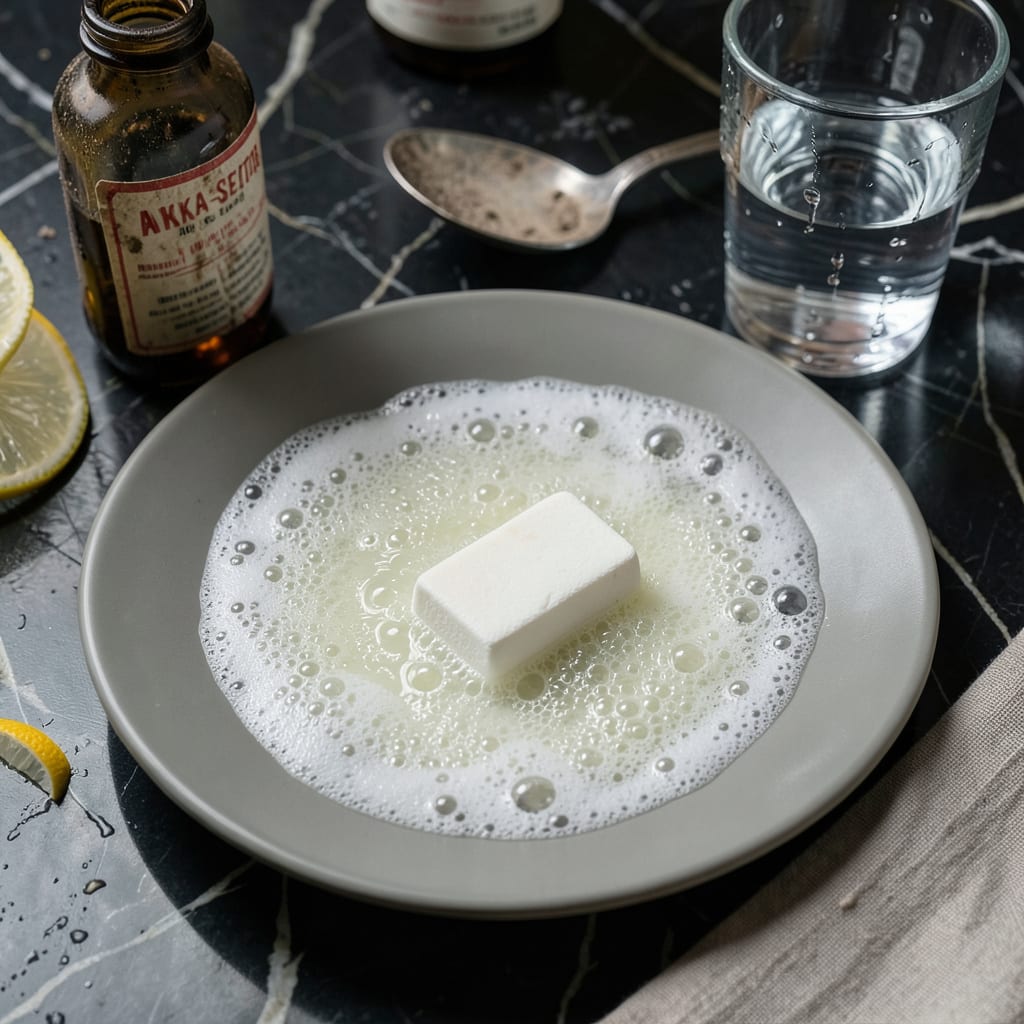
Alka-Seltzer tastes bitter and salty due to its active ingredients—sodium bicarbonate, citric acid, and aspirin—which create a sharp, medicinal flavor when dissolved. The effervescence also intensifies the harsh taste on your tongue.
This unappealing flavor comes from the chemical reaction between its core components. When the tablet hits water, the sodium bicarbonate and citric acid create that signature fizz—but they also release a sour, alkaline punch. Meanwhile, aspirin contributes its own naturally bitter profile, which many people find hard to swallow. 💥
The bubbling action doesn’t help either. Those tiny carbonation bubbles burst against your taste buds, making the medicinal notes feel even stronger. It’s a necessary trade-off for fast relief, but definitely not designed for enjoyment.
💡 In This Article
- Chemical Reactions Behind Alka-Seltzer’s Unpleasant Taste
- How to Mask Alka-Seltzer’s Taste Without Losing Effectiveness
Chemical Reactions Behind Alka-Seltzer’s Unpleasant Taste
When you drop an Alka-Seltzer tablet into water, you’re witnessing a classic acid-base reaction. The sodium bicarbonate (a base) and citric acid (an acid) collide, producing carbon dioxide bubbles and sodium citrate. This reaction lowers the solution’s pH to about 3.5-4.0, creating that sharp, sour tang.
The fizzing action isn’t just visual—it physically carries these acidic compounds to your taste buds faster than still liquids would. 🔥
The aspirin (acetylsalicylic acid) adds another layer of bitterness. This compound naturally tastes unpleasant because it stimulates our bitter taste receptors—an evolutionary warning system for potential toxins. At 325 mg per tablet, it delivers a concentrated bitter punch.
Compare this to flavored pain relievers that use coatings or sweeteners to mask their active ingredients, and you’ll understand why Alka-Seltzer’s taste is so pronounced.
Here’s what most people don’t realize: the effervescence actually amplifies the bad taste. Those bursting bubbles create tiny explosions on your tongue, dispersing the bitter and sour compounds more efficiently than a flat liquid would.
The carbonation also carries volatile compounds to your nasal passages, creating that distinctive “medicine smell” that intensifies the overall unpleasant experience. ✨
The temperature of your water matters too. Using hot water (above 120°F) speeds up the reaction but also releases more volatile compounds immediately, hitting your senses harder. Cold water slows the reaction, giving you a slightly milder but longer-lasting taste experience.
Either way, you’re getting the full force of these chemical interactions without any flavor buffers.
Other effervescent tablets often include flavorings or sweeteners to counterbalance these reactions. Alka-Seltzer’s original formula skips these additives to maintain its rapid absorption rate—what you’re tasting is pure, unmasked chemistry at work. The trade-off is effectiveness for palatability, which explains why the taste is so memorably unpleasant for many people. 💫
Interestingly, your saliva’s pH (normally around 6.2-7.4) gets temporarily overwhelmed by the solution’s acidity. This creates a sensory contrast that makes the bitterness and sourness feel even more intense. Your mouth is essentially experiencing a miniature chemical battle with each sip, which is why the taste lingers so distinctly.
The concentration plays a role too. A standard 8 oz glass of water with one tablet creates a solution that’s about 3-4% active ingredients by volume. That’s a high enough concentration to trigger strong taste reactions, unlike diluted fruit juices where flavors are more subtle.
This medicinal potency is exactly why it works so quickly for stomach relief—but also why it tastes so challenging to drink. ⚡

Trained in classic French technique but raised on slow-cooked ribs and spicy rubs, she blends culinary skill with smoke and soul.
- Recipe for Boneless Pork Chops in Cast Iron Skillet: Sear and Baste to Juicy Perfection - October 3, 2026
- Recipe for Boneless Cross Rib Roast: Slow-Roasted Beef with Herb Crust - October 3, 2026
- Hamburgers in Sauce Recipe Crock Pot: Slow-Cooked Savory Delight - October 3, 2026