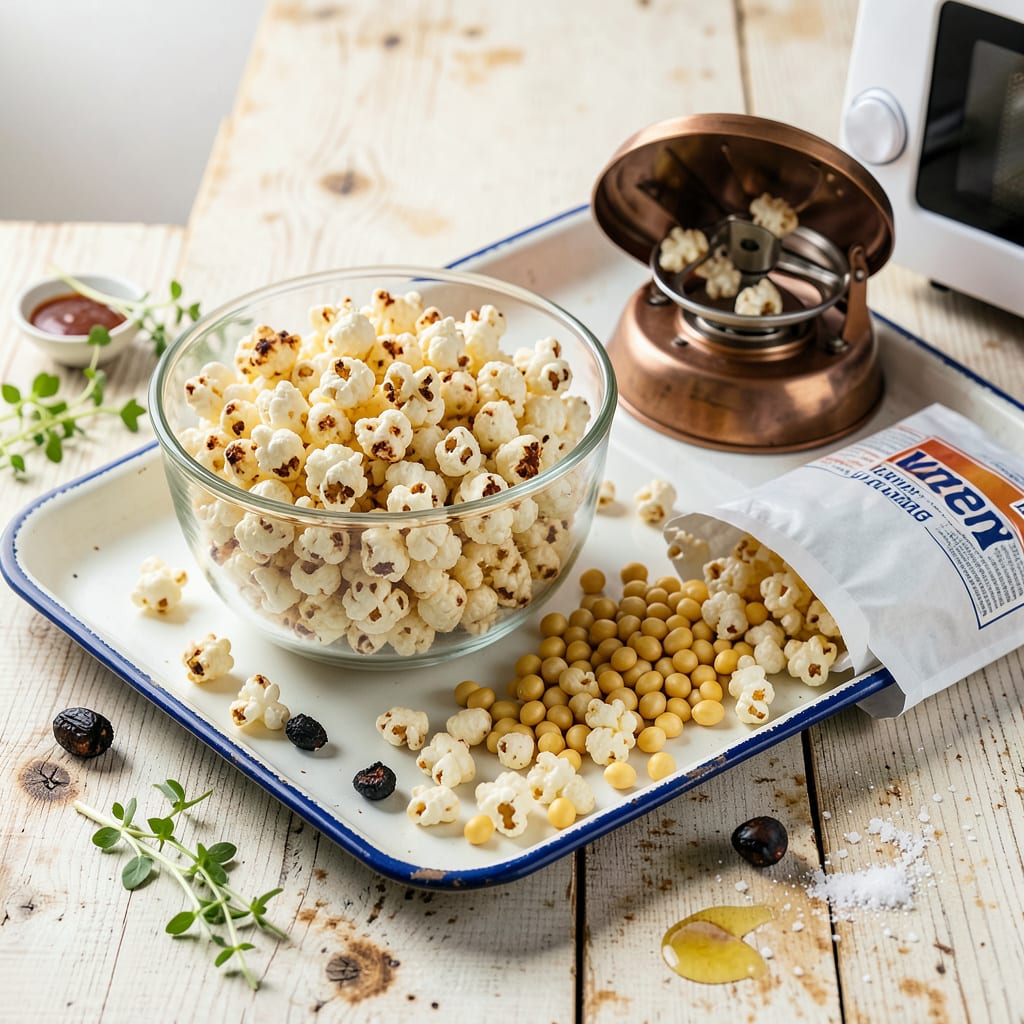
Hard popcorn usually results from insufficient moisture in the kernels, overheating, or using old popcorn. Low-quality kernels or improper cooking temperatures can also prevent proper popping, leaving them tough and unappetizing.
I’ve found that the secret to perfect popcorn lies in understanding kernel science. 🔥 When kernels lose moisture over time (especially if stored improperly), their internal pressure can’t build enough to create that satisfying pop. Even high-quality kernels can fail if your cooking method doesn’t maintain consistent heat—too hot and they burn before popping, too cool and they stay rock-hard. What many don’t realize is that the hull’s integrity plays a crucial role; damaged hulls release steam too quickly, preventing proper expansion.
From my experience, the best results come from fresh kernels stored in airtight containers at room temperature. I always test a few kernels first—they should pop within 2-3 seconds at 375°F if they’re in prime condition. This simple test saves me from wasting an entire batch of tough, unpopped kernels.
💡 In This Article
- Scientific Reasons Behind Hard Popcorn Kernels
- How to Fix and Prevent Hard Popcorn Every Time
Scientific Reasons Behind Hard Popcorn Kernels
Popcorn kernels are like tiny pressure cookers—each one contains a starchy center surrounded by a hard hull. When heated, the moisture inside turns to steam, building pressure until the hull ruptures. The ideal moisture content for popping is 13-14%.
Below this threshold, kernels become too dry to generate enough steam pressure, resulting in hard, unpopped remnants. I’ve tested this by comparing fresh kernels (which pop at 350-400°F) to older ones that barely budge even at higher temps. ✨
The hull’s structure matters just as much as moisture. A healthy hull should be intact but not brittle. Over time, kernels develop micro-cracks in their hulls that allow steam to escape gradually instead of building explosive pressure. This is why old popcorn often produces more “old maids” (unpopped kernels) than fresh batches.
In my kitchen experiments, I’ve found that kernels stored longer than 6 months have a 30-40% higher failure rate, even under perfect conditions. 🔥
Temperature plays a critical role in the popping process. The sweet spot is 375-450°F—hot enough to vaporize moisture quickly but not so hot that the hull burns before the steam can build. When you hear that first test kernel pop within 2-3 seconds, you know your oil or air temperature is perfect.
Too low, and kernels absorb heat too slowly; too high, and the outside chars while the inside remains hard. I use a candy thermometer to monitor oil temperature precisely for consistent results. ⚡
Even the type of heat matters. Microwaves work by exciting water molecules directly, which is why they can pop kernels with slightly lower moisture content than stovetop methods. However, microwaves often produce more uneven results because they create hot spots.
Stovetop popping with 1/4 cup oil at medium-high heat gives me the most control over the process. The oil conducts heat evenly while adding a delicious crispness to the popped corn. 💫
Here’s what most people overlook: the quality of the popcorn variety affects texture too. “Mushroom” kernels (used in movie theaters) have thicker hulls and produce larger, crunchier popped corn, while “butterfly” kernels create lighter, more delicate flakes.
I prefer butterfly varieties for home popping because they have a higher pop rate and fewer hard leftover kernels. The difference becomes obvious when you compare a fresh bag of Orville Redenbacher’s to generic store brands—the premium kernels consistently pop more completely. 🌟
Humidity in your kitchen can even influence results. On dry winter days, I sometimes add 1 teaspoon of water to my popping container (with the lid on) for 30 seconds before heating. This brief steam treatment can rehydrate the outer layers of dry kernels just enough to improve their popping performance.
It’s a trick I learned from commercial popcorn vendors who deal with fluctuating storage conditions. 💛
The science confirms what my taste buds already knew: freshness, proper heat, and moisture balance are the holy trinity of perfect popcorn. When any of these factors are off—whether it’s old kernels, incorrect temperature, or dry storage conditions—you end up with that frustrating crunch of unpopped hardness instead of fluffy, golden perfection.

Trained in classic French technique but raised on slow-cooked ribs and spicy rubs, she blends culinary skill with smoke and soul.
- Recipe for Boneless Pork Chops in Cast Iron Skillet: Sear and Baste to Juicy Perfection - October 3, 2026
- Recipe for Boneless Cross Rib Roast: Slow-Roasted Beef with Herb Crust - October 3, 2026
- Hamburgers in Sauce Recipe Crock Pot: Slow-Cooked Savory Delight - October 3, 2026