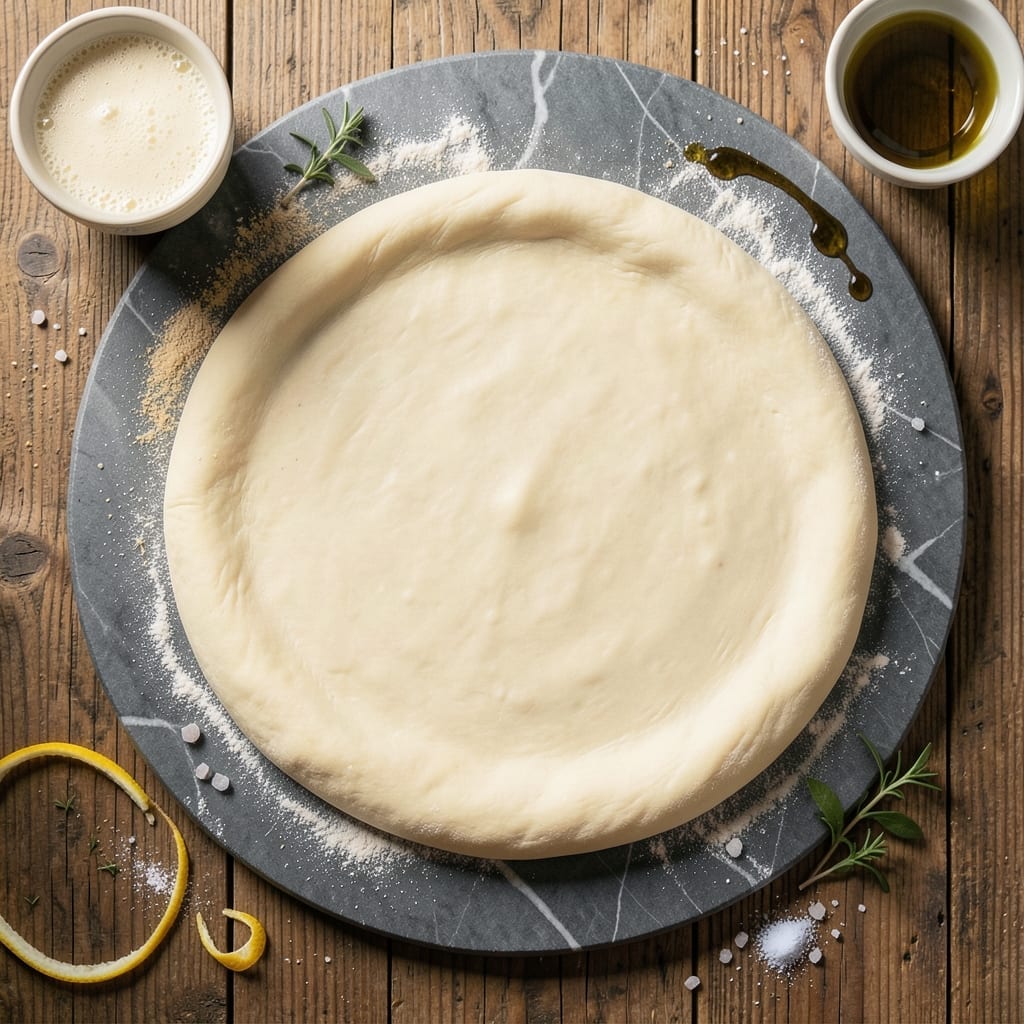
This homemade pizza dough delivers a chewy, fluffy base with minimal effort and maximum flavor. The secret lies in proper kneading and resting time.
As a vegetarian-friendly recipe by default, it provides a perfect canvas for any toppings. The result is consistently better than store-bought options.
Ingredients for Winco Pizza Dough
Eight ingredients transform into a restaurant-quality pizza base right in your kitchen.
| Ingredient | Amount | Notes |
|---|---|---|
| Bread Flour 🌾 | 3 ½ cups | High-protein for chewiness |
| Active Dry Yeast 🍞 | 1 package | 2 1/4 tsp equivalent |
| Granulated Sugar 🍚 | 1 tsp | Feeds the yeast activation |
| Kosher Salt 🧂 | 1 ½ tsp | Diamond Crystal preferred |
| Extra-Virgin Olive Oil 🫒 | 2 tbsp | For dough elasticity |
| Warm Water 💧 | 1 ¼ cups | 110-115°F temperature |
| Cornmeal 🌽 | ¼ cup | For dusting baking surface |
| All-Purpose Flour 🌾 | ½ cup | For dusting work surface |
[recipe_ingredient_scaler]
The flour is non-negotiable for texture. King Arthur Bread Flour delivers consistent protein content (12-13%) for that signature chew. Yeast freshness matters—check the expiration date and store unopened packages in the freezer. Winco’s store-brand yeast works perfectly here. For the olive oil, choose a fruity, high-quality extra-virgin—it adds subtle depth to the dough’s flavor profile.
No bread flour? All-purpose plus 1 tbsp vital wheat gluten per cup mimics the protein content. Sugar substitutes like honey work at equal amounts, though the yeast may activate slightly faster. Warm water temperature is critical—too hot kills the yeast, too cool slows activation. A kitchen thermometer ensures precision. Fine sea salt can replace kosher at half the volume.
Dough rises best in a warm, draft-free environment—an unlit oven with the light on works well. Prepared dough keeps 24 hours refrigerated or 3 months frozen. For same-day use, let it rest at room temperature before shaping. Always dust your surface generously to prevent sticking during rolling.
Why You’ll Love This Recipe
- No-Fuss Mixing: I just dump, stir, and let the yeast and olive oil work their magic—no fancy techniques needed.
- Rich, Toasty Depth: The bread flour and olive oil give it that bakery-style chew with a golden crust.
- Endless Topping Playground: Honestly, it’s my blank canvas for everything from margherita to breakfast pizza.
- Penny-Pincher’s Dream: A bag of bread flour and yeast makes four doughs for the cost of one delivery pie.
Step-by-Step Instructions for Winco Pizza Dough
This method ensures a consistently chewy, fluffy base with professional results every time.
Step 1: Activate the Yeast Properly
In a small bowl, combine the 1 package Active Dry Yeast, 1 tsp Granulated Sugar, and 1.25 cups Warm Water at 110-115°F. The sugar feeds the yeast while the precise temperature range activates it without killing the culture.
Let this mixture stand for 5-7 minutes until it becomes foamy and has visibly doubled in volume. This visual confirmation proves your yeast is active—without this step, your dough won’t rise properly. If no foam appears, your water may have been too hot or the yeast too old; start over with fresh ingredients.
Step 2: Form and Knead the Dough
In a large mixing bowl, combine the 3.5 cups Bread Flour and 1.5 tsp Kosher Salt. Make a well in the center and pour in the activated yeast mixture along with the 2 tbsp Extra-Virgin Olive Oil. The high-protein bread flour creates the chewy texture characteristic of professional pizza dough.
Using a wooden spoon, mix until a shaggy dough forms, then turn it onto a surface dusted with 0.5 cup All-Purpose Flour. Knead for 8-10 minutes by hand until the dough becomes smooth and elastic. You’ll know it’s ready when it springs back slowly after poking with your finger.
Step 3: First Rise Until Doubled
Lightly oil a clean bowl, place the dough inside, and cover with a damp kitchen towel. Let it rise in a warm, draft-free place for 1-2 hours or until it has doubled in size. The ideal rise temperature is 75-80°F—too cold slows fermentation, too hot can overproof the dough.
The dough should be puffy and when gently pressed with a finger, the indentation should remain. This first rise develops the gluten structure and flavor. Don’t rush this step; proper fermentation is what gives your crust that perfect chewy texture.
Step 4: Shape and Second Rise
Punch down the risen dough to deflate it, then divide it into 4 equal portions for individual pizzas. Roll each portion into a ball and place them on a baking sheet dusted with 0.25 cup Cornmeal. The cornmeal prevents sticking and adds a subtle crunch to the finished crust.
Cover the dough balls with a towel and let them rest for 30-45 minutes. During this second rise, the gluten relaxes, making the dough easier to stretch. You’ll notice the balls expand slightly—they’re ready when they feel soft and pliable to the touch.
Step 5: Stretch and Prepare for Baking
Preheat your oven to its highest setting, typically 500-550°F, with a pizza stone or inverted baking sheet inside. This high heat mimics a professional pizza oven, creating a crispy exterior while keeping the interior fluffy.
On a surface dusted with additional all-purpose flour, stretch one dough ball into a 12-inch round by pressing from the center outward, leaving a slightly thicker rim for the crust. The dough should be thin enough to see light through it in spots but not so thin it tears. Transfer to a cornmeal-dusted pizza peel and add your toppings immediately for baking.
Pro Tips For Making Winco Pizza Dough
- Activate the Yeast: Proof your active dry yeast in warm water (105-110°F) with the sugar for 5-10 minutes until foamy—I learned this the hard way after a few flat, sad doughs.
- Use Bread Flour: Skip the all-purpose; bread flour’s higher protein content gives that chewy, elastic texture Winco’s recipe is known for.
- Don’t Over-Oil: Stick to 2 tablespoons of extra-virgin olive oil in the dough—more makes it greasy, less leaves it dry and tough.
- Let It Rise: Give the dough a full 1-2 hours to double in size in a warm spot; rushing this step means a dense, flavorless crust.
Perfect Pairings for This Dish
Classic Wine Pairings
Italian reds cut through the richness of cheesy toppings beautifully. I love Chianti Classico with its bright acidity and cherry notes—it complements tomato sauce perfectly. For white lovers, Pinot Grigio from Veneto offers a crisp, clean finish that refreshes your palate between bites. 🍷
Craft Beer Options
A light Italian pilsner like Birra del Borgo won’t overpower the dough’s subtle flavors. For bolder toppings, try a hoppy IPA—the bitterness balances the fat in melted cheese. I’ve found West Coast IPAs work particularly well with spicy sausages.
Simple Salads
A baby arugula salad with lemon vinaigrette adds a peppery bite that contrasts the dough’s chewiness. Toss 4 cups arugula with 2 tbsp olive oil, 1 tbsp lemon juice, and shaved Parmigiano-Reggiano. The acidity cuts through the richness without competing with your toppings.
Dipping Sauces
Serve warm marinara on the side for dipping the crust—it’s a game-changer. I also love garlic-infused olive oil with a sprinkle of red pepper flakes for heat. For a creamy option, mix ricotta with chopped basil and a drizzle of honey.
Dessert Follow-Up
End with tiramisu or panna cotta to keep the Italian theme going. For a quick option, serve vanilla gelato with a drizzle of balsamic glaze and crushed pistachios. The sweetness balances the meal’s savory notes perfectly. 💛
Nutrition Facts
Frequently Asked Questions
What’s the best flour for chewy texture?
Use bread flour for its high protein content (12-13%). This creates the gluten structure needed for that characteristic chew. King Arthur Bread Flour is a reliable choice.
Why isn’t my dough rising?
Check your yeast freshness and water temperature. Yeast needs 110-115°F water to activate. If your mixture doesn’t foam within 5-7 minutes, start over with fresh ingredients.
Can I make this dough ahead?
Yes! Prepared dough keeps 24 hours refrigerated or 3 months frozen. For best results, let refrigerated dough come to room temperature before shaping.
How thin should I roll the dough?
Aim for a 12-inch round that’s thin enough to see light through in spots. Leave a slightly thicker rim for the crust. Stretch gently to avoid tearing.

Trained in classic French technique but raised on slow-cooked ribs and spicy rubs, she blends culinary skill with smoke and soul.
- Recipe for Boneless Pork Chops in Cast Iron Skillet: Sear and Baste to Juicy Perfection - October 3, 2026
- Recipe for Boneless Cross Rib Roast: Slow-Roasted Beef with Herb Crust - October 3, 2026
- Hamburgers in Sauce Recipe Crock Pot: Slow-Cooked Savory Delight - October 3, 2026