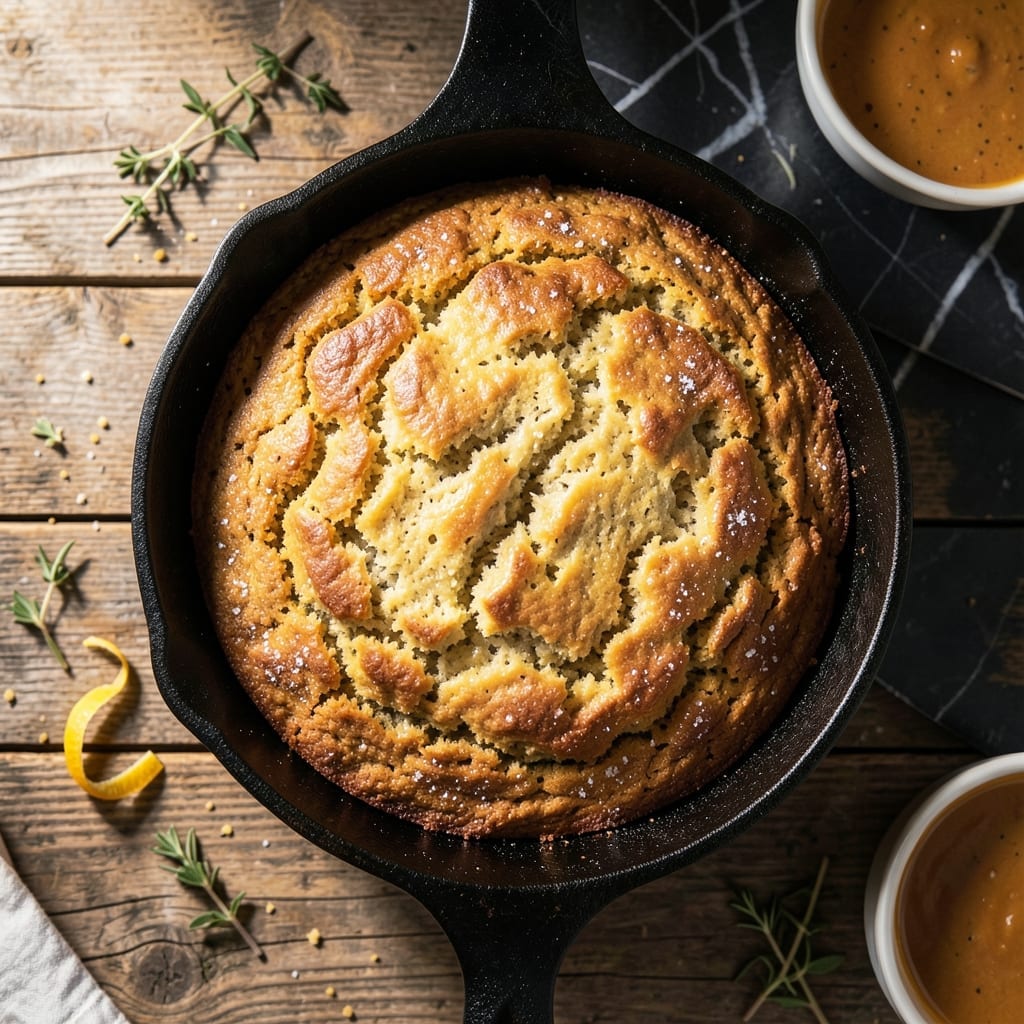
This Southern cornbread delivers the golden crust and buttery richness that made Paula Deen famous. The secret lies in the perfect ratio of cornmeal to flour and a hot cast iron skillet.
With just 10 minutes of prep and 20 minutes in the oven, you’ll have a warm, crumbly loaf that pairs perfectly with any meal.
Ingredients for Paula Deen Cornbread
Short list. Pantry staples. Southern magic in every bite.
| Ingredient | Amount | Notes |
|---|---|---|
| Yellow Cornmeal 🌽 | 1 ½ cups | Fine or medium grind |
| All-Purpose Flour 🌾 | ½ cup | Sifted for even texture |
| Granulated Sugar 🍚 | ¼ cup | Adjust for sweetness preference |
| Baking Powder 🧂 | 1 tbsp | Double-acting for rise |
| Baking Soda 🧂 | ½ tsp | Balances acidity in buttermilk |
| Salt 🧂 | 1 tsp | Kosher or sea salt preferred |
| Buttermilk 🥛 | 1 ¼ cups | Full-fat for richness |
| Large Eggs 🥚 | 2 whole | Room temperature for best rise |
| Unsalted Butter 🧈 | ½ cup | Melted plus extra for skillet |
| Vegetable Shortening 🧈 | 2 tbsp | For crispy crust in skillet |
[recipe_ingredient_scaler]
The cornmeal is non-negotiable here. White Lily is the Southern standard if you can find it (look in the baking aisle or Walmart down South). Fine or medium grind both work, but avoid coarse—it’ll give you a gritty texture. The buttermilk? Full-fat is what Paula would use (and what you want for that rich, tender crumb). If your grocery store doesn’t carry it, whole milk with a splash of vinegar does the trick in a pinch.
No buttermilk? Stir 1 tbsp vinegar or lemon juice into regular milk and let it sit 5 minutes. Out of cornmeal? Stone-ground is best, but any yellow cornmeal will do—just don’t swap in corn flour. The sugar can be reduced or omitted if you prefer a less sweet cornbread, but that touch of sweetness is classic for this style.
Batter comes together fast, so have your skillet hot and ready. Leftovers? Wrap tightly in foil—they’ll stay moist for 2-3 days. Reheat in the oven or toaster for that fresh-baked taste. Freezes beautifully for up to 3 months.
Why You’ll Love This Recipe
- Minimal Effort: I just dump the cornmeal, flour, and sugar in one bowl—no fancy steps, no fuss.
- Sweet & Crumbly: That touch of granulated sugar gives it the perfect balance, not too sweet, just right.
- Feeds a Crowd: One batch covers dinner, leftovers, and still some for breakfast toasted with butter.
- Pantry Staples: I always have cornmeal and flour on hand, so this is my go-to when I need bread in a pinch.
Step-by-Step Instructions for Southern-Style Buttery Cornbread
Here’s how I make cornbread with that signature golden crust and tender crumb.
Step 1: Combine Dry Ingredients for Even Rise
In a large bowl, whisk together the 1.5 cups Yellow Cornmeal, 0.5 cup All-Purpose Flour, 0.25 cup Granulated Sugar, 1 tbsp Baking Powder, 0.5 tsp Baking Soda, and 1 tsp Salt until fully incorporated. I sift the flour first if it has any lumps—this ensures a light, airy texture in the final product.
The baking powder and baking soda work together to give this cornbread its lift, while the sugar balances the acidity in the buttermilk. Don’t skip the salt; it enhances all the flavors without making the bread taste salty.
Step 2: Whisk Wet Ingredients Until Smooth
In a separate bowl, beat the 2 whole Large Eggs lightly, then whisk in the 1.25 cups Buttermilk and 0.5 cup Unsalted Butter (melted and slightly cooled). The buttermilk adds richness and tang, while the butter gives it that unmistakable Southern flavor.
Room temperature eggs blend more evenly into the buttermilk, preventing streaks in the batter. If your butter is too hot, it can cook the eggs—always let it cool to just warm before mixing.
Step 3: Fold Wet and Dry Mixtures Together
Pour the wet ingredients into the dry ingredients and stir just until combined. The batter will be thick but pourable—don’t overmix, or the cornbread will turn out dense instead of tender. A few small lumps are fine; they’ll dissolve during baking.
This is where the magic happens. The buttermilk reacts with the baking soda, creating tiny air pockets that give the cornbread its signature crumb. The cornmeal soaks up the liquid, so work quickly but gently.
Step 4: Prep the Skillet for a Crispy Crust
Place a 10-inch cast-iron skillet in the oven and preheat to 425°F. Once hot, add the 2 tbsp Vegetable Shortening to the skillet and swirl to coat the bottom and sides evenly. The shortening should be shimmering but not smoking—this is your signal it’s ready.
I always use shortening here instead of butter because it has a higher smoke point, creating a crispier crust without burning. Pour the batter into the hot skillet—it should sizzle slightly when it hits the pan.
Step 5: Bake Until Golden and Pull Away from Edges
Bake for 20-25 minutes until the top is golden brown and the edges start to pull away from the sides of the skillet. A toothpick inserted in the center should come out clean, but don’t overbake—this bread stays moist and tender when pulled at the right moment.
Let it cool in the skillet for 5 minutes before slicing. This brief rest lets the structure set so it doesn’t crumble when you cut into it. Serve warm, straight from the pan, for that authentic Southern experience.
Pro Tips For Making Paula Deen Cornbread
- Preheat the Pan: Heat your cast iron skillet in the oven for 5 minutes before adding batter—this guarantees a crispy crust and prevents a gummy bottom.
- Sift Dry Ingredients: Always sift the cornmeal, flour, baking powder, and baking soda together to avoid dense spots in your cornbread.
- Skip Overmixing: Stir just until the batter comes together; overmixing develops gluten and makes the cornbread tough.
- Use Buttermilk Substitute: If you don’t have buttermilk, add 1 tablespoon of vinegar to regular milk and let it sit for 5 minutes—works just as well for that tangy flavor.
Troubleshooting This Dish
Dense or Dry Cornbread
Overmixing is the most common culprit for dense results. Stir wet and dry ingredients just until combined—10-12 strokes is plenty. If your cornbread is dry, try adding 2 tbsp more buttermilk next time. The batter should be thick but pourable. 💡
Crust Not Crispy
For that signature crispy crust, your skillet must be ripping hot before adding batter. I preheat my Lodge cast iron in the oven for 10 minutes at 425°F with the shortening inside. If it smokes, it’s ready.
Center Not Cooking
If the top browns but the center stays wet, your oven may run cool. Try baking at 435°F instead and check at 18 minutes. A toothpick in the center should come out clean, not wet or gummy.
Cornbread Sinks After Baking
This usually means the leavening agents were old or the batter sat too long before baking. Check that your baking powder and baking soda are fresh. Pour batter into the skillet immediately after mixing.
Crumbly Texture
This often happens with too much cornmeal or not enough liquid. Stick to the 1.5 cups cornmeal to 1.25 cups buttermilk ratio. Let the bread cool for 5 minutes in the skillet before slicing to help it hold together.
Bland Flavor
Don’t skip the 1 tsp salt—it enhances all flavors. For more depth, I sometimes add ½ tsp smoked paprika to the dry ingredients. The buttermilk’s tang should balance the sweetness perfectly. ✨
Nutrition Facts
Frequently Asked Questions
Can I use a different pan instead of cast iron?
Yes, but cast iron gives the best crust. Use a 9×9-inch baking dish or muffin tin, but preheat it and add 1 tbsp shortening for similar results. Bake time may vary slightly.
Why does the recipe call for both baking powder and baking soda?
The combination ensures a perfect rise. Baking powder reacts with moisture, while baking soda reacts with the buttermilk’s acidity. Together they create a tender, airy texture.
Can I make this ahead of time?
Bake as directed, cool completely, then store in an airtight container for 2-3 days. Reheat in the oven at 350°F for 10 minutes.

Trained in classic French technique but raised on slow-cooked ribs and spicy rubs, she blends culinary skill with smoke and soul.
- Recipe for Boneless Pork Chops in Cast Iron Skillet: Sear and Baste to Juicy Perfection - October 3, 2026
- Recipe for Boneless Cross Rib Roast: Slow-Roasted Beef with Herb Crust - October 3, 2026
- Hamburgers in Sauce Recipe Crock Pot: Slow-Cooked Savory Delight - October 3, 2026