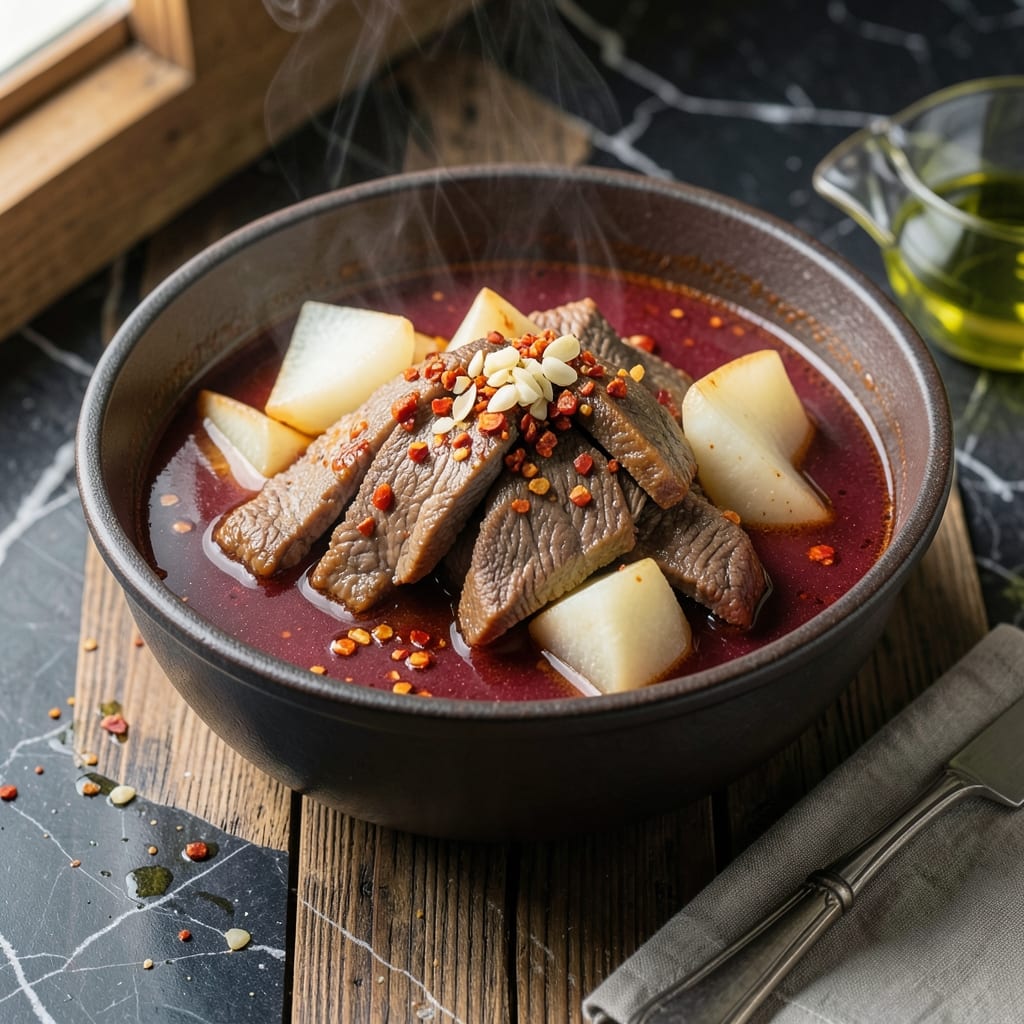
This Korean beef stew brings bold flavors and comforting warmth to any meal. I developed this version after testing multiple techniques to balance the spiciness with rich, savory depth.
The secret lies in the broth—slow-simmered with beef brisket, radish, and Korean chili flakes for that signature hearty character. Traditional preparation ensures every ingredient melts into the dish.
What emerges is a stew with tender meat, soft vegetables, and a broth so flavorful it demands to be soaked up with rice. The spice level builds gradually, creating perfect harmony.
Serve steaming hot with a side of kimchi for the full experience. This is Korean comfort food at its finest.
Ingredients for Yukgaejang
Thinly sliced brisket, bold chili flakes, and aromatic vegetables create this rich Korean stew.
| Ingredient | Amount | Notes |
|---|---|---|
| Beef Brisket 🥩 | 1 ½ lb | Thinly sliced against grain |
| Korean Radish 🥕 | 1 whole | Peeled, cut into chunks |
| Korean Chili Flakes 🌶️ | ½ cup | Adjust for spice preference |
| Gochugaru 🌶️ | 3 tbsp | Mild or hot variety |
| Soy Sauce 🫒 | ¼ cup | Low-sodium preferred |
| Garlic Cloves 🧄 | 8 cloves | Minced for depth of flavor |
| Fresh Ginger 🌿 | 1 whole | About 2-inch piece, sliced |
| Onion 🧅 | 1 whole | Yellow or white, sliced thin |
| Green Onions 🧅 | 4 whole | Cut into 2-inch pieces |
| Beef Stock 💧 | 6 cups | Low-sodium for control |
| Sesame Oil 🫒 | 1 tbsp | Toasted for aroma |
| Sugar 🍚 | 1 tbsp | Balances spice and acidity |
| Black Pepper 🌶️ | 1 tsp | Freshly ground preferred |
| Tofu 🧈 | 8 oz | Firm or extra-firm, cubed |
| Shiitake Mushrooms 🍄 | 4 whole | Fresh or dried, sliced |
[recipe_ingredient_scaler]
The brisket is non-negotiable for authenticity. Ask your butcher for well-marbled beef brisket—this ensures tenderness after long simmering. Korean radish (mu) is traditional, but daikon radish works in a pinch. For the chili flakes, seek out authentic gochugaru at an Asian market or H Mart. Avoid generic chili flakes; they lack the depth and color.
No gochugaru? Substitute with half the amount of cayenne plus sweet paprika for color and heat, though the flavor won’t be identical. Beef stock can be swapped for mushroom stock for a lighter version. The tofu is optional but recommended for texture—firm tofu holds up best. If using dried shiitake, soak and slice before adding.
This stew improves overnight as flavors meld. Store in an airtight container in the fridge for up to 4 days or freeze for 3 months. Reheat gently to preserve the brisket’s tenderness. Always skim excess fat before serving for the cleanest broth.
Why You’ll Love This Recipe
- Set It and Forget It: I toss the beef brisket and radish in the pot with gochugaru and soy sauce, then let it simmer while I do other things.
- Spicy Comfort: The chili flakes and gochugaru create a deep, fiery broth that warms you up from the first spoonful.
- Meal Prep Hero: I make a big batch on Sunday and it tastes even better by Wednesday, if it lasts that long.
- Feeds Many: One pot of this hearty stew stretches easily for leftovers or a crowd, and the brisket keeps it filling.
Step-by-Step Instructions for Spicy Korean Beef Stew
This authentic method delivers rich, aromatic broth and perfectly tender beef every time.
Step 1: Prepare the Beef and Aromatics
Begin by slicing the 1.5 lb Beef Brisket thinly against the grain—this shortens the muscle fibers for maximum tenderness. I use a sharp chef’s knife and partially freeze the brisket for 20 minutes first to make slicing easier.
Peel and cut the 1 whole Korean Radish into 1-inch chunks. Slice the 1 whole Onion thinly, mince the 8 cloves Garlic Cloves, and slice the 1 whole Fresh Ginger into thin coins. Cut the 4 whole Green Onions into 2-inch pieces, separating whites from greens.
Slice the 4 whole Shiitake Mushrooms and cube the 8 oz Tofu. Having all ingredients prepped before cooking ensures a smooth process and prevents burning the aromatics during the next steps.
Step 2: Build the Flavor Base
Heat the 1 tbsp Sesame Oil in a large, heavy pot over medium-high heat. Add the sliced brisket and sear for 3-4 minutes until the edges turn lightly browned—this caramelizes the meat’s natural sugars for depth.
Add the onion, garlic, ginger, and white parts of the green onions. Sauté for 2-3 minutes until the onions soften and become translucent. The aroma should be fragrant and pungent at this stage.
Stir in the 0.5 cup Korean Chili Flakes and 3 tbsp Gochugaru, toasting them for 30 seconds until the oil turns a deep red. This blooms the spices, intensifying their flavor in the final stew.
Step 3: Simmer to Perfection
Pour in the 6 cups Beef Stock, 0.25 cup Soy Sauce, 1 tbsp Sugar, and 1 tsp Black Pepper. Add the Korean radish, shiitake mushrooms, and tofu. Bring to a boil, then reduce the heat to medium-low to maintain a gentle simmer.
Partially cover the pot and let it cook for 1 hour to 1 hour 15 minutes, stirring occasionally. The stew is ready when the brisket is fork-tender and the radish chunks are soft enough to pierce easily with a knife.
During the last 10 minutes of cooking, add the green onion tops. This preserves their fresh, oniony bite as a garnish in the finished dish.
Step 4: Adjust and Serve
Taste the stew and adjust the seasoning if needed. The balance should be spicy, savory, and slightly sweet, with the heat from the chili flakes and gochugaru mellowed by the rich beef broth.
Ladle the stew into deep bowls, ensuring each portion has a mix of beef, radish, tofu, and mushrooms. The broth should be deep red and glossy from the rendered fat and spices.
Serve immediately while hot, with steamed rice on the side to soak up the robust, flavorful broth. The stew thickens slightly as it cools, so enjoy it promptly for the best texture.
Pro Tips For Making Yukgaejang
- Boil the Brisket First: Parboil the beef brisket for 10-15 minutes to remove impurities and excess fat—this keeps your yukgaejang broth clean and rich, not greasy.
- Toast the Gochugaru: Lightly toast the Korean chili flakes in a dry pan for 1-2 minutes before adding to the soup. It deepens the flavor and removes any raw bitterness.
- Skip the Overcooking: Add the Korean radish slices only 20 minutes before serving—they should be tender but still hold their shape, not turn mushy.
- Use Cold Water: Start the brisket in cold water and bring it up to a boil slowly. This guarantees even cooking and prevents the meat from toughening up.
Best Sauces and Condiments for yukgaejang
Spicy Dipping Sauce
Mix 2 tbsp gochujang with 1 tbsp rice vinegar, 1 tsp sesame oil, and 1 tsp honey for a tangy, spicy dip. I love this with the beef—it amplifies the stew’s heat while adding brightness. 🌶️
Cooling Yogurt Sauce
Combine ½ cup Greek yogurt with 1 tsp grated cucumber and ½ tsp garlic powder. The creamy texture balances the stew’s boldness beautifully. I use Fage 2% for the perfect consistency.
Garlic Soy Dip
Whisk 3 tbsp soy sauce, 1 tbsp sesame oil, 1 minced garlic clove, and ½ tsp sugar. This savory dip enhances the beef’s richness. I always keep Kikkoman soy sauce on hand.
Kimchi Relish
Chop ½ cup kimchi with 1 tbsp kimchi juice and 1 tsp toasted sesame seeds. The fermented tang cuts through the stew’s depth. I buy Mother-in-Law’s Kimchi from my local Asian market.
Sesame Salt Blend
Toast 1 tbsp sesame seeds with ½ tsp coarse sea salt and ¼ tsp gochugaru. Sprinkle this over the stew for crunch and extra flavor. I use a mortar and pestle to grind it lightly. ✨
Rice Vinegar Spritz
Mix 2 tbsp rice vinegar with 1 tsp sugar and 1 tbsp water in a spray bottle. A light spritz before serving brightens the dish. I tested this trick in my tiny Boston kitchen—game-changer.
Nutrition Facts
Frequently Asked Questions
Can I use a different cut of beef?
Brisket is traditional, but chuck roast or short ribs work too. These cuts have good marbling for tenderness after long simmering. Avoid lean cuts like sirloin as they can become tough.
How do I adjust the spice level?
Reduce gochugaru by half for mild heat, or add 1 tbsp sugar to balance spiciness. For extra heat, include 1 chopped jalapeño with the aromatics.
Can I make this in a slow cooker?
Yes! Sear the beef first, then transfer everything to the slow cooker. Cook on low for 6-7 hours or high for 3-4 hours. The flavors will deepen beautifully.

Trained in classic French technique but raised on slow-cooked ribs and spicy rubs, she blends culinary skill with smoke and soul.
- Recipe for Boneless Pork Chops in Cast Iron Skillet: Sear and Baste to Juicy Perfection - October 3, 2026
- Recipe for Boneless Cross Rib Roast: Slow-Roasted Beef with Herb Crust - October 3, 2026
- Hamburgers in Sauce Recipe Crock Pot: Slow-Cooked Savory Delight - October 3, 2026