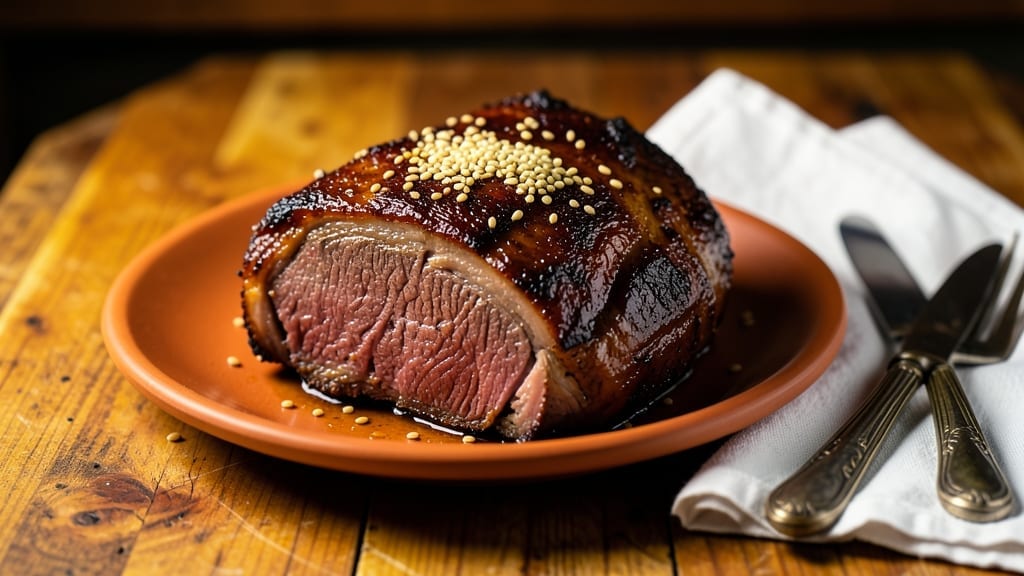
Transforming a 7 lb beef brisket into melt-in-your-mouth perfection requires patience, precision, and the right techniques. This recipe delivers restaurant-quality results by focusing on low-and-slow cooking, proper seasoning, and the critical Texas Crutch method to ensure fall-apart tenderness.
The key lies in maintaining consistent temperatures and understanding when to wrap the brisket for maximum flavor infusion.
Professional pitmasters swear by the 225°F low-and-slow approach, which breaks down tough connective tissue over 12-16 hours while developing deep, smoky flavors. I’ve refined this method to include a precise internal temperature check—203°F—before wrapping in butcher paper to trap steam and accelerate tenderness.
This isn’t just about time; it’s about science meeting tradition for that signature brisket texture.
What you’ll achieve is a brisket so tender it practically falls apart at the touch, with a dark, flavorful bark that’s crisp enough to stand up to every bite. The juice runs clear when sliced, and the aroma alone will have everyone gathered around your smoker.
This isn’t your average brisket—it’s the kind that makes people ask for seconds before they’ve even finished their first plate.
Serve with classic sides like creamy coleslaw, buttery cornbread, and pickled jalapeños to cut through the richness. The secret to presentation is slicing against the grain and letting the brisket rest for 30 minutes before serving—this ensures every bite is juicy and full of flavor.
Let’s get started on creating your showstopping centerpiece.
Ingredients for 7 lb beef brisket
The right ingredients transform a tough cut into melt-in-your-mouth brisket perfection.
| Ingredient | Amount | Notes |
|---|---|---|
| Beef Brisket 🥩 | 7 lb | Whole packer cut, fat cap intact |
| Yellow Mustard 🍯 | ¼ cup | For fat cap application |
| Coarse Kosher Salt 🧂 | ½ cup | Diamond Crystal preferred |
| Black Peppercorns 🌶️ | 2 tbsp | Freshly cracked, coarse grind |
| Smoked Paprika 🌶️ | 1 tbsp | High-quality, deep color |
| Garlic Powder 🧄 | 1 tbsp | Freshly ground preferred |
| Onion Powder 🧅 | 1 tbsp | Not onion salt |
| Ground Cumin 🌿 | 1 tbsp | Toasted for depth |
| Brown Sugar 🍚 | 2 tbsp | Light or dark, packed |
| Butcher Paper 📄 | 1 sheet | Heavyweight, unbleached |
| Apple Juice 🍎 | 2 cups | For spritzing during wrap |
| Wood Chips 🌳 | 4 cups | Hickory or oak, soaked |
| Beef Tallow 🧈 | ½ cup | For bark enhancement (optional) |
[recipe_ingredient_scaler]
The brisket itself is non-negotiable—look for a packer cut with that thick fat cap intact. Costco or your local butcher shop will have the best quality, often pre-trimmed for convenience. The fat cap isn’t just for flavor; it acts as a natural insulator during the long cook. If you’re buying whole, trim excess fat to about 1/4-inch thickness—enough to render but not so much it slows the cook. For wood chips, Traeger or Cookshack brands are consistent, but any quality hardwood works. The apple juice should be unsweetened, like Mott’s or Tree Top—the acidity helps tenderize during the wrap.
No smoked paprika? Regular paprika plus a pinch of cayenne gets you close, though the smoky depth is worth the hunt. Running short on brown sugar? Honey or maple syrup at half the amount works, but the caramelization helps create that signature bark. The butcher paper is critical—Kraft paper or foil won’t do. It needs to breathe while trapping steam. For the wood chips, if you can’t find hickory, oak or pecan are solid substitutes. And trust me on the beef tallow—it’s not just for flavor; it helps create that dark, crackling bark that’s the hallmark of great brisket.
Store your brisket in the fridge until ready to cook—2-3 days max for best results. The wood chips can be prepped ahead and stored in a sealed bag in the fridge for up to 2 weeks. Once cooked, slice against the grain and serve immediately, but leftovers reheat beautifully in the oven at 300°F for 20-30 minutes, covered with foil. The brisket keeps well in the fridge for 5-6 days or freezes for up to 3 months—portion into individual servings for easy reheating.
Why You’ll Love This Recipe
- No-Fuss Flavor Bomb: Honestly, the secret’s in that 24-hour dry brine with the coarse kosher salt and smoked paprika—it clings to the meat like a second skin. No fancy techniques, just let the spices do their thing while you sleep. The yellow mustard on the fat cap? Game-changer for that crispy bark without the fuss.
- Smoky Sweet Payoff: That toasted cumin and garlic powder blend with the slow smoke from the hickory or oak wood chips creates a flavor so rich, it’s like a hug in every bite. The brown sugar keeps it from being just salty—it’s got that perfect smoky-sweet balance that’ll have you licking your plate.
- Leftovers That Outlast the Meal: Cook once, eat twice. This brisket’s so good, you’ll have leftovers for days—sandwiches, tacos, or just straight-up piled high on a plate. And here’s the kicker: the apple juice spritz inside the butcher paper keeps it juicy for days, so no sad, dry meat here.
- Budget-Friendly Feast: A 7 lb brisket feeds a crowd without breaking the bank. The coarse kosher salt and black peppercorns cost pennies, and the wood chips can be prepped ahead. It’s the kind of dish that makes you feel fancy without the fancy price tag—plus, any scraps? Perfect for stock.
Step-by-step instructions for smoked beef brisket
Here’s how to transform a tough cut into melt-in-your-mouth perfection using time-tested techniques.
Prepare the Rub and Season the Brisket
In a medium bowl, combine the ½ cup coarse kosher salt, 2 tablespoons freshly cracked black peppercorns, 1 tablespoon smoked paprika, 1 tablespoon garlic powder, 1 tablespoon onion powder, 1 tablespoon ground cumin, and 2 tablespoons brown sugar. Mix thoroughly until the spices are evenly distributed and the salt crystals are fully coated.
Pat the 7 lb beef brisket completely dry with paper towels, focusing on the fat cap and any crevices where moisture might hide. This drying step is crucial for developing that coveted bark. Spread the ¼ cup yellow mustard evenly over the fat cap—this helps the rub adhere and creates a barrier that prevents the fat from rendering too quickly. Then generously coat all sides of the brisket with the spice rub, pressing it firmly into the meat so it doesn’t fall off during the smoke. Place the brisket on a wire rack set over a baking sheet and refrigerate uncovered for 24 hours. This dry-brining process ensures deep flavor penetration and helps tenderize the meat.
Set Up the Smoker and Begin Low-and-Slow Cooking
Soak the 4 cups wood chips (hickory or oak) in water for at least 1 hour before using. This prevents them from burning and creates a steady smoke. When ready, fill your smoker with the soaked wood chips and preheat to 225°F. Place a water pan in the smoker to maintain moisture levels during the long cook.
Once the smoker reaches temperature and you see clean, blue smoke (not thick white steam), place the brisket fat-side up on the grill grates. The fat cap should face upward to render slowly and baste the meat as it cooks. Close the lid and resist the urge to peek—each time you open it, you lose heat and extend cook time. Smoke the brisket undisturbed for 6 hours, or until the internal temperature reaches 165°F. At this point, you’ll notice the bark developing a deep mahogany color, and the meat will begin to “stall,” where the internal temperature stops rising despite continued cooking. This is completely normal and indicates the moisture is evaporating.
Wrap and Finish for Maximum Tenderness
When the brisket hits the 165°F stall, remove it from the smoker and wrap it tightly in the 1 sheet butcher paper. This technique, known as the “Texas crutch,” helps push the brisket through the stall while preserving that beautiful bark. Before sealing, sprinkle the brisket generously with 2 cups apple juice inside the butcher paper. This adds moisture and enhances the bark’s texture. Seal the paper tightly by folding the edges and securing it with butcher’s twine if needed.
Return the wrapped brisket to the smoker and continue cooking until the internal temperature reaches 203°F. This final stage typically takes 4 to 6 hours, during which the collagen in the meat breaks down into gelatin, ensuring that fall-apart tenderness you’re after. The beef tallow comes into play here—if you’re using it for bark enhancement, brush a thin layer of the ½ cup beef tallow over the exposed surfaces of the brisket just before the final hour of cooking. This adds an extra layer of richness and helps create a darker, more flavorful crust.
Rest and Slice for Serving
Once the brisket reaches 203°F, remove it from the smoker and transfer it to a cutting board. Tent loosely with foil and let it rest for at least 1 hour. This resting period allows the juices to redistribute throughout the meat, ensuring every slice is moist and flavorful. During this time, the internal temperature will rise another 5 to 10 degrees due to carryover cooking.
After resting, slice the brisket against the grain into ¼-inch thick slices. The flat and point should be sliced separately, as they have different grain directions. Serve immediately with the juices that have accumulated on the cutting board—these are packed with flavor and should be ladled over each slice. The result should be a brisket with a dark, crispy bark on the outside, a pink smoke ring just beneath, and meat that pulls apart effortlessly with a gentle tug. Each bite should deliver a perfect balance of smoky, spicy, and sweet flavors, with a texture that’s unmistakably tender.
Pro Tips For Making 7 Lb Beef Brisket
- Crack Those Peppercorns Fresh: DESCRIPTION:
- Don’t Rush the Dry Brine: DESCRIPTION:
- Wrap Tight or Regret It: DESCRIPTION:
- Tallow Brush Timing Matters: DESCRIPTION:
Troubleshooting great 7 lb beef brisket
Bark Not Forming Properly
If your brisket isn’t developing that coveted dark mahogany bark, check your fat cap thickness—it should be about ¼-inch thick. Too thin? The fat renders too quickly, and too thick? It won’t crisp properly.
I’ve found that brushing the fat cap with beef tallow during the last hour of cooking helps create a deeper, crackling bark. Also, ensure your smoker hits 225°F consistently—fluctuations prevent proper bark formation. 🔥
Stuck at the Stall
The “stall”—when internal temp plateaus at 165°F—can feel endless, but it’s normal! If your brisket isn’t progressing, wrap it in butcher paper (the Texas Crutch) and spritz with apple juice every 30 minutes.
This adds moisture while pushing through the stall. I’ve seen briskets stall for 3-4 hours—patience is key. Avoid foil; it traps too much steam and softens the bark.
Dry or Tough Meat
Tough brisket often means undercooking or skipping the wrap phase. Ensure you hit 203°F internal temperature after wrapping—this breaks down collagen. If your brisket is dry, you might have over-salted during the dry-brine (stick to ½ cup kosher salt for 7 lbs).
Also, never slice immediately—rest for at least 1 hour to redistribute juices. I’ve learned the hard way that rushing this step ruins texture.
Uneven Cooking or Cold Spots
Uneven temps usually mean poor smoker setup. Place the brisket fat-side up on the middle rack for even heat distribution. If you’re using a pellet smoker, ensure the pellet feed tube isn’t blocked.
For charcoal smokers, rotate the brisket 90 degrees halfway through cooking. I’ve noticed cold spots often occur when the water pan runs dry—refill it with water every 2 hours to maintain moisture. 💧
Burnt Bark Before Doneness
Burnt bark happens when smoke temp exceeds 250°F. Keep your smoker at 225°F and monitor wood chip moisture—dry chips burn hotter. If the bark chars prematurely, lower the smoker temp by 25°F and let the brisket cook slower.
I’ve also found that soaking wood chips for 2+ hours prevents flare-ups. Trust me, a little extra time is worth the perfect bark!
Nutrition facts
Frequently asked questions
Why does my brisket need to rest before slicing?
Resting is critical—it lets juices redistribute after the long cook. Skipping this step means dry slices. After removing from the smoker at 203°F, tent loosely with foil and wait at least 1 hour. This ensures every bite stays juicy and flavorful. The internal temp will rise another 5-10°F during rest, so don’t rush it!
How do I know when the brisket is done?
Use a meat thermometer to check the thickest part of the flat. Aim for 203°F after wrapping. The stall at 165°F is normal—just wrap it and keep cooking. If unsure, check again after another 1-2 hours. The bark should be dark mahogany, and the meat should pull apart easily. Patience pays off!
Can I use foil instead of butcher paper?
Foil traps too much steam, which softens the bark and can make the meat mushy. Butcher paper allows moisture to escape while keeping heat in. If you must use foil, do it only during the final 1-2 hours of cooking, then switch back to paper. The bark will still develop, but it won’t be as crisp.
What if my smoker isn’t hitting 225°F?
Adjust your heat source or add more wood chips to maintain 225°F. Fluctuations cause uneven cooking or burnt bark. If your smoker maxes out lower, just extend the cook time slightly—250°F works too, just monitor closely. A reliable thermometer is your best friend here!
How do I store leftovers?
Let the brisket cool completely, then slice against the grain and store in an airtight container. It keeps in the fridge for 5-6 days or freezes for up to 3 months. Reheat in the oven at 300°F for 20-30 minutes, covered with foil, to restore tenderness. Juices stay delicious this way!

Trained in classic French technique but raised on slow-cooked ribs and spicy rubs, she blends culinary skill with smoke and soul.
- Slow Cooker Barbecue Pork Recipe: Fall-Apart Tender With Smoky Depth - November 2, 2026
- Pork Butt Smoker Recipe: Low and Slow to Juicy, Fall-Off-Bone Tenderness - November 2, 2026
- Brisket Recipe Slow Cooker: Fall-Apart Tender With Minimal Effort - November 2, 2026