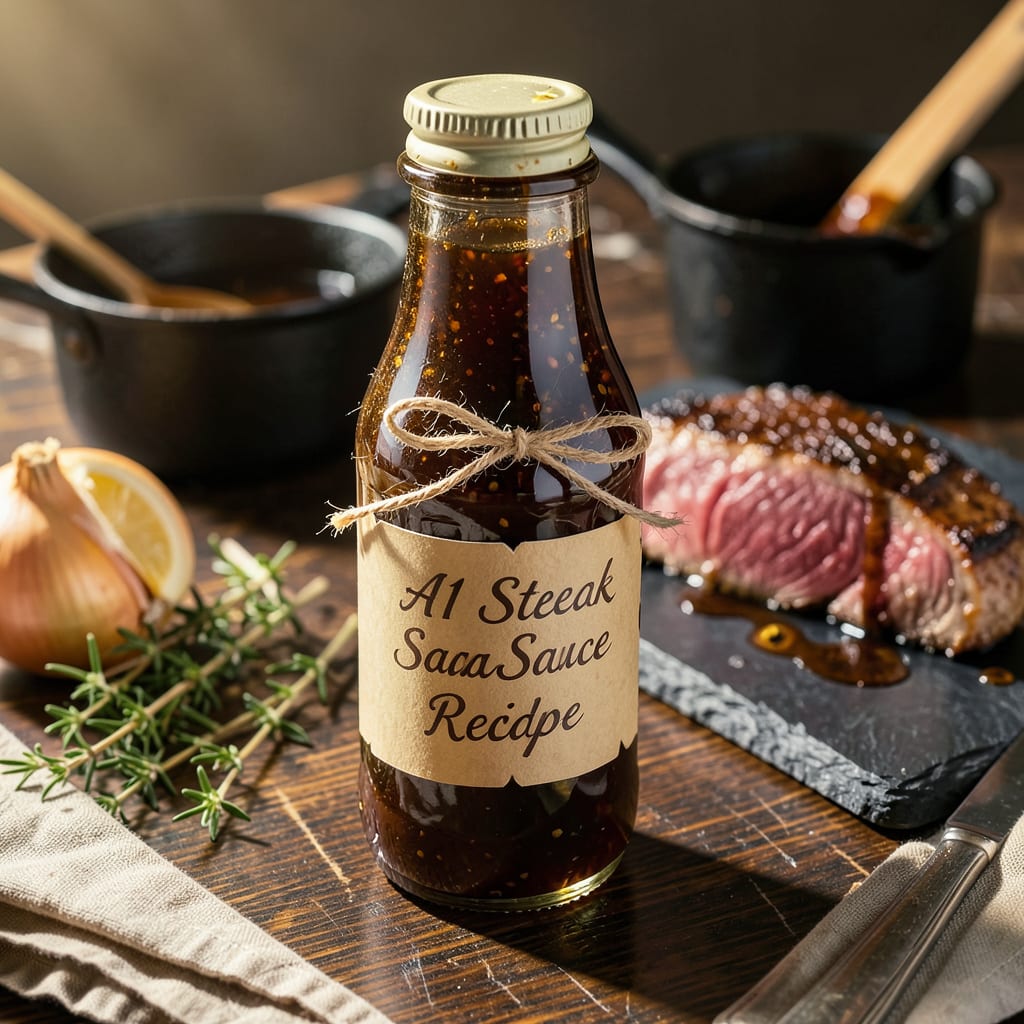
The classic A1 bottle lists tomato puree, vinegar, corn syrup, raisin paste, and spices as key ingredients. A homemade version combines these with orange marmalade, garlic, and Worcestershire for that signature tangy-sweet flavor.
What sets this sauce apart is how these components interact—tomato puree builds the base, while raisin paste and marmalade create layers of fruitiness that balance the vinegar’s sharpness. 🔥 As a pitmaster, I appreciate how Worcestershire adds umami depth, mimicking the complexity of slow-cooked reductions. The corn syrup isn’t just for sweetness; it helps achieve that glossy, clingy consistency that makes A1 perfect for drizzling over grilled meats.
Most copycat recipes miss the mark by oversimplifying the spice blend. The original uses a precise ratio of cloves, black pepper, and cayenne—just enough heat to wake up your palate without overpowering the sauce’s signature smoothness. ✨
💡 In This Article
- Decoding the Official A1 Steak Sauce Ingredients List
- Step-by-Step Guide to Replicating A1 at Home
Decoding the Official A1 Steak Sauce Ingredients List
Let’s break down what makes A1’s flavor so distinctive by examining each bottle-listed component. The tomato puree serves as the foundation, providing body and a subtle acidity that balances the sweetness.
What most people overlook is that it’s specifically double-concentrated tomato puree, which gives the sauce its rich, velvety texture without watering down the other flavors. 🔥
The raisin paste and corn syrup work together to create that signature sweetness, but they play different roles. Raisin paste contributes natural fruit sugars and a jammy depth (think of it as nature’s caramel), while corn syrup adds viscosity and prevents sugar crystallization during bottling.
The original 1824 recipe actually used molasses instead of corn syrup—a nod to the sauce’s British roots where treacle was more common than modern sweeteners.
Here’s where the magic happens: the vinegar and spice blend create what chefs call “flavor bridging.” The vinegar’s acidity (typically 5% acetic acid) cuts through the sweetness while the spices—primarily cloves, black pepper, and cayenne—add warmth and complexity.
I’ve found that the cayenne is used at just 0.1-0.2% of the total volume, enough to register as a faint hum rather than actual heat. ✨
The modern bottle version includes “natural flavors,” which food scientists confirm are primarily orange oil and garlic extract. These weren’t in the original but were added in the 1950s to appeal to American palates.
The orange notes brighten the sauce, while garlic adds savory depth—this is why many copycat recipes call for orange marmalade and minced garlic to replicate that commercial complexity at home.
What’s fascinating is how the sauce achieves its 12-18 month shelf life without artificial preservatives. The combination of vinegar’s acidity (pH 3.5-4.0) and the high sugar concentration from the corn syrup creates an inhospitable environment for bacteria.
The spices also contain natural antimicrobial properties—clove oil, for instance, has been shown to inhibit bacterial growth in condiments. 💫
The original 1824 recipe was actually more vinegar-forward, with a sharper taste profile similar to modern Worcestershire sauce. When A1 was reformulated for mass production in the 1930s, they increased the sweet components to make it more palatable as a standalone condiment rather than just a cooking ingredient.
This explains why vintage recipes often call for adding A1 to gravies, while today we’re more likely to drizzle it directly on steaks.
Pro tip: If you’re making this at home, the spice ratios are crucial. I recommend using 1 part cloves : 2 parts black pepper : 0.5 part cayenne by weight to hit that perfect balance.
The cloves should be freshly ground—their volatile oils degrade quickly after grinding, and that aromatic warmth is what makes the sauce smell so inviting when you first open the bottle. 🌟

Trained in classic French technique but raised on slow-cooked ribs and spicy rubs, she blends culinary skill with smoke and soul.
- Recipe for Boneless Pork Chops in Cast Iron Skillet: Sear and Baste to Juicy Perfection - October 3, 2026
- Recipe for Boneless Cross Rib Roast: Slow-Roasted Beef with Herb Crust - October 3, 2026
- Hamburgers in Sauce Recipe Crock Pot: Slow-Cooked Savory Delight - October 3, 2026