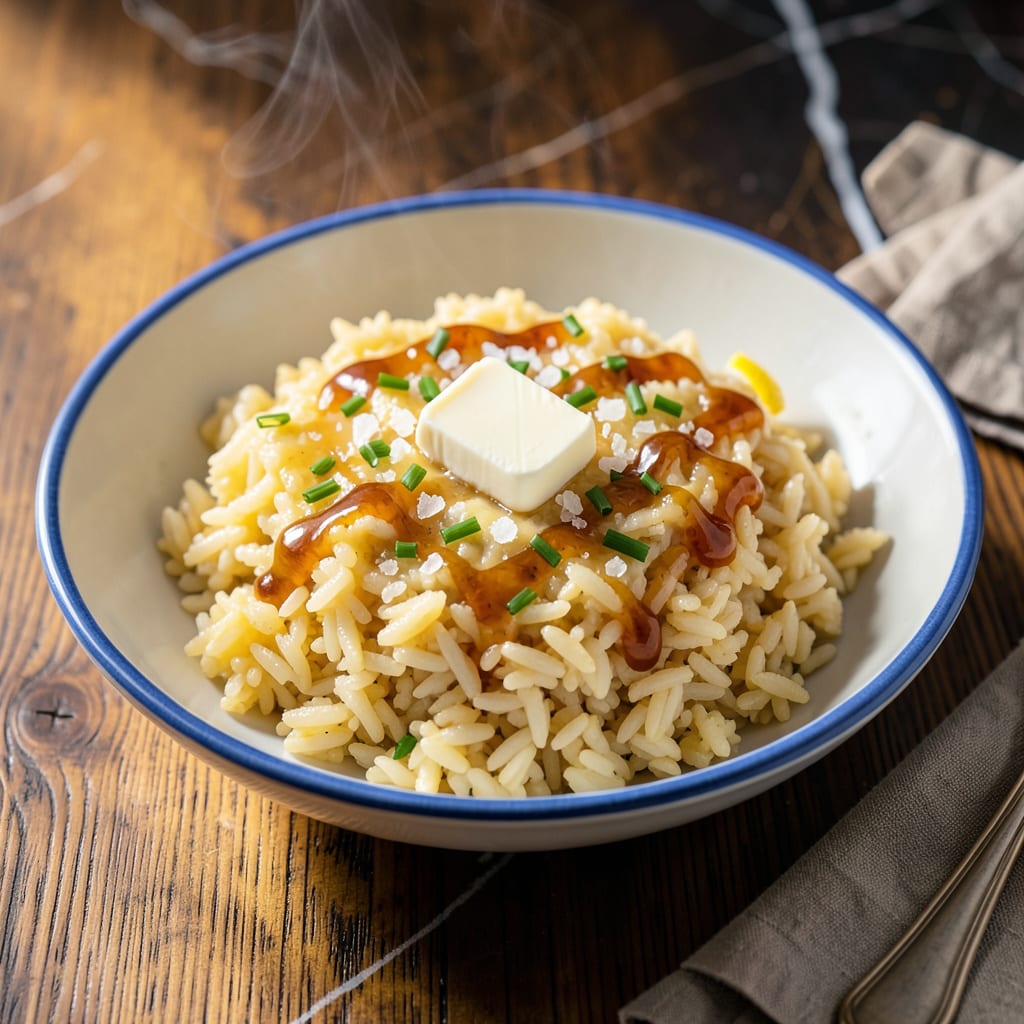
I’ll be real with you—adding butter to rice isn’t just about flavor, it’s about transforming plain grains into something creamy and luxurious with almost no extra effort. After years of experimenting (and a few burnt pots), I’ve landed on the simplest method that works every time, whether you’re using a rice cooker or your trusty stovetop pot.
Here’s the thing—timing matters more than you’d think. I add the butter right as the rice finishes cooking, then let it melt while the pot sits covered for 5 minutes. This creates steam that carries buttery richness through every grain, making them fluffier and more flavorful than you’d expect from such a basic ingredient.
What you end up with is rice that’s anything but boring—each bite has that subtle golden richness, with grains that stay separate but feel decadent. I like to finish with a pinch of salt and sometimes fresh herbs, but honestly, the butter does most of the work here. It’s the kind of simple upgrade that makes people ask for your secret.
Perfect alongside grilled chicken, stir-fries, or just on its own when you need comfort food fast. The whole process takes less than 20 minutes, start to finish, and works with any long-grain rice you’ve got on hand. No fancy techniques, just better rice.
📚 In This Guide
- What You’ll Need
- Instructions
- Tips and Common Mistakes
What Youll Need
- ● Rice: 1 cup (white, basmati, or jasmine—long-grain works best!) 🍚
- ● Water or broth: 2 cups (for fluffier rice, use low-sodium broth)
- ● Butter: 1–2 tbsp (unsalted preferred; adjust to taste)
- ● Salt: ½ tsp (or to taste)
- ● Garlic: 1 clove (minced, for extra flavor)
- ● Herbs: 1 tsp (dried thyme, parsley, or chives)
- ● Lemon zest: ½ tsp (brightens the dish!)
- ● Medium pot (with a tight-fitting lid)
- ● Fork (for fluffing)
- ● Measuring cups/spoons
Instructions for Adding Butter to Rice
Here’s the simple method I use to transform plain rice into something rich and luxurious.
Cook Your Rice Normally
Start by cooking your rice using your preferred method—whether that’s on the stovetop, in a rice cooker, or even in the microwave. I like to use long-grain white rice for this because it absorbs the butter beautifully while staying light and fluffy.
If you’re cooking on the stovetop, use a 2:1 water-to-rice ratio and bring it to a boil, then reduce to a simmer and cover. Let it cook undisturbed for 15-18 minutes until the water is absorbed and the rice is tender. Don’t peek or stir while it’s cooking—this disrupts the steam and can lead to uneven texture.
Fluff the Rice and Let It Rest
Once the rice is fully cooked, remove it from the heat and let it sit, covered, for 5-10 minutes. This resting time is crucial—it allows the steam to redistribute, making the grains even more tender and separate.
After resting, use a fork to gently fluff the rice. I avoid using a spoon because it can crush the grains. Fluffing separates the rice and creates little pockets where the butter can melt and distribute evenly. You’ll notice the texture becomes lighter and airier as you do this.
Add the Butter While the Rice Is Hot
Here’s the key to getting that creamy, rich flavor: add the butter while the rice is still hot. I use 2-3 tablespoons of unsalted butter per 1 cup of uncooked rice, but you can adjust this to your taste. Cut the butter into small pieces—this helps it melt faster and distribute more evenly.
Drop the butter pieces onto the hot rice and immediately cover the pot or rice cooker again. Let it sit for 2-3 minutes so the butter can melt completely from the residual heat. You’ll see the butter start to glisten as it coats each grain, giving the rice a subtle sheen.
Gently Fold the Butter Into the Rice
After the butter has fully melted, use a fork to gently fold it into the rice. I like to use a lifting and turning motion rather than stirring—this keeps the grains intact while ensuring every bite gets coated in that rich, buttery flavor.
Taste the rice and adjust as needed. If you want it even richer, add a little more butter. For extra creaminess, you can stir in a splash of warm milk or cream at this stage. The rice should look glossy and smell deliciously buttery, with each grain distinct yet perfectly coated.
Serve Immediately for Best Results
Buttered rice is best served right away while it’s still warm and the butter is freshly melted. The heat helps the butter cling to the grains, giving you that perfect creamy texture in every bite. If you need to hold it for a few minutes, keep it covered to retain the heat and moisture.
This simple addition turns ordinary rice into something special—creamy, flavorful, and just a little indulgent. It pairs beautifully with everything from grilled meats to steamed vegetables, or even stands alone as a comforting side dish. The butter adds richness without overpowering, making it a versatile upgrade to any meal.
Tips and Common Mistakes
Transforming simple rice into something extraordinary is all about the details. Here’s what I’ve learned from making this countless times.
Timing Secret: The 15-18 minutes cooking time in Step 1 is perfect for long-grain white rice, but here’s the thing—don’t lift that lid! Every time you peek, you release steam and risk uneven cooking. I set a timer and walk away until it goes off. The rice will tell you when it’s done by absorbing all the water.
Resting Matters: That 5-10 minutes of resting time in Step 2 isn’t optional. I used to skip this until I noticed how much better the texture became when I let the rice steam itself to perfection. Covered resting makes the grains separate beautifully, creating space for the butter to work its magic.
Butter Technique: When adding butter in Step 3, cutting it into small pieces makes all the difference. I aim for pea-sized pieces that melt completely during those 2-3 minutes of covered resting. Larger chunks won’t distribute evenly, and you’ll end up with some bites that are too buttery and others that aren’t buttery enough.
Folding Method: In Step 4, use a fork and a gentle lifting motion rather than stirring. I learned this the hard way after crushing too many rice grains with a spoon. The goal is to coat each grain without breaking it, creating that perfect balance of creamy and fluffy.
Pro Tips for Add Butter To Rice
- Transforming simple rice into something extraordinary is all about the details. Here’s what I’ve learned from making …
- Timing Secret: The 15-18 minutes cooking time in Step 1 is perfect for long-grain white rice, but here’s the thing—do…
- Resting Matters: That 5-10 minutes of resting time in Step 2 isn’t optional. I used to skip this until I noticed how …
Frequently Asked Questions
Can I add butter to rice while it’s cooking, or only after?
You can do both! For maximum creaminess, stir 1–2 tbsp of butter into the rice during the last 5 minutes of cooking. If you prefer a lighter touch, mix it in after cooking while the rice is still hot—this keeps the grains fluffy. Avoid adding butter at the start, or it may absorb too much liquid.
What’s the best butter-to-rice ratio for flavor without greasiness?
Aim for 1 tbsp of butter per 1 cup of uncooked rice (or 2 tbsp for extra richness). For pre-cooked rice, start with ½ tbsp per cup and adjust. Unsalted butter gives you control over saltiness, while salted butter adds a savory boost. Pro tip: Warm the butter slightly for even coating!
What are good alternatives if I don’t have butter?
No butter? No problem! Try these swaps for similar richness:
- Olive oil or ghee (1:1 ratio)—adds depth.
- Coconut oil (½ tbsp per cup)—great for tropical dishes.
- Heavy cream or yogurt (1–2 tbsp)—stir in post-cooking for creaminess.
- Vegan butter—works just like dairy butter.
Why does my buttered rice turn out mushy or sticky?
Over-stirring or too much butter/liquid is usually the culprit. Fix it by:
- Rinsing rice before cooking to remove excess starch.
- Using 1:1.5 rice-to-water ratio (adjust for your rice type).
- Letting rice rest 5 minutes off heat post-cooking, then fluffing with a fork.
Does adding butter to rice change its nutritional value?
Yes, but moderately! Butter adds ~100 calories and 11g fat per tbsp, plus vitamins A/E. For a lighter option, use half the butter or swap in olive oil. Pair with veggies or lean proteins to balance the meal. Bonus: The fat helps absorb fat-soluble nutrients from other ingredients!
Adding butter to rice isn’t just a small tweak—it’s a game-changer for flavor, texture, and satisfaction! 🍚✨ Whether you’re whipping up a quick weeknight side or elevating a special meal, that rich, creamy touch makes every bite unforgettable. Now that you’ve got the know-how, why not try it tonight? Grab your favorite rice, a pat of butter, and let your taste buds thank you. For extra inspiration, experiment with herbs or garlic butter next—your rice (and dinner guests) will love the upgrade!

Trained in classic French technique but raised on slow-cooked ribs and spicy rubs, she blends culinary skill with smoke and soul.
- Recipe for Boneless Pork Chops in Cast Iron Skillet: Sear and Baste to Juicy Perfection - October 3, 2026
- Recipe for Boneless Cross Rib Roast: Slow-Roasted Beef with Herb Crust - October 3, 2026
- Hamburgers in Sauce Recipe Crock Pot: Slow-Cooked Savory Delight - October 3, 2026