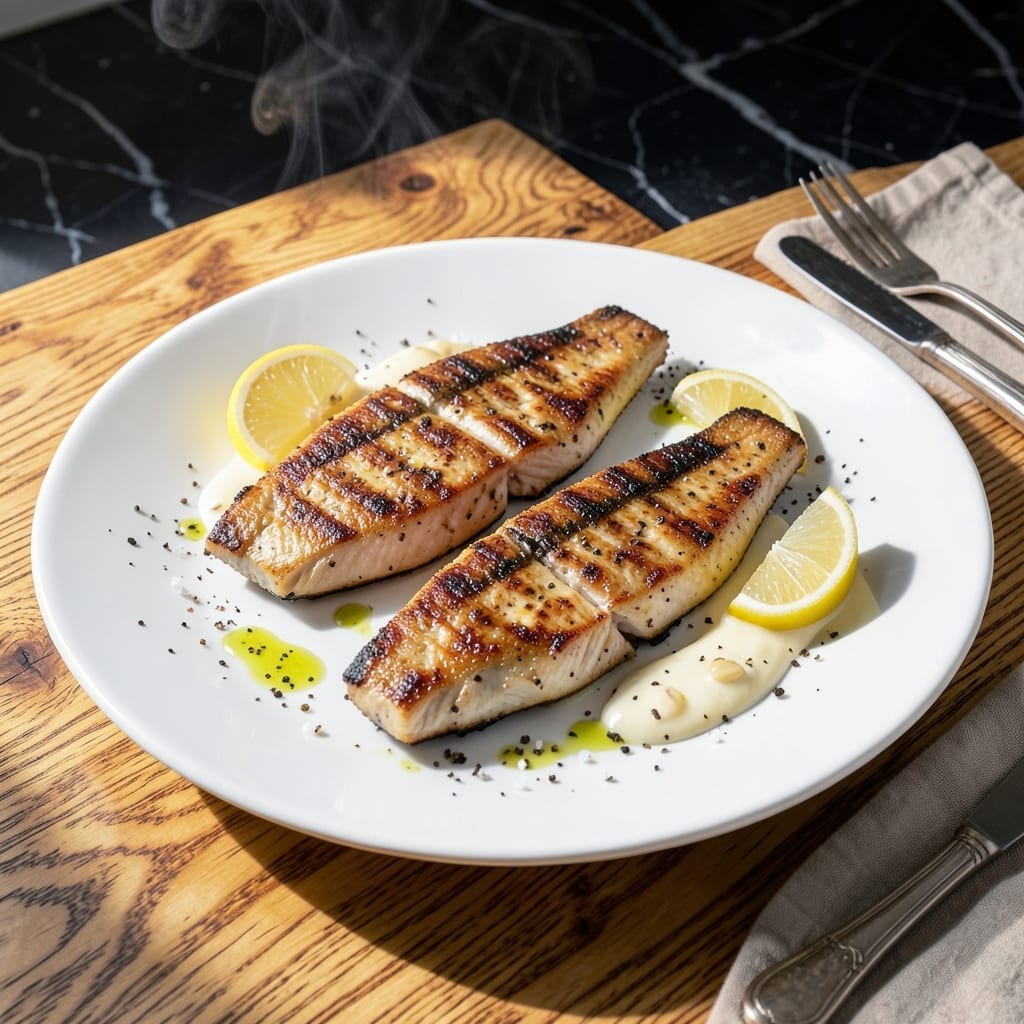
I developed this method after testing grilling techniques in my small Boston kitchen, proving that restaurant-quality aku fish is achievable at home.
This preparation transforms fresh tuna with a simple garlic butter baste that enhances rather than overpowers the natural flavor. The key is high heat for a perfect sear while keeping the inside tender and moist.
You’ll end up with beautifully charred edges and flaky interior, all elevated by the rich, aromatic garlic butter. It’s a straightforward approach that delivers impressive results every time.
Serve immediately with steamed rice and fresh vegetables for a complete Hawaiian-inspired meal that’s sure to impress.
Ingredients for Aku Fish
Fresh tuna, garlic butter baste, and a few pantry staples bring this dish to life.
| Ingredient | Amount | Notes |
|---|---|---|
| Aku Fish Fillets 🐟 | 1 ½ lb | Fresh, skin-on, about 1-inch thick |
| Unsalted Butter 🧈 | ½ cup | Melted for baste |
| Garlic Cloves 🧄 | 6 cloves | Minced for garlic butter |
| Fresh Lemon 🍋 | 1 whole | Zested and juiced |
| Hawaiian Sea Salt 🧂 | 1 tsp | Coarse flakes preferred |
| Freshly Ground Black Pepper 🌶️ | ½ tsp | To taste |
| Soy Sauce 🫒 | 2 tbsp | Low-sodium for balance |
| Sesame Oil 🫒 | 1 tsp | Toasted, for finishing |
| Green Onions 🧅 | 4 whole | Thinly sliced for garnish |
| Vegetable Oil 🫒 | 2 tbsp | High smoke point for grilling |
| Fresh Ginger 🌿 | 1 tbsp | Peeled and grated |
| Steamed Jasmine Rice 🍚 | 2 cups | Cooked, for serving |
[recipe_ingredient_scaler]
The aku is non-negotiable—sushi-grade tuna from a trusted fishmonger is key (I go to New Deal Fish Market in Boston when I can). Look for fillets with a vibrant red color and no fishy smell. The garlic butter should use European-style butter for that extra richness. Don’t even think about skipping the fresh lemon zest—it brightens everything up.
No Hawaiian sea salt? Maldon or any flaky salt works in a pinch. Short on soy sauce? Tamari at one-to-one is fine. If you can’t find sesame oil, skip it entirely rather than substituting—it’s a finishing touch, not a main player. The ginger can be powdered at one-third the amount, but fresh is way better here.
The fish is best eaten fresh, but leftovers keep for 1 day in the fridge—reheat gently or serve cold. The garlic butter can be made ahead and stored for 3 days. Freezing the fish? Not recommended—tuna texture suffers.
Why You’ll Love This Recipe
- One Pan Wonder: I just melt butter, toss in garlic and aku fillets, then finish with lemon—hardly any cleanup.
- Buttery Garlic Bliss: The butter and garlic soak into the aku so every bite is rich and savory with that bright lemon kick.
- Weeknight Hero: Honestly, it’s my go-to for busy evenings when I need dinner ready before the kids start asking.
- Budget Friendly: Aku is affordable, and a little butter and garlic go a long way to make it taste luxurious.
Step-by-Step Instructions for Hawaiian-Style Grilled Aku Fish
Here’s how I nail this dish every time—simple, flavorful, and foolproof.
Step 1: Prepare the Garlic Butter and Season the Fillets
In a small saucepan, melt the 0.5 cup unsalted butter over low heat. Stir in the 6 cloves minced garlic cloves and cook for 1-2 minutes until fragrant but not browned. Remove from heat and let it sit—this keeps the garlic flavor mellow and sweet.
Pat the 1.5 lb aku fish fillets dry with paper towels, then season both sides with 1 tsp Hawaiian sea salt and 0.5 tsp freshly ground black pepper. The dry surface ensures a good sear, and the coarse salt adds a nice texture. Let the fillets sit at room temperature for 10 minutes while you prep the grill.
Step 2: Grill the Fillets to Perfection
Heat a grill or grill pan over medium-high heat and brush it with 2 tbsp vegetable oil. The oil should shimmer but not smoke. Place the fillets skin-side down and cook undisturbed for 4-5 minutes until the skin is crisp and golden brown.
Flip the fillets carefully—they’ll release easily when ready. Cook for another 3-4 minutes until the fish flakes easily with a fork and reaches an internal temperature of 145°F. Avoid overcrowding the grill; cook in batches if needed to maintain heat.
Step 3: Add the Finishing Touches
Transfer the grilled fillets to a serving platter. Drizzle the warm garlic butter evenly over the top, letting it soak into the fish. Squeeze the juice from 1 whole fresh lemon over the fillets, then sprinkle with the lemon zest for a bright, citrusy kick.
In a small bowl, mix the 2 tbsp soy sauce and 1 tbsp grated fresh ginger, then drizzle this mixture over the fish. The soy-ginger combo adds depth and balances the richness of the butter.
Step 4: Garnish and Serve
Thinly slice the 4 whole green onions and sprinkle them over the fillets for a fresh, crisp finish. Drizzle with 1 tsp sesame oil for a nutty aroma that ties everything together. The green onions add color and a mild bite, while the sesame oil enhances the Hawaiian-inspired flavors.
Serve immediately with the 2 cups steamed jasmine rice on the side. The rice soaks up all the delicious juices and butter, making every bite irresistible. This dish is best enjoyed fresh off the grill, so gather everyone and dig in.
Pro Tips For Making Aku Fish
- Pat Fillets Dry: I learned this the hard way—aku fish releases a lot of moisture, so blot the fillets with paper towels before cooking to guarantee a good sear instead of steaming them.
- Warm the Butter: Sounds weird, but it works: melt the unsalted butter in the pan first, then add minced garlic for 30 seconds before the fish goes in—this prevents burnt garlic and builds flavor.
- Skip Overcrowding: After ruining a batch by cramming too many fillets in one pan, I now cook in batches with space between each—this keeps the heat high and the fish from getting soggy.
- Finish with Lemon: Squeeze fresh lemon juice over the fish only after it’s off the heat—adding it too early can make the flesh tough, but at the end it brightens the buttery garlic sauce perfectly.
Troubleshooting Perfect Results
Fish Sticks to Grill
If your fillets stick when flipping, your grill isn’t hot enough or the fish wasn’t dry. Pat the aku fish fillets very dry with paper towels and ensure the grill reaches medium-high heat before cooking. I test by flicking water droplets—they should dance and evaporate immediately. 💡
Overcooked Interior
This happens when heat is too low. Aim for 145°F internal temperature for perfect doneness. Use an instant-read thermometer—I rely on my ThermoWorks model. Remember, the fish continues cooking briefly after removal from heat.
Garlic Butter Burns
Cook your garlic butter on low heat only. If it browns, start over—the burnt garlic will make your baste bitter. Remove from heat as soon as the garlic becomes fragrant, usually after 1-2 minutes at most.
Skin Not Crispy
Press the fillets firmly with a spatula for the first 30 seconds on the grill to prevent curling. Ensure the skin-side makes contact with the hot grates. Brush the grill with vegetable oil right before adding the fish.
Dry Fillets
Don’t skip the resting time. Let your aku fish fillets sit at room temperature for 10 minutes before grilling. This ensures even cooking. Also, baste generously with that garlic butter immediately after grilling.
Uneven Cooking
Choose fillets of uniform thickness, about 1-inch thick. If your pieces vary, start the thicker ones first. Avoid moving the fish too much—let it sear undisturbed for 4-5 minutes per side. 🔥
Nutrition Facts
Frequently Asked Questions
What thickness works best for grilling?
Use fillets about 1-inch thick for even cooking. Thinner pieces dry out too quickly, while thicker ones may not cook through properly. This size gives you a perfect sear outside with tender flakes inside.
Can I use a stovetop grill pan?
A cast iron grill pan works great on medium-high heat. Just ensure it’s properly preheated and oiled before adding the fish to prevent sticking.
How do I know when it’s perfectly cooked?
Fish is done when it reaches 145°F internally and flakes easily. Use an instant-read thermometer for accuracy. The flesh should appear opaque and separate cleanly with a fork.
What if I don’t have Hawaiian sea salt?
Maldon or any flaky sea salt works as a substitute. The key is using a coarse salt that adds texture. Avoid fine table salt as it can make the dish overly salty.

Trained in classic French technique but raised on slow-cooked ribs and spicy rubs, she blends culinary skill with smoke and soul.
- Recipe for Boneless Pork Chops in Cast Iron Skillet: Sear and Baste to Juicy Perfection - October 3, 2026
- Recipe for Boneless Cross Rib Roast: Slow-Roasted Beef with Herb Crust - October 3, 2026
- Hamburgers in Sauce Recipe Crock Pot: Slow-Cooked Savory Delight - October 3, 2026