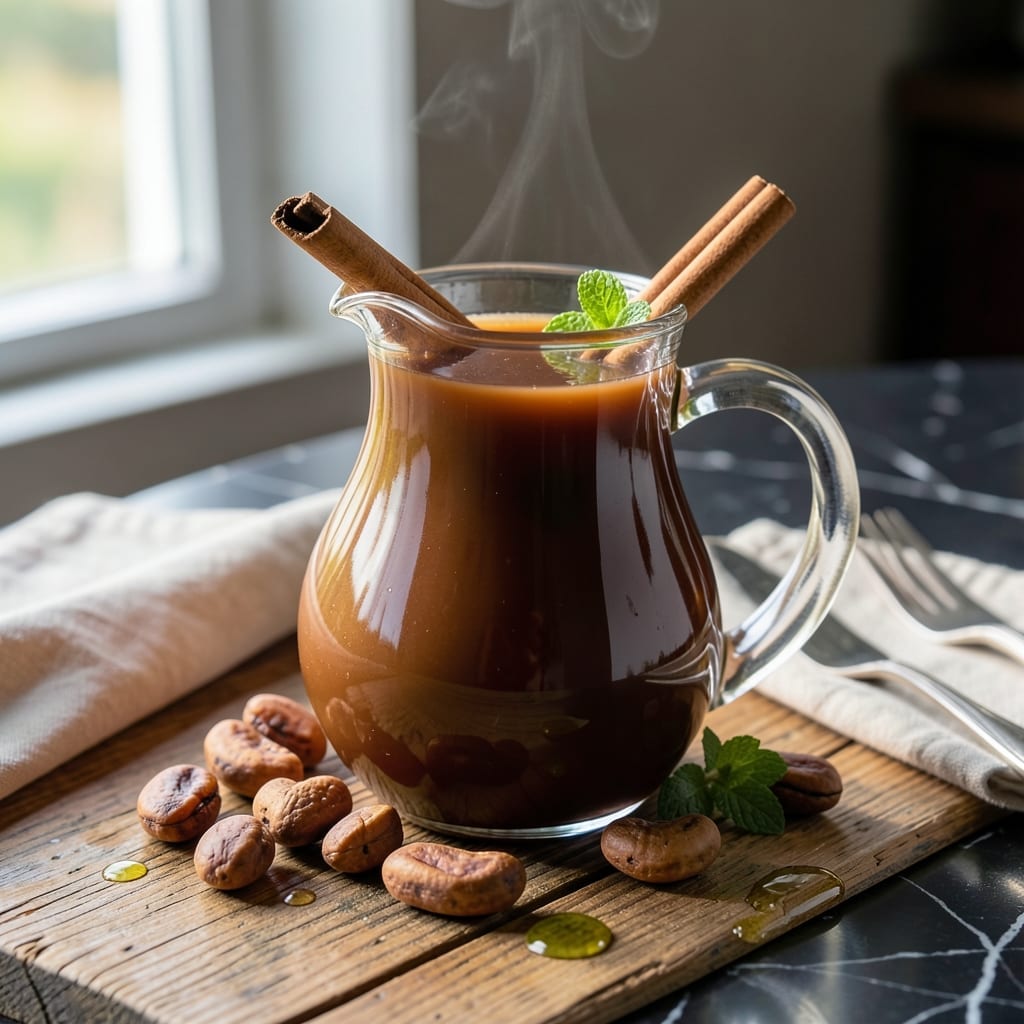
I developed this carob syrup after searching Boston markets for a vegan alternative to traditional sweeteners. It delivers a rich, complex sweetness that enhances Middle Eastern desserts and beverages beautifully.
The process is straightforward—carob pods simmer with sugar and water until reduced to a thick, glossy syrup. No special equipment is required, just patience and attention to the reduction stage.
What results is a naturally vegan syrup with a deep, molasses-like flavor that works in coffee, drizzled over yogurt, or as a base for desserts. Its versatility makes it a pantry staple.
Store in an airtight container in the refrigerator, where it will keep for months. The flavor deepens slightly over time, making it even more delicious.
Ingredients for Carob Syrup
Seven simple ingredients transform into a rich, molasses-like syrup perfect for Middle Eastern sweets.
| Ingredient | Amount | Notes |
|---|---|---|
| Carob Pods 🌰 | 2 cups | Dried, pitted, roughly chopped |
| Granulated Sugar 🍚 | 2 cups | Organic preferred for clean flavor |
| Water 💧 | 4 cups | Filtered for best results |
| Lemon Juice 🍋 | 2 tbsp | Freshly squeezed for brightness |
| Vanilla Extract 🌿 | 1 tsp | Pure extract, not imitation |
| Ground Cinnamon 🌶️ | ½ tsp | Optional for warmth |
| Sea Salt 🧂 | ¼ tsp | Fine grain for even distribution |
[recipe_ingredient_scaler]
Carob pods are the foundation here—find them at Middle Eastern markets or Whole Foods (the bulk section often carries them). Look for pods that are dark, plump, and free of moisture. I typically grab mine from Sofra Bakery in Boston when I’m restocking. The sugar balances the carob’s natural bitterness, so don’t skimp on quality. Organic granulated sugar dissolves cleanly and doesn’t leave a metallic aftertaste.
No carob pods? Carob powder at half the amount works, but the texture won’t be quite as smooth. Out of fresh lemon? Apple cider vinegar at one-third the quantity adds a similar brightness. The vanilla is subtle but worth it—if you’ve got a high-quality Madagascar vanilla, this is the time to use it. Cinnamon haters can skip it, but I love the extra depth it adds.
This syrup keeps beautifully in the fridge for 6-12 months. The flavor mellows and deepens over time, so make a big batch. Store in a glass jar with a tight seal, and give it a quick stir before using if it thickens too much.
Why You’ll Love This Recipe
- 5-Minute Simmer: I toss the carob pods, sugar, and water in a pot and let it do its thing—no babysitting required.
- Rich Chocolatey Depth: The vanilla and carob blend into this deep, almost cocoa-like flavor that’s sweet but not cloying.
- Drizzle on Everything: Honestly, I’ve put it on yogurt, pancakes, even roasted nuts, and it works every time.
- Pantry Staple: One batch lasts me weeks, and the ingredients cost less than a fancy bottle of syrup.
Step-by-Step Instructions for Carob Syrup
This method transforms the carob pods into a velvety, aromatic syrup with minimal effort.
Step 1: Simmer Carob Pods with Water
Combine the 2 cups Carob Pods and 4 cups Water in a medium saucepan. Bring to a gentle boil over medium-high heat, then reduce to a simmer. You’ll notice the water gradually deepen to a rich amber color as the pods release their natural sweetness.
Let this mixture simmer uncovered for 30-40 minutes, stirring occasionally. The carob pods will soften significantly and the liquid will reduce by about a third. This extended simmer extracts maximum flavor and natural pectin from the pods, which helps thicken the final syrup.
Step 2: Strain and Add Sugar
Line a fine-mesh strainer with cheesecloth and place it over a clean saucepan. Pour the carob mixture through, pressing gently on the solids with a spoon to extract all liquid. Discard the spent pods—they’ve given all their goodness to the liquid.
Return the strained liquid to medium heat and add the 2 cups Granulated Sugar. Stir constantly until the sugar completely dissolves, which should take 5-7 minutes. The mixture will appear thin at this stage, but will thicken as it reduces.
Step 3: Reduce to Syrup Consistency
Once the sugar dissolves, add the 0.25 tsp Sea Salt and 0.5 tsp Ground Cinnamon. Continue simmering at medium-low heat, stirring occasionally, for another 20-25 minutes. The syrup will gradually thicken and develop a glossy sheen.
To test for doneness, dip a spoon in the syrup and let it drip back into the pan. When the last drops form thick, slow ribbons rather than thin streams, it’s ready. This visual cue is more reliable than timing alone, as humidity can affect reduction rates.
Step 4: Finish with Bright Flavors
Remove the pan from heat and stir in the 2 tbsp Lemon Juice and 1 tsp Vanilla Extract. The lemon juice brightens the deep carob flavor, while the vanilla adds subtle complexity. Be careful—the hot syrup will bubble when you add the cold liquid.
Let the syrup cool to room temperature. It will thicken slightly more as it cools. The final texture should coat the back of a spoon but still pour easily. Taste and adjust seasoning if needed, though the measurements here should yield a perfectly balanced syrup.
Pro Tips For Making Carob Syrup
- Simmer Slowly: Keep the heat at medium-low to let the carob pods infuse fully without burning the sugar—I learned this the hard way after scorching two batches.
- Strain Thoroughly: Press the cooked carob pods in a fine-mesh sieve to extract every last drop of flavor, or you’ll waste half the richness.
- Skip the Boil: Never let the syrup reach a rolling boil, or it’ll turn bitter and thicken unevenly—gentle bubbles are what you want.
- Add Lemon Late: Stir in the lemon juice only after removing from heat to preserve its brightness; adding it too early dulls the flavor.
Regional Styles of This carob syrup
Levantine Tradition
In Lebanon and Syria, this syrup is called dibs kharroub and is a breakfast staple. I love it drizzled over labneh with nuts, or mixed into tahini for a sweet dip. The Middle Eastern version often includes a touch of rose water for floral complexity.
Greek Island Style
On Cyprus and Crete, carob syrup takes on a citrus-forward profile. They simmer the pods with orange peel and a cinnamon stick, creating a brighter flavor perfect for spoon sweets. I sometimes add 1 strip of orange zest during the reduction stage for this variation.
Turkish Approach
Turkish pekmez makers often blend carob with grape molasses for depth. They also tend to reduce it further to a thicker consistency, almost like a fruit leather. This version works beautifully in baklava or as a filling for maamoul cookies. 🌟
Moroccan Spiced
In Morocco, they infuse the syrup with warm spices like cardamom and star anise. I add 3 green cardamom pods during the simmer and remove them before straining. This spiced version is amazing in mint tea.
Boston Adaptation
Here in Boston, I sometimes add 1 tsp molasses to deepen the flavor, creating a hybrid that nods to New England’s history with carob. It’s my little tribute to both my Irish-Italian roots and love for Middle Eastern flavors. 💛
Nutrition Facts
Frequently Asked Questions
What can I use if I don’t have carob pods?
Carob powder works as a substitute at half the amount. The texture may be slightly grainier. You can also try date syrup for a similar deep sweetness, though the flavor profile will differ.
How long does homemade carob syrup last?
Stored in a clean glass jar in the fridge, it keeps for 6-12 months. The flavor actually improves over time as it mellows and deepens.
Why did my syrup crystallize?
This usually happens if the sugar wasn’t fully dissolved before reduction. Stir constantly while adding sugar and ensure it’s completely dissolved before proceeding.
Can I use this in coffee?
It adds a rich, molasses-like sweetness that pairs beautifully with coffee. Start with 1-2 teaspoons and adjust to taste.

Trained in classic French technique but raised on slow-cooked ribs and spicy rubs, she blends culinary skill with smoke and soul.
- Recipe for Boneless Pork Chops in Cast Iron Skillet: Sear and Baste to Juicy Perfection - October 3, 2026
- Recipe for Boneless Cross Rib Roast: Slow-Roasted Beef with Herb Crust - October 3, 2026
- Hamburgers in Sauce Recipe Crock Pot: Slow-Cooked Savory Delight - October 3, 2026