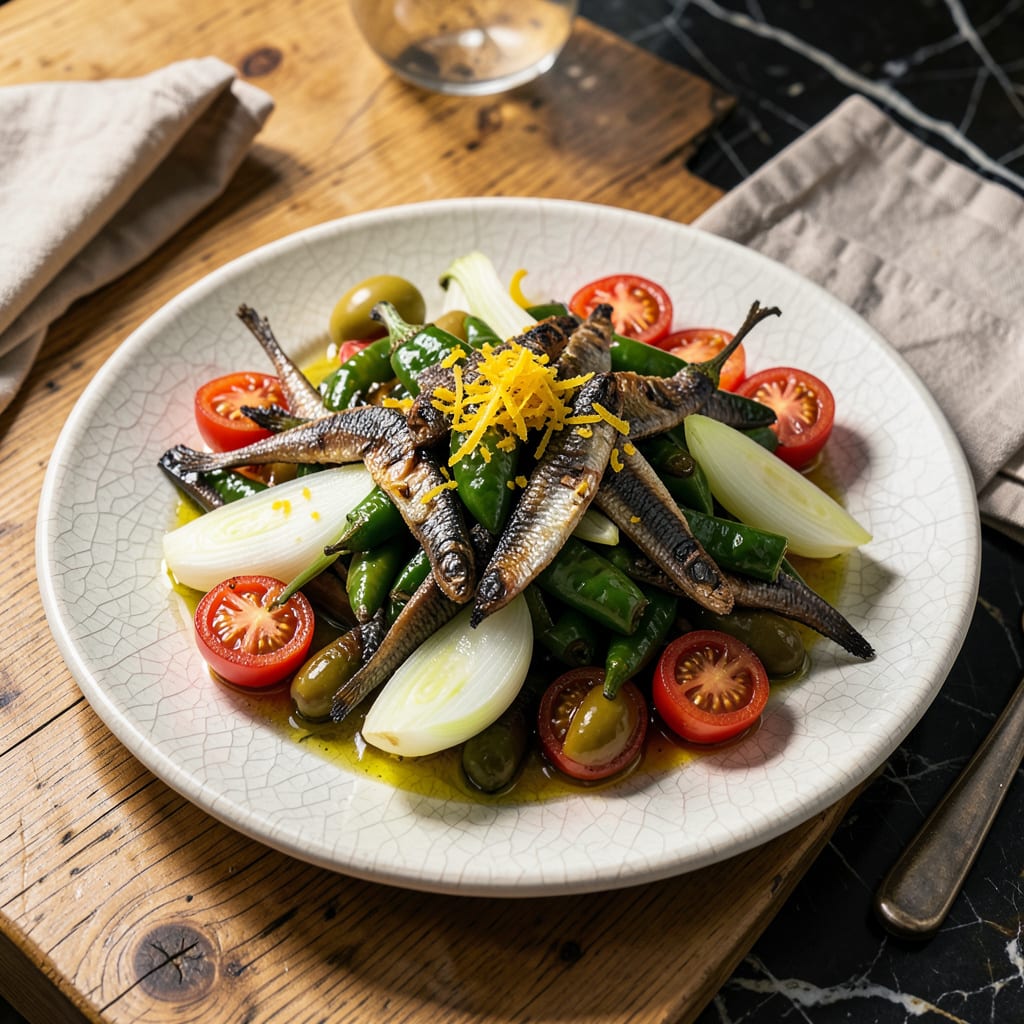
Anchovies are not vegetables—they’re small, saltwater forage fish. While often used to enhance plant-based dishes like Caesar dressing or umami-rich sauces, they belong to the animal kingdom, not the vegetable category.
This confusion often stems from their intense, savory flavor that blends seamlessly into vegetable-heavy recipes. 🔥 I’ve seen many home cooks assume anchovies are plant-derived because they dissolve into sauces or dressings, leaving behind only their umami punch. The reality is they’re part of the Engraulidae family, caught in oceans worldwide and packed with protein—something no vegetable can claim. Their ability to elevate plant-based dishes without overpowering them makes them a secret weapon in my kitchen.
💡 In This Article
- Why Anchovies Are Classified as Fish, Not Vegetables
- How to Use Anchovies in Vegetable-Based Dishes
Why Anchovies Are Classified as Fish, Not Vegetables
Anchovies belong to the Engraulidae family, a group of small, saltwater forage fish that thrive in temperate oceans worldwide. Biologically, they’re vertebrates with gills, fins, and a backbone—clear markers of their animal classification.
Their silver-blue scales and elongated bodies (typically 2-4 inches) are adapted for swift movement in schools, a survival tactic against predators like tuna and seabirds. 🌊
The confusion arises from their culinary role rather than their biology. When cured in salt and packed in oil, anchovies develop an intense umami flavor from naturally occurring glutamates and inosinates—compounds also found in mushrooms and aged cheeses.
This savory punch makes them behave like a seasoning rather than a protein, allowing just 1-2 fillets to transform an entire dish without visible traces.
Unlike vegetables that derive nutrients from soil, anchovies are rich in omega-3 fatty acids (about 1.4g per ounce) and complete proteins, containing all nine essential amino acids. Their nutritional profile aligns more closely with salmon or sardines than with kale or carrots.
The curing process concentrates these nutrients while adding 2,000-3,000mg of sodium per ounce, which is why they’re used sparingly as flavor enhancers.
What’s fascinating is how their marine diet influences their taste. Anchovies feed on plankton and small crustaceans, which contributes to their briny, mineral-rich flavor profile. This oceanic essence can’t be replicated by plant-based umami sources like soy sauce or nutritional yeast, though these alternatives come closest in vegetarian cooking.
The key difference lies in their fatty acid composition—anchovies provide EPA and DHA, while plant sources offer ALA, a less bioavailable form.
In my kitchen, I treat anchovies as a bridge between animal and plant-based cooking. A single fillet melted into warm olive oil creates a base for dressings that makes greens taste meatier, while their salt content means I can reduce added sodium elsewhere in the dish.
Their ability to dissolve completely at 120°F (the temperature of warm oil) is what makes them so versatile in vegetable-forward recipes. ✨
For those avoiding fish, the closest substitutes combine miso paste (for fermented umami) with capers (for briny sharpness). However, no plant-based option perfectly replicates anchovies’ unique balance of salt, fat, and marine-derived savoriness.
This culinary magic explains why they’ve been used since ancient Roman times in dishes like garum, the fermented fish sauce precursor to modern anchovy paste.

Trained in classic French technique but raised on slow-cooked ribs and spicy rubs, she blends culinary skill with smoke and soul.
- Recipe for Boneless Pork Chops in Cast Iron Skillet: Sear and Baste to Juicy Perfection - October 3, 2026
- Recipe for Boneless Cross Rib Roast: Slow-Roasted Beef with Herb Crust - October 3, 2026
- Hamburgers in Sauce Recipe Crock Pot: Slow-Cooked Savory Delight - October 3, 2026