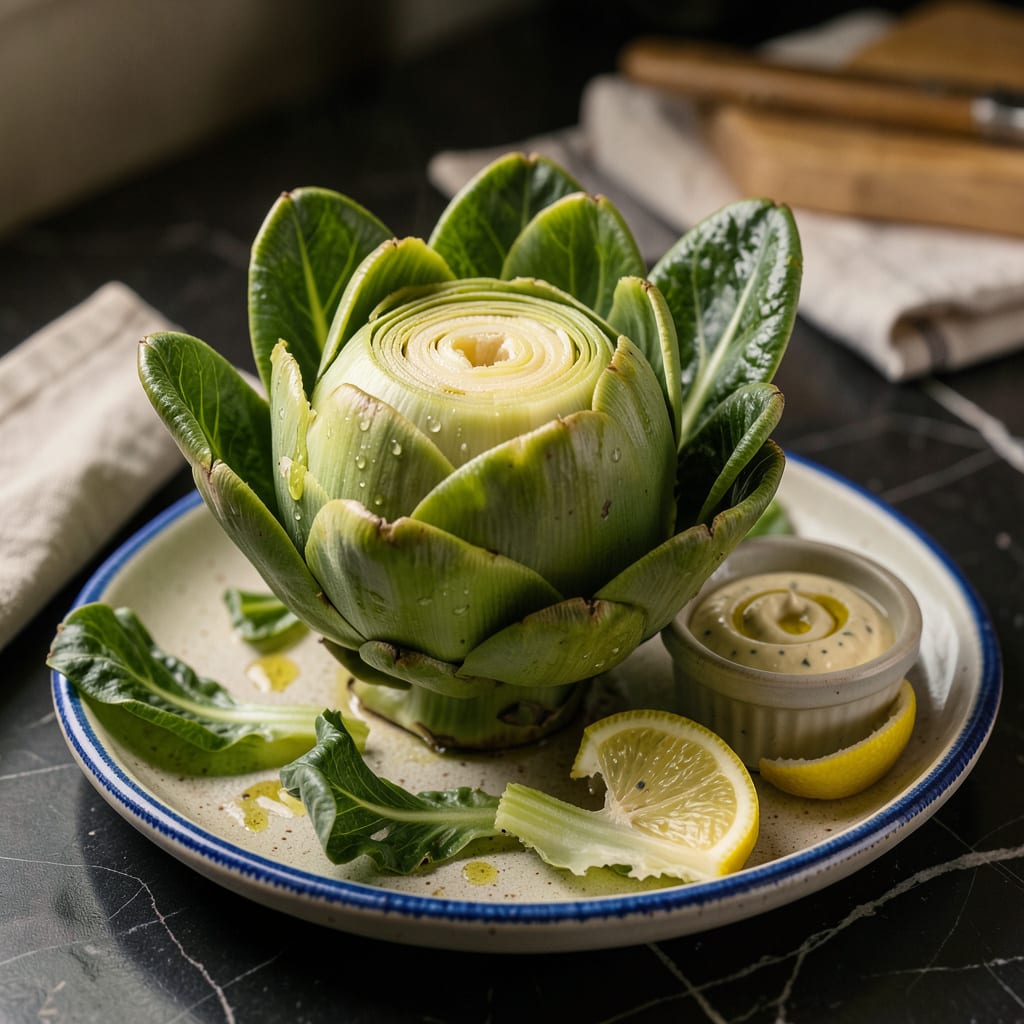
Artichoke leaves are technically edible but mostly fibrous and tough. The tender base of each leaf (near the heart) and the fleshy heart itself are the only parts commonly eaten after cooking.
I’ve always found artichokes fascinating because they’re one of those rare vegetables where you’re actually eating the flower bud. 🔥 The fibrous nature of the leaves isn’t just random—it’s the plant’s way of protecting its delicate heart from predators. When properly cooked, those leaf bases transform into something surprisingly tender, almost buttery, while the tough upper portions remain inedible. This is why traditional preparation methods focus on steaming or boiling to soften the fibers, making the edible portions more accessible and enjoyable.
💡 In This Article
- Why Only Certain Parts of Artichoke Leaves Are Edible
- How to Properly Prepare and Eat Artichoke Leaves
Why Only Certain Parts of Artichoke Leaves Are Edible
Artichokes are essentially unopened flower buds, and their leaves function as protective armor for the developing heart. The fibrous nature isn’t accidental—it’s the plant’s evolutionary defense against herbivores. Each leaf contains vascular bundles (similar to celery strings) that become tougher as they extend outward from the base.
The bottom 1/3 of each leaf contains the only edible portion: a small pocket of tender flesh where the leaf connects to the heart. This is where the plant stores moisture and nutrients, making it the most palatable part when cooked. 🌱
The upper 2/3 of each leaf is composed of lignified fibers—essentially nature’s version of reinforced concrete. These fibers contain high levels of cellulose (about 40-50% of the leaf’s dry weight), which human digestive systems can’t break down. Even after cooking, these portions remain stringy and unpleasant to eat.
The choke (the fuzzy center above the heart) contains even more concentrated fibers plus sharp, hair-like structures called pappus that can irritate the throat if ingested. Ancient Romans actually called artichokes “earth thistles” and developed elaborate preparation methods to access just these small edible portions.
What changes during cooking is the pectin structure in the leaf bases. When exposed to moist heat (like steaming at 212°F/100°C for 25-45 minutes), the pectin softens and the cell walls partially collapse, transforming the texture from woody to tender.
The heart undergoes a similar process but contains less fiber to begin with, making it naturally more edible. This is why you’ll never see artichokes eaten raw—the cooking process is essential to make even the “edible” parts palatable. 🔥
Historical preparation methods reveal how cultures maximized these limited edible portions. Mediterranean traditions involved slow-braising whole artichokes in olive oil to penetrate the fibers, while French techniques focused on peeling away layers to expose the heart.
The artichoke’s domestication actually selected for larger hearts and slightly more tender leaves over centuries, though the fundamental structure remains the same. Modern varieties like the Green Globe still only yield about 20-30% edible portion by weight when properly prepared.
Interestingly, the inedible portions aren’t waste in many cultures. Italian farmers traditionally used the tough leaves as natural scrubbers for pots and pans—the fibrous texture made them perfect for scouring without damaging cookware.
Some modern chefs even use the upper leaves as garnishes or in broths where their flavor can infuse without needing to be eaten. The key takeaway is that artichokes demand patience and technique to unlock their edible potential, which is why they’ve been considered a delicacy since Roman times. ✨
For comparison, think of artichoke leaves like asparagus stalks—only the bottom portion is tender enough to enjoy, while the tops become increasingly fibrous. The difference is that asparagus fibers run longitudinally and can be snapped off, while artichoke fibers are embedded throughout the leaf structure.
This fundamental botanical difference explains why we can eat most of an asparagus spear but only small portions of each artichoke leaf. The plant’s growth pattern literally dictates our eating experience.

Trained in classic French technique but raised on slow-cooked ribs and spicy rubs, she blends culinary skill with smoke and soul.
- Recipe for Boneless Pork Chops in Cast Iron Skillet: Sear and Baste to Juicy Perfection - October 3, 2026
- Recipe for Boneless Cross Rib Roast: Slow-Roasted Beef with Herb Crust - October 3, 2026
- Hamburgers in Sauce Recipe Crock Pot: Slow-Cooked Savory Delight - October 3, 2026