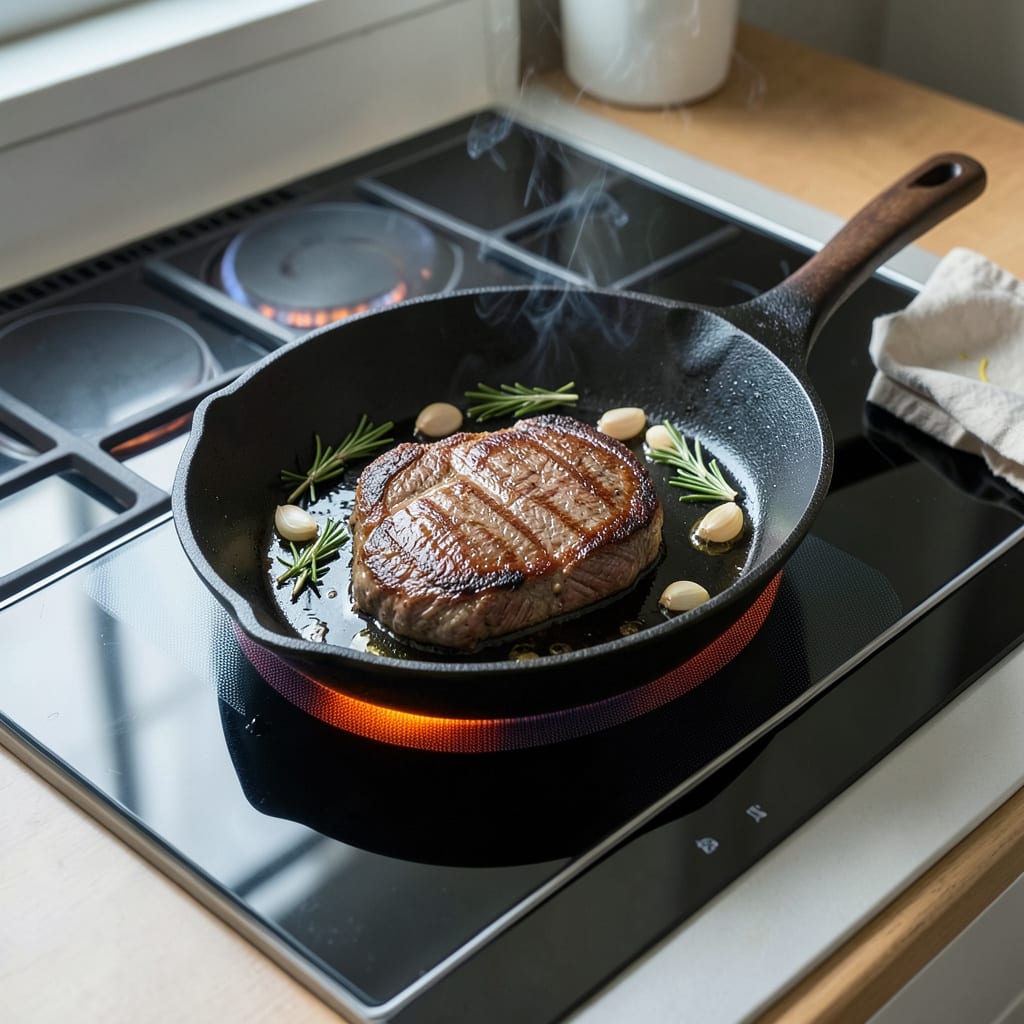
Yes, you can use cast iron on a glass-top stove, but it requires caution. Always lift—not slide—the pan to avoid scratches, use smooth-bottomed cookware, and avoid excessive heat to prevent thermal shock or damage to the glass surface.
As a pitmaster who’s worked with every type of cookware, I’ve learned that glass stovetops and cast iron can coexist—if you respect their differences. The key is understanding that glass surfaces are more fragile than gas burners, and cast iron’s weight and texture demand extra care. 🔥 I always recommend checking your pan’s bottom for rough spots or warping before using it, as even small imperfections can create friction that damages the glass over time.
What most people don’t realize is that the real risk isn’t just scratches—it’s thermal stress. Glass stovetops expand and contract with heat, and cast iron retains heat longer than other materials. This mismatch can cause the glass to crack if you’re not careful with temperature control. ✨
💡 In This Article
- Why Cast Iron Can Risk Damaging Glass-Top Stoves
- Safe Cast Iron Cooking Tips for Glass-Top Stoves
Why Cast Iron Can Risk Damaging Glass-Top Stoves
The core issue lies in how cast iron and glass respond differently to heat. Glass stovetops are made from ceramic glass designed to withstand temperatures up to 1,200°F, but they’re sensitive to rapid temperature changes. Cast iron, meanwhile, retains heat exceptionally well—it can stay at 400°F+ long after you turn off the burner.
This creates a thermal mismatch that stresses the glass, potentially causing micro-fractures over time. 🔥
Weight distribution plays a bigger role than most realize. A standard 12-inch cast iron skillet weighs 8-10 pounds—far heavier than aluminum or stainless steel pans. When you place this concentrated weight on glass, it creates pressure points.
The glass can flex slightly under this load, and if you slide the pan (even gently), those pressure points become scratch zones. The rough, porous surface of seasoned cast iron acts like sandpaper against the smooth glass.
Here’s what’s actually happening at the microscopic level: Even “smooth” cast iron has tiny ridges and valleys from seasoning. When dragged across glass, these imperfections create friction that generates heat and leaves behind micro-scratches. Over months of use, these scratches accumulate into visible damage.
The seasoning itself can also transfer to the stovetop, leaving a sticky residue that attracts more debris and accelerates wear. ✨
Thermal shock becomes a real concern with high-heat cooking. If you preheat cast iron on high for 5+ minutes, the pan’s temperature can exceed 600°F while the glass underneath struggles to dissipate that heat evenly. The glass expands where it’s hottest (directly under the pan) but remains cooler at the edges, creating internal stress.
I’ve seen this cause hairline cracks that spread over time—especially with frequent high-heat searing. 💫
The shape of your pan matters too. Warped cast iron (common with older or poorly maintained pans) creates uneven contact points. A pan that rocks when placed on a flat surface will concentrate heat and pressure on just 2-3 small areas of the glass, multiplying both scratch and thermal risks.
Always test your pan’s flatness by placing it on a perfectly level surface before using it on glass. 🌟
What most people overlook is the cumulative effect. A single use might not cause visible damage, but repeated exposure to these stress factors—thermal mismatch, weight concentration, surface friction—gradually weakens the glass. The damage often appears suddenly after months of seemingly fine use, which is why prevention through proper technique is so critical. ⚡

Trained in classic French technique but raised on slow-cooked ribs and spicy rubs, she blends culinary skill with smoke and soul.
- Recipe for Boneless Pork Chops in Cast Iron Skillet: Sear and Baste to Juicy Perfection - October 3, 2026
- Recipe for Boneless Cross Rib Roast: Slow-Roasted Beef with Herb Crust - October 3, 2026
- Hamburgers in Sauce Recipe Crock Pot: Slow-Cooked Savory Delight - October 3, 2026