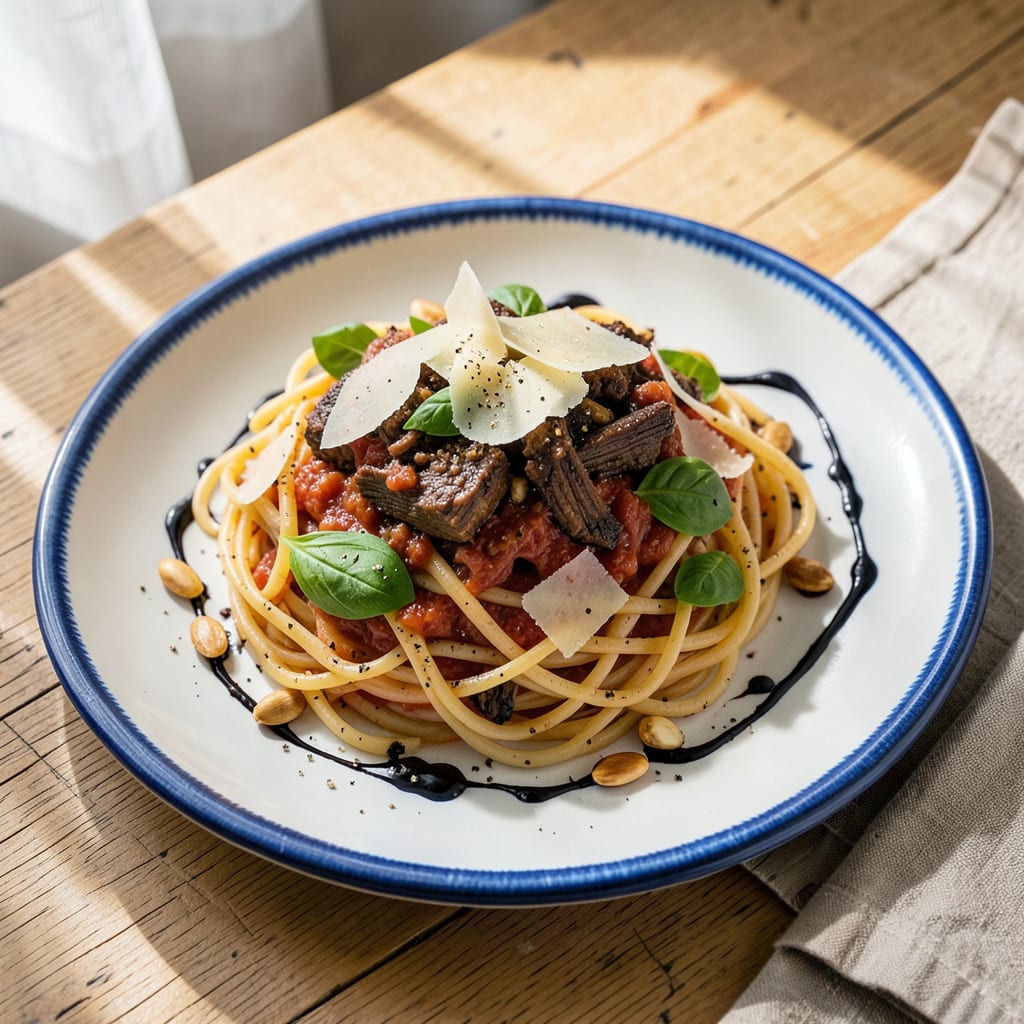
The best pasta depends on the dish: long noodles like spaghetti pair with oil-based sauces, tubes like rigatoni hold chunky sauces, and delicate shapes like orzo work in soups. Fresh pasta suits creamy sauces, while dried pasta excels in hearty dishes.
I’ve spent years testing pasta pairings in my kitchen, and the magic happens when you match texture with sauce consistency. 🔥 Think of rigatoni’s ridges as tiny flavor traps for meaty ragù, or how angel hair’s delicate strands let olive oil cling perfectly. The Italian tradition of abbinamento (pairing) isn’t just about taste—it’s about creating the ideal bite experience. Even the cooking time matters: fresh pasta’s 2-3 minute cook preserves its tender quality for light sauces, while dried pasta’s sturdier structure stands up to long simmering.
💡 In This Article
- How Pasta Shapes Affect Sauce Pairings
- Fresh vs Dried Pasta: When to Use Each
How Pasta Shapes Affect Sauce Pairings
The secret lies in the architecture of each shape. Ridged pastas like rigatoni or penne have 30-40% more surface area than smooth varieties, creating tiny channels that physically trap chunky sauces. The ridges act like microscopic dams, preventing meaty ragù or thick pesto from sliding off.
Italian pasta makers call this “tenuta”—the shape’s ability to hold sauce—which is why tubes dominate in southern Italian cuisine where tomato-based sauces reign supreme.
Delicate strands like angel hair (0.8mm diameter) or spaghetti (2mm) work with oil-based sauces because their thin profile allows even coating. The science here involves capillary action—where liquid naturally climbs narrow spaces. A 1/4 cup olive oil will cling completely to 2 oz angel hair but pool at the bottom with wider noodles.
This is why aglio e olio (garlic and oil) dishes traditionally use thin pasta: the sauce-to-pasta ratio stays perfect in every bite.
Flat shapes like fettuccine or pappardelle (1/2 to 3/4 inch wide) create a textural contrast with creamy sauces. Their broad surfaces allow Alfredo or carbonara to adhere while the edges provide a slight bite. The width matters—1-inch pappardelle holds 25% more sauce per strand than fettuccine, making it ideal for hearty mushroom creams.
Chefs call this the “sauce carriage” principle: wider noodles transport more flavor per forkful.
Small shapes like orzo or ditalini (rice-shaped and tiny tubes) excel in broths because their size matches the liquid’s viscosity. A 1:3 pasta-to-broth ratio ensures even distribution in soups, while their compact shape prevents sogginess.
The Italian rule here is “minestra”—soup pasta should be small enough to spoon easily but substantial enough to remain the star of the bowl.
Hollow shapes like manicotti or jumbo shells act as edible containers for fillings. Their 1/4-inch walls provide structure while the hollow center holds 1-2 tablespoons of ricotta or meat mixtures. The key measurement: the filling should equal about 30% of the pasta’s total volume to maintain balance.
Overstuffing causes structural failure during baking—what Italians call “sfondamento” (collapse).
Even the pasta’s curvature affects sauce distribution. Curved shapes like gemelli or cavatappi create turbulence as you twirl them, which aerates thick sauces like vodka cream. Straight pastas require more manual twirling to achieve the same effect.
This is why 12-inch spaghetti needs 3 full rotations on a fork to gather sauce properly, while 6-inch penne only needs 1-2 stabs.
The thickness of the pasta walls also plays a crucial role. Thin-walled pastas like capellini cook in 3-4 minutes and pair with light sauces, while thick-walled varieties like bucatini (with its 1/8-inch hollow core) can handle robust sauces and 15-minute simmering without turning mushy.
The golden ratio: sauce viscosity should match the pasta’s cooking time—thinner sauces for quick-cooking shapes, thicker for long-simmered varieties. ✨

Trained in classic French technique but raised on slow-cooked ribs and spicy rubs, she blends culinary skill with smoke and soul.
- Recipe for Boneless Pork Chops in Cast Iron Skillet: Sear and Baste to Juicy Perfection - October 3, 2026
- Recipe for Boneless Cross Rib Roast: Slow-Roasted Beef with Herb Crust - October 3, 2026
- Hamburgers in Sauce Recipe Crock Pot: Slow-Cooked Savory Delight - October 3, 2026