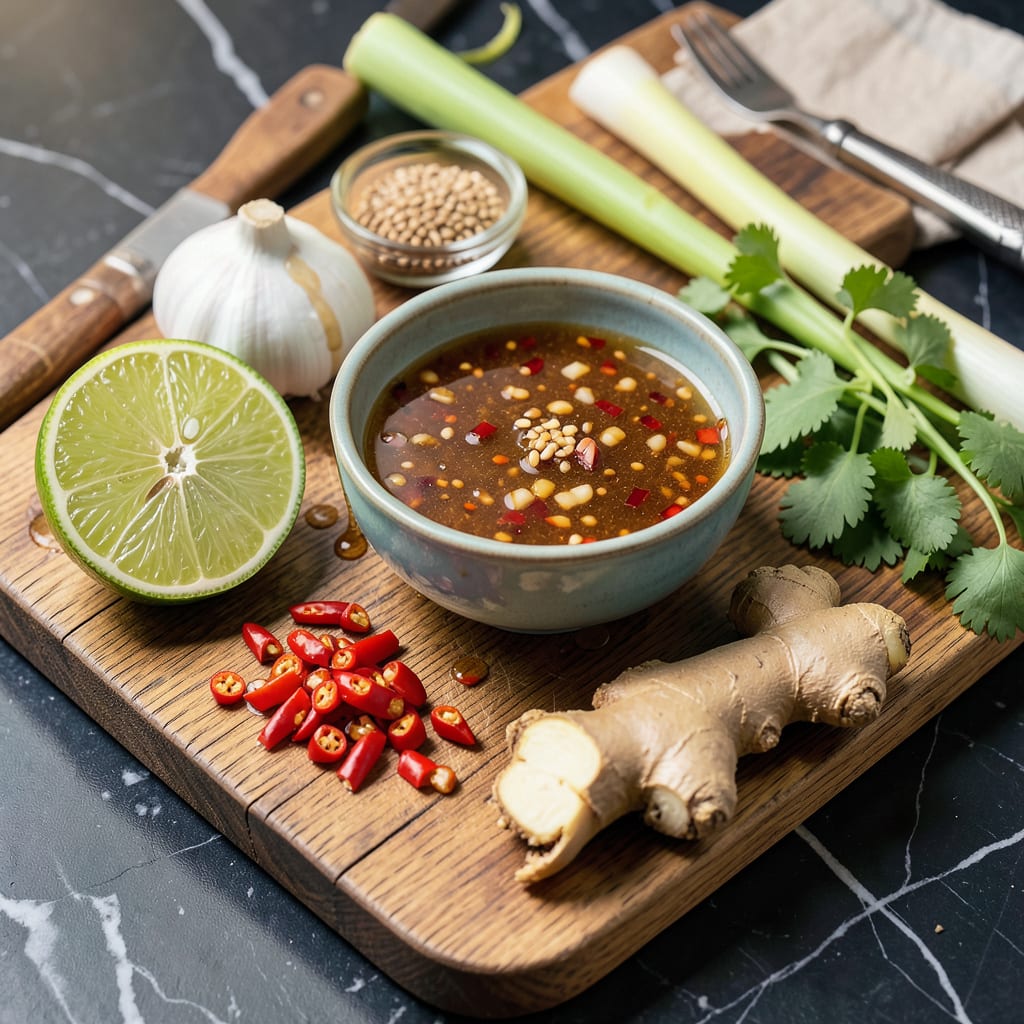
Asian Zing sauce combines sweet, spicy, and tangy flavors using honey, rice vinegar, soy sauce, garlic, ginger, red pepper flakes, and sesame oil. Some versions add lime juice or chili paste for extra kick.
This sauce is all about balance—something I learned early in my French training and now apply to bold flavors. The honey and sesame oil create a rich base, while the rice vinegar cuts through with brightness. 🔥 What fascinates me is how the garlic and ginger act as flavor bridges, connecting the sweetness to the heat. I’ve seen regional twists where chefs swap honey for palm sugar or add lemongrass for a citrusy depth that works beautifully with grilled meats.
For home cooks, the real magic happens when you adjust the ratios to your taste. A dash more chili paste transforms it into a fiery dip, while extra lime juice makes it perfect for seafood. ✨ My pro tip? Toast the red pepper flakes briefly before adding—they’ll release oils that deepen the sauce’s complexity without overpowering the other notes.
💡 In This Article
- Breaking Down the Core Flavors in Asian Zing Sauce
- Customizing Asian Zing Sauce for Different Dishes
Breaking Down the Core Flavors in Asian Zing Sauce
This sauce is a masterclass in flavor layering, where each ingredient plays a distinct role. The honey (typically ¼ to ½ cup) provides the sweet foundation, but it’s not just about sugar—it also helps emulsify the sauce, giving it that glossy, clinging texture.
Meanwhile, rice vinegar (2-3 tablespoons) cuts through with its mild acidity, brightening the heavier elements without the harshness of white vinegar. The balance here is crucial: too much sweetness and the sauce becomes cloying; too much acid and it turns sharp.
The umami backbone comes from soy sauce (3-4 tablespoons), which also contributes saltiness that enhances all other flavors. I’ve found that using low-sodium soy sauce gives better control over the final taste. Then there’s the aromatic trio: garlic (2-3 cloves), ginger (1 tablespoon grated), and sesame oil (1 teaspoon).
When these hit hot oil, their volatile compounds bloom, creating that signature fragrant punch. The red pepper flakes (½ to 1 teaspoon) don’t just add heat—they release capsaicin that triggers endorphins, making the sauce addictive. 🔥
What fascinates me is how these ingredients transform when combined. The garlic and ginger contain sulfur compounds that, when heated, create new flavor molecules through the Maillard reaction. The honey’s fructose caramelizes slightly when the sauce simmers, adding subtle depth.
I’ve seen Thai versions use palm sugar instead of honey for a more complex sweetness, while Korean adaptations might add gochujang for fermented heat. The sesame oil’s nutty aroma acts as a bridge between all these elements.
The science behind the balance is remarkable. Our tongues have specific receptors for sweet, salty, sour, and umami—this sauce hits all four simultaneously. The lime juice some recipes include (about 1 tablespoon) isn’t just for tartness; its citric acid helps preserve the sauce and makes the flavors pop by stimulating saliva production.
When I teach this in classes, I call it the “flavor pyramid”—each component supports the others, and removing any one element makes the whole structure wobble. ✨
Regional adaptations show how versatile this foundation is. In Vietnam, you might find fish sauce replacing some soy for a funkier depth. Malaysian versions often include belacan (shrimp paste) for an umami bomb. I once had a version in Singapore that used kaffir lime leaves—the citrusy, floral notes completely transformed the sauce.
The constant across all variations? That perfect tension between sweet, spicy, tangy, and savory that makes your taste buds sit up and take notice. 💫
For home cooks, understanding these interactions means you can troubleshoot like a pro. Sauce too sweet? Add a splash of vinegar. Not spicy enough? Bloom more pepper flakes in the oil first.
The ingredients might seem simple, but their chemistry is what creates that “zing”—a carefully calibrated flavor explosion that’s more than the sum of its parts. That’s why I always say this sauce is like a well-tuned engine: every component has a precise role in making the whole thing purr. ⚡

Trained in classic French technique but raised on slow-cooked ribs and spicy rubs, she blends culinary skill with smoke and soul.
- Recipe for Boneless Pork Chops in Cast Iron Skillet: Sear and Baste to Juicy Perfection - October 3, 2026
- Recipe for Boneless Cross Rib Roast: Slow-Roasted Beef with Herb Crust - October 3, 2026
- Hamburgers in Sauce Recipe Crock Pot: Slow-Cooked Savory Delight - October 3, 2026