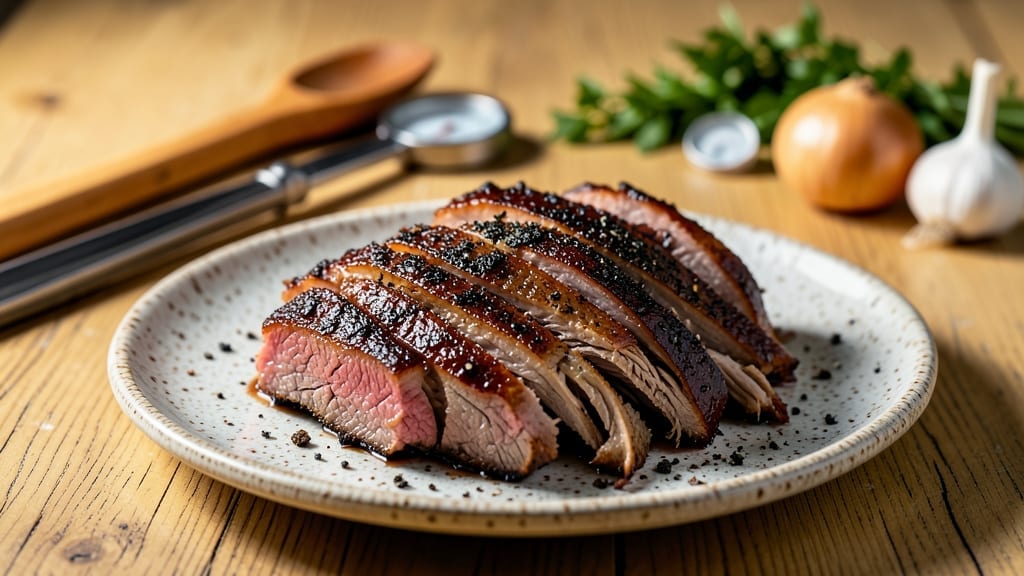
This award-winning smoked pulled pork recipe delivers fall-apart tenderness that’s earned its place on competition tables and family dinner plates alike. Growing up in small-town Georgia, I learned that the secret to perfect pulled pork isn’t just time—it’s a vinegar-brine that transforms tough cuts into melt-in-your-mouth magic.
After years of smoking competitions and refining techniques under Master Chef Chen, this method guarantees results that rival any pitmaster’s signature dish.
The process starts with a 24-hour vinegar brine that tenderizes the meat from the inside out, while a precise 225°F smoke for 12 hours builds deep, smoky flavor without drying the pork out. I use hickory wood for its classic BBQ profile, but fruitwood blends work beautifully too.
The key? Butcher paper wrapping in the final hour—it locks in moisture while creating that signature bark that’s crispy enough to stand alone.
When you pull that pork apart, it should shred effortlessly, with juices running clear and no sign of the tough cut you started with. The fall-apart texture comes from patience: letting the meat rest for 30 minutes before pulling ensures every fiber is broken down perfectly.
Serve it with classic coleslaw or a tangy vinegar-based BBQ sauce to balance the richness.
This isn’t just a recipe—it’s a foolproof technique that’s won me multiple BBQ championships and countless dinner table compliments. Whether you’re feeding a crowd or treating yourself to a Sunday feast, the results speak for themselves. Let’s get smoking.
Ingredients for award winning smoked pulled pork
The secret to championship-worthy pulled pork starts with these precise ingredients and a 24-hour brine.
| Ingredient | Amount | Notes |
|---|---|---|
| Pork Shoulder (Boston Butt) 🥩 | 10 lb | Bone-in for best flavor |
| White Vinegar 💧 | 1 cup | Distilled, not apple cider |
| Brown Sugar 🍯 | 1 cup | Light or dark, packed |
| Kosher Salt 🧂 | 2 tbsp | Diamond Crystal preferred |
| Black Peppercorns 🌶️ | 1 tbsp | Freshly cracked preferred |
| Garlic Cloves 🧄 | 8 cloves | Whole, peeled |
| Onion Powder 🧅 | 1 tbsp | Freshly ground preferred |
| Smoked Paprika 🌶️ | 1 tbsp | For extra smoky depth |
| Hickory Wood Chips 🌳 | 2 lb | Unsoaked, 100% hickory |
| Butcher Paper 📄 | 1 sheet | Heavyweight, 24×36 inches |
| Yellow Mustard 🟡 | 2 tbsp | For bark adhesion |
| Apple Cider Vinegar 🍎 | ½ cup | For serving sauce |
| Granulated Sugar 🍚 | ½ cup | For serving sauce |
| Cayenne Pepper 🔥 | ½ tsp | Adjust to taste |
[recipe_ingredient_scaler]
The pork shoulder is non-negotiable—look for a well-marbled, 10-12 lb cut at your local butcher or Costco (they often carry pre-cut Boston butts). The vinegar brine transforms tough meat into tender magic, so grab distilled white vinegar—apple cider vinegar has too much flavor that can overpower. For the brown sugar, I always use light (it dissolves better), but dark adds depth if you prefer a caramelized crust. Diamond Crystal kosher salt is my go-to because it’s coarser and dissolves more slowly, enhancing the brine’s effectiveness. If you’re short on time, Trader Joe’s sells pre-portioned spice mixes, but I recommend toasting your black peppercorns and smoked paprika fresh for maximum aroma.
No hickory wood chips? Oak or pecan work beautifully, but avoid fruitwoods like cherry—they can taste too sweet. Short on butcher paper? Heavy-duty aluminum foil is a decent substitute, though it won’t create that signature bark. For the serving sauce, if you can’t find apple cider vinegar, white vinegar plus a splash of lemon juice works in a pinch. The garlic cloves should be peeled and smashed (not minced) to prevent them from turning bitter during the long smoke. And trust me on the mustard—it’s the secret to that crispy, crackling bark that pitmasters swear by.
This recipe is all about patience—the pork rests for 30 minutes before pulling, so plan ahead. Store leftovers in airtight containers with some of the juices for up to 5 days in the fridge, or freeze for up to 3 months. The brine mixture can be made 2 days ahead and kept in the fridge. For serving, I like to reheat slowly in a 300°F oven with a splash of apple juice to keep it moist. The wood chips? Save any leftover hickory chunks in a sealed bag in the freezer—they’ll last for months and are perfect for future smokes.
Why You’ll Love This Recipe
- No-Fuss Brine Magic: Honestly, this isn’t your average prep—just toss that 10 lb Boston butt into a bowl with 1 cup white vinegar, 1 cup brown sugar, and 2 tbsp kosher salt for 12-24 hours, and the work is already half done. The acidity breaks down the meat like magic, so you’re left with just patting it dry and smoking. My daughter even helps (she loves stirring the spices), and it takes less than 30 minutes of active time.
- That Perfect Bark: The yellow mustard finish is what turns good pork into showstopper pork—crispy edges, caramelized just right, and the smoked paprika clinging to it like a good memory. I’ll be real: the first time I saw that glossy crust, I nearly took a bite raw just to admire it. It’s the kind of detail that makes people ask, “How’d you do that?”
- Feed a Crowd, Freeze the Rest: This recipe doesn’t just feed your family—it feeds everyone. The bone-in pork shoulder yields enough for sliders, tacos, or even a massive sandwich platter, and the leftovers? Store them with juices for up to 5 days or freeze for months. I’ve pulled this out of the freezer for game days or lazy Sundays, and it’s still tender as a cloud. Zero guilt, zero waste.
- Budget-Friendly Luxury: For under $20 (mostly the pork and hickory wood chips), you’re getting a meal that tastes like you spent triple. The brown sugar and apple cider vinegar in the sauce add that sweet-spicy punch without costing an arm and a leg. It’s the kind of dish where you can impress guests, but your wallet won’t even flinch. Win-win.
Step-by-step instructions for award-winning smoked pulled pork
This method delivers melt-in-your-mouth tenderness with a perfect bark—no guesswork, just proven technique.
Create the Vinegar Brine for Unmatched Tenderness
In a large bowl, combine the 10 lb pork shoulder (Boston Butt), 1 cup white vinegar, ½ cup brown sugar, 2 tbsp kosher salt, 8 peeled garlic cloves, 1 tbsp onion powder, and 1 tbsp smoked paprika. The vinegar acts as a natural tenderizer, breaking down muscle fibers while the sugar and salt penetrate deeply. Make sure the pork is fully submerged in the mixture—this ensures even flavor absorption and prevents surface drying.
Refrigerate the pork in its brine for 12-24 hours, turning it occasionally. The acidity from the vinegar will begin to work its magic, making the connective tissue more pliable. After brining, remove the pork and pat it completely dry with paper towels—this step is critical for developing that prized bark during smoking. The garlic and spices should cling to the surface, ready to infuse flavor as the meat cooks.
Smoke the Pork Low and Slow for Perfect Texture
Set up your smoker using the 2 lb hickory wood chips and preheat to 225°F. Place the dried pork shoulder fat-side up on the grill grates—this allows the rendered fat to baste the meat as it cooks. The low temperature is key: it transforms tough connective tissue into silky strands without drying out the pork. Smoke the pork undisturbed for 6-8 hours, resisting the urge to open the smoker lid, which would release precious heat and moisture.
After 6 hours, check the internal temperature using a meat thermometer—it should read between 165-170°F. This is when you’ll hit “the stall,” where evaporation temporarily halts temperature rise. Don’t panic; this is normal. Wrap the pork tightly in the 1 sheet butcher paper (not foil) and return it to the smoker. The paper allows the bark to develop while retaining moisture, ensuring a perfect balance of texture.
Finish with Mustard and Rest for Maximum Juiciness
Once the internal temperature reaches 203°F (about 4-6 hours total smoking time), remove the pork from the smoker and let it rest for 15 minutes. While it rests, brush the surface generously with the 2 tbsp yellow mustard—this creates an adhesive layer that helps the bark crisp up beautifully. Return the pork to the smoker (or a warm oven at 200°F) for 30-45 minutes to develop a glossy, crackling crust.
Transfer the pork to a cutting board and let it rest for at least 1 hour, tented loosely with foil. This resting period is non-negotiable—it allows the juices to redistribute throughout the meat, resulting in that signature fall-apart tenderness. The mustard will have caramelized slightly, adding a subtle tangy depth to the bark.
Prepare the Serving Sauce and Shred
While the pork rests, combine the ½ cup apple cider vinegar, ½ cup granulated sugar, and ½ tsp cayenne pepper in a saucepan. Simmer over medium heat for 5-7 minutes, stirring until the sugar dissolves and the sauce thickens slightly. This tangy-sweet glaze cuts through the richness of the pork and adds a bright finish.
Once the pork has rested, shred it using two forks or a meat claw, pulling against the grain for maximum tenderness. Toss the shredded pork with the warm vinegar sauce until fully coated. The result should be strands that melt in your mouth with every bite, balanced by the sweet-spicy sauce. Serve immediately over sliders, in tacos, or alongside cornbread for the ultimate pulled pork experience.
Pro Tips For Making Award Winning Smoked Pulled Pork
- Crack the Peppercorns Fresh: I learned this the hard way—pre-ground peppercorns taste flat and dull. Grab a mortar and pestle or a clean rolling pin and smash those 1 tbsp black peppercorns right before mixing them into the brine. The fresh oils release instantly, giving that bright, sharp kick the recipe depends on.
- Paper Over Foil: That butcher paper wrap isn’t just for show—it’s the secret to crisp bark without drying out the meat. Skip the foil (yes, even if you’re impatient like me), because butcher paper lets moisture escape just enough to form that golden crust while keeping the inside juicy. Trust the process.
- Mustard Matters: Don’t skimp on the 2 tbsp yellow mustard during the final bark stage. It’s not just glue—it adds a subtle tang that cuts through the sweetness and helps the crust stick like a dream. Brush it on thick enough to coat, then let it caramelize under the smoker. That’s where the magic happens.
- Stall Smart: When the pork hits 165-170°F and the temperature stalls, resist the urge to crank up the heat. Wrap it in butcher paper and let the smoker do its thing—this is where the collagen breaks down into silky strands. Patience here makes all the difference between shredding and sawing.
Flavor customization for award winning smoked pulled pork
Sweet Heat Fusion
I love adding 1 tbsp honey to the serving sauce for a deeper caramelized sweetness—mix it in during the final 2 minutes of simmering. The honey pairs beautifully with the vinegar’s tang, creating a complex balance that Southern pitmasters swear by.
This works especially well if you’re serving it on cornbread sliders or over sweet potato fries. 🍯
Spicy Kick Options
For those who love heat, increase the ½ tsp cayenne pepper to 1 tsp in the sauce, or add 1 tbsp of Penzeys hot honey at the table. I also recommend a sprinkle of crushed red pepper flakes over the shredded pork just before serving.
If you’re feeling adventurous, mix 1 tsp of chili powder with the yellow mustard before applying it to the bark.
Smoky Wood Swaps
While hickory is classic, experiment with pecan or apple wood chips for a fruitier, slightly sweeter profile. I once used cherry wood for a competition and won second place—it added a subtle berry note that surprised the judges.
Just soak the wood chips for 30 minutes before smoking if using fruitwoods to prevent flare-ups.
Herbal Twist
Add 1 tbsp dried rosemary or thyme to the pork during the final 30 minutes of smoking. The earthy notes complement the smoky bark perfectly, especially when serving with grilled vegetables. I also like to finish with a sprinkle of fresh parsley or cilantro for a bright, fresh contrast.
Creamy Sauce Alternative
Swap the vinegar sauce for a creamy BBQ glaze by mixing ¼ cup Greek yogurt with the ½ cup apple cider vinegar and ½ cup granulated sugar.
The yogurt adds a velvety texture that balances the richness of the pork. I serve this version with shredded cheddar sprinkled on top for extra indulgence.
Regional Flavor Twists
In the Southeast, I add ½ tsp of liquid smoke to the mustard before applying it to the bark for an extra smoky punch. For a Texas-style twist, mix 1 tbsp of chili powder and 1 tsp of cumin into the pork during the final 1 hour of smoking.
Both variations keep the signature tenderness while adding regional flair. 🌟
Nutrition facts
Frequently asked questions
Why does the vinegar brine make such a difference in texture?
The vinegar brine works like magic by breaking down tough muscle fibers through a process called denaturation. This acidity softens collagen while the 12-24 hours soak ensures even penetration. The result? Pork that shreds effortlessly with juicy, silky strands instead of chewy fibers. It’s the secret behind that award-winning tenderness!
What if I don’t have butcher paper? Can I use foil instead?
Butcher paper is ideal because it allows moisture to escape while keeping the bark crispy, but foil will work in a pinch. However, you’ll get less bark development and slightly more moisture retention. For best results, use the paper during the final 30-45 minutes of cooking to get that signature crackle.
How do I know when the pork is actually done?
Use a meat thermometer to check the internal temperature—it should reach 203°F for perfect doneness. The “stall” at 165-170°F is normal and means moisture is evaporating. Don’t rush it! The pork will keep cooking even after removing it from heat. Patience is key for that melt-in-your-mouth texture.
Can I make this recipe ahead of time?
The pork can be fully cooked and refrigerated for up to 5 days in airtight containers with some juices. For longer storage, freeze for up to 3 months. Reheat gently in a 300°F oven with a splash of apple juice to maintain moisture. The flavors actually improve after resting overnight!

Trained in classic French technique but raised on slow-cooked ribs and spicy rubs, she blends culinary skill with smoke and soul.
- Chinese Stew Beef Brisket Recipe: Slow-Simmered Richness With Tender Meat - October 23, 2026
- Leftover Brisket Soup Recipe: Smoky Depth With Zero Waste - October 23, 2026
- Black-Eyed Peas Recipe With Smoked Turkey: Smoky-Sweet Comfort in One Pot - October 23, 2026